
Bathroom countertop materials determine how well a vanity surface resists water, stains, and daily wear while shaping the room’s overall look. I’ve walked enough California homeowners through this decision to know it’s rarely as simple as picking a favorite color. The surface you choose affects maintenance time, resale value, and how the whole bathroom holds up over fifteen or twenty years.
Getting this choice wrong means redoing a vanity within a few years instead of decades. We see it happen when budget drives the decision ahead of performance. Getting it right protects both your investment and your daily routine.
This guide covers what separates a high-performing countertop from a disappointing one, walks through the major material categories from engineered quartz to natural stone to budget-friendly laminate, compares cost and durability side by side, and explains how installation quality and maintenance expectations factor into the final decision.
What Makes a Bathroom Countertop Material “High Quality”?
A high-quality bathroom countertop material resists water absorption, withstands daily contact with toiletries and cleaning products, and holds its finish for at least a decade without heavy maintenance. I judge every material against those three benchmarks before anything else, because bathrooms punish surfaces in ways kitchens don’t always match.
Humidity sits in a bathroom longer than in most rooms in the house. Standing water near a sink basin, splashed cleaning chemicals, and temperature swings from hot showers all stress a countertop surface daily.
Water & Moisture Resistance
Water and moisture resistance refers to a material’s ability to prevent liquid absorption into its surface. Porous materials like untreated marble or low-grade laminate can absorb water and develop staining or warping over time. Non-porous engineered materials resist this almost entirely, which matters most around sink basins where water pools repeatedly.
Durability Against Daily Wear
Daily wear in a bathroom includes makeup, hairspray, skincare products, and the occasional dropped bottle. Scratch and impact resistance varies significantly by material hardness, with engineered stone generally outperforming natural stone and laminate in day-to-day resilience.
Long-Term Maintenance Demands
Some materials need annual sealing, specific cleaning products, or careful handling to avoid damage. Others need almost nothing beyond routine wiping. I always ask clients how much maintenance time they’re actually willing to commit before recommending a material, because the “best” surface on paper isn’t always the best fit for a busy household.
Quartz Bathroom Countertops
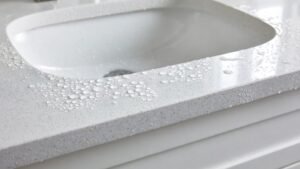
Quartz is an engineered stone surface made from roughly 90% crushed natural quartz combined with resin binders and pigments. It’s become the default recommendation I give most homeowners because it delivers consistent performance without the upkeep that natural stone demands. The manufacturing process creates a surface that’s harder and more uniform than anything quarried directly from the ground.
How Engineered Quartz Is Made
Manufacturers crush natural quartz crystals, mix them with polyester resin, then compress and cure the blend under heat and pressure. This process is what gives engineered quartz its non-porous structure, unlike natural stone which forms with microscopic pores already built in.
Quartz Pros for Bathrooms
Quartz resists staining from cosmetics, mildew growth in grout-free seams, and chipping from dropped items better than most natural stone options. A study on engineered stone durability found quartz surfaces showed minimal wear after simulated years of daily bathroom use.
Quartz Limitations to Know
Quartz isn’t indestructible. Direct, sustained heat exposure can discolor the resin binder, and the surface can’t be repaired as invisibly as natural stone if it chips. Cost also runs higher than laminate or tile, though it typically falls below premium granite or marble slabs.
Granite Bathroom Countertops

Granite is a natural igneous stone quarried in large slabs and prized for its unique mineral patterning and hardness. No two granite slabs look identical, which is part of the appeal for homeowners wanting a one-of-a-kind vanity surface. I still install a fair amount of granite in California bathrooms, particularly for clients who want that natural variation quartz can’t fully replicate.
Natural Variation and Sealing Needs
Because granite is porous at a microscopic level, it requires periodic sealing to prevent moisture and staining from penetrating the surface. Sealing frequency typically falls between one and two years depending on slab porosity and usage, according to stone care industry guidelines. Skipping this step shortens the material’s effective lifespan considerably.
Granite Performance in Wet Environments
Once properly sealed, granite performs well against daily moisture exposure and resists scratching better than most solid surface materials. The seal itself is the weak point, not the stone, which is why a granite countertop sealing schedule matters more here than with engineered alternatives.
Marble Bathroom Countertops
Marble is a natural metamorphic stone known for its veining pattern and soft, luminous surface finish, making it a popular choice for upscale bathroom vanities. It’s the material clients request most often for aesthetics, and I understand why. But marble is also the softest and most porous natural stone in common use, which means it stains and etches more easily than granite or quartz. Lemon juice, certain cleaning products, and even prolonged water contact can leave permanent marks without diligent sealing. Homeowners who choose marble usually accept a higher maintenance commitment in exchange for the look.
Solid Surface Countertops
Solid surface is a man-made material composed of acrylic or polyester resins, formed into a seamless, non-porous countertop with no visible grout lines or seams. Brands like Corian popularized this category decades ago, and it remains a strong choice for bathrooms where a clean, unbroken surface matters. The material resists moisture completely since nothing can seep into seams that don’t exist. Scratches can be sanded out rather than requiring full replacement, which gives it a repair advantage over both quartz and natural stone.
Laminate Bathroom Countertops
Laminate is a budget-friendly countertop material made from layers of paper or fabric bonded with resin and topped with a decorative, scratch-resistant finish. It’s the most affordable option covered in this guide and remains common in rental properties and budget renovations. Laminate performs reasonably well against moisture when seams are properly sealed during installation, though it lacks the heat resistance and longevity of stone or engineered surfaces. Edges and seams are the most common failure points, where water can eventually penetrate the substrate.
Concrete Bathroom Countertops

Concrete countertops are custom-poured or precast surfaces made from a cement, aggregate, and reinforcement mix, often finished with a sealant to control porosity. They appeal to homeowners wanting an industrial or modern aesthetic that no other material quite replicates. Concrete is inherently porous and requires a quality sealant applied correctly during curing, or it will absorb moisture and stain. Hairline cracking can also develop over time as the material settles, which is a tradeoff some homeowners accept for the custom look.
Butcher Block & Wood Countertops

Butcher block countertops are solid wood surfaces, typically oak, maple, or walnut, finished with a protective sealant for use in wet environments. Wood brings warmth to a bathroom that no stone or engineered material matches, but it’s also the most vulnerable option here to water damage. Without consistent sealing and quick cleanup of standing water, wood will warp, swell, or develop mold at the seams. I recommend this material only to clients who understand and accept the higher maintenance commitment involved.
Tile Bathroom Countertops
Tile countertops use ceramic, porcelain, or stone tile set over a substrate with grout lines between each piece. This option allows significant design flexibility and often costs less than a single stone slab. The tradeoff lives in the grout lines themselves, which absorb moisture and require regular sealing and cleaning to prevent discoloration or mildew growth. A well-installed grout sealing routine extends the practical lifespan of a tile countertop considerably.
Quartz vs. Granite: Key Differences
Quartz and granite differ most in porosity, maintenance needs, and pattern consistency, with quartz requiring no sealing and granite needing periodic resealing to stay stain-resistant.
| Factor | Quartz | Granite |
| Porosity | Non-porous | Porous, needs sealing |
| Maintenance | Wipe clean | Periodic resealing |
| Pattern | Consistent, engineered | Unique, natural variation |
| Heat resistance | Moderate | High |
| Average lifespan | 20-25+ years | 25-40+ years with sealing |
Granite tends to outlast quartz if properly maintained, but quartz wins on convenience for homeowners who don’t want a sealing schedule to track.
Cost Comparison Across Countertop Materials
Bathroom countertop material costs typically range from $20 per square foot for laminate to $150 or more per square foot for premium marble, with installation adding to the total.
| Material | Cost per Sq Ft (Material Only) |
| Laminate | $20-$50 |
| Tile | $25-$60 |
| Solid Surface | $40-$80 |
| Granite | $50-$100 |
| Quartz | $60-$120 |
| Marble | $75-$150+ |
| Concrete | $65-$135 |
Installation labor typically adds another 30-50% on top of material costs, depending on slab complexity and edge detailing.
How to Choose the Right Material for Your Bathroom
Choosing the right material starts with how the bathroom actually gets used, not just how the sample looks under showroom lighting. A kids’ bathroom with constant splashing needs different performance than a low-traffic guest powder room. Budget, maintenance tolerance, and how long you plan to stay in the home all factor into which material makes sense.
Installation Quality and Why It Matters as Much as Material
Even the best countertop material fails prematurely with poor installation. Improperly sealed seams, uneven substrate support, and rushed edge finishing cause more early countertop failures than the material itself does. I’ve replaced plenty of high-end stone that was simply installed wrong the first time, which is why installation craftsmanship standards deserve as much attention as material selection.
Long-Term Durability and Resale Value by Material
Natural stone and quartz generally hold resale value better than laminate or tile, since buyers associate these materials with higher overall build quality. A bathroom with a well-installed granite or quartz vanity signals the rest of the home likely received similar attention to detail, which matters during a sale.
Maintenance Requirements by Countertop Material
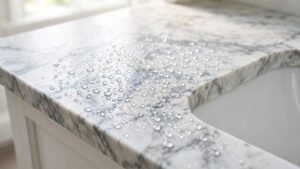
Maintenance needs vary significantly by material, ranging from simple daily wiping for quartz to annual resealing for natural stone and concrete.
- Quartz: wipe with mild soap and water, no sealing required
- Granite: reseal every 1-2 years, avoid acidic cleaners
- Marble: reseal every 6-12 months, clean spills immediately
- Solid surface: wipe clean, sand out minor scratches as needed
- Laminate: avoid standing water at seams, no sealing needed
- Concrete: reseal annually, monitor for hairline cracks
- Tile: clean and reseal grout lines every 1-2 years
Eco-Friendly and Sustainable Countertop Options
Homeowners increasingly ask about sustainability alongside performance. Recycled glass composites, certain solid surface products made with recycled content, and responsibly quarried stone all offer lower environmental impact than virgin-material laminate production. Material sourcing transparency has become a factor more California buyers weigh during the selection process.
Conclusion
Bathroom countertop materials each balance durability, maintenance, and cost differently, from low-upkeep quartz to naturally distinctive granite and marble. The right choice depends on your household’s habits, budget, and how long you plan to stay in the home. We help homeowners at Tiny Home Builders California weigh these tradeoffs and select materials built for lasting performance.
Frequently Asked Questions
What is the most durable bathroom countertop material?
Quartz and granite are generally the most durable bathroom countertop materials. Both resist scratching and daily wear significantly better than laminate or wood, with granite often lasting longer when properly sealed.
Is quartz or granite better for bathrooms?
Quartz suits homeowners wanting low maintenance since it needs no sealing. Granite suits those wanting unique natural patterns and don’t mind periodic resealing to maintain stain resistance.
How much does a bathroom countertop cost on average?
Bathroom countertop material costs average $20 to $150 per square foot depending on material choice. Installation labor typically adds another 30-50% to the total project cost.
Do bathroom countertops need to be sealed?
Natural stone materials like granite and marble need periodic sealing to resist staining and moisture. Engineered materials like quartz and solid surface do not require sealing at all.
What countertop material is best for a small bathroom?
Solid surface and laminate work well in small bathrooms due to lower cost and seamless installation options. Quartz is also a strong choice where budget allows for its durability benefits.
Can I use kitchen countertop material in a bathroom?
Most kitchen countertop materials, including quartz and granite, work equally well in bathrooms. The main consideration is moisture exposure, which bathrooms experience more consistently than kitchens.
How long do quartz and granite countertops last?
Quartz countertops typically last 20 to 25 years or more with basic care. Granite can last 25 to 40 years or longer when resealed consistently on schedule.