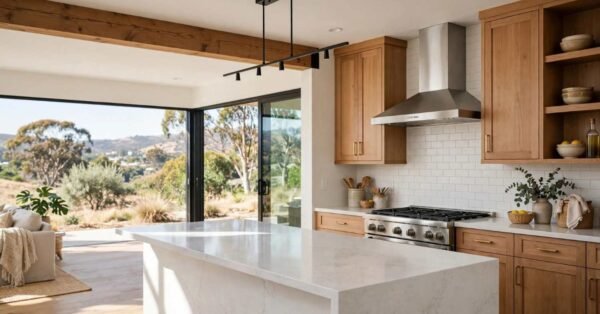

Luxury kitchens combine premium materials, professional-grade appliances, and precise craftsmanship to create spaces built for both daily use and lasting value. I’ve walked through hundreds of kitchen builds, and the ones that actually hold up over time share the same bones: real stone or engineered surfaces that resist wear, cabinetry built from solid materials rather than veneer-wrapped particleboard, and appliance packages sized and vented correctly for how a family actually cooks. None of that shows up in a glossy photo.
Getting this wrong costs real money twice, once on the build and again on the redo. A kitchen is the most expensive room per square foot in most homes, and it’s also the room buyers judge a house by first.
This guide covers what separates a genuinely high-end kitchen from one that just looks expensive, including cabinetry and surface materials, appliance packages and layout design, lighting and ventilation systems, smart technology and pantry design, and how to budget for the work and vet the builder who’ll deliver it.
What Defines a Luxury Kitchen Today
A luxury kitchen is a residential cooking space built with premium materials, professional-grade equipment, and custom design elements that prioritize durability, function, and craftsmanship over standard builder-grade finishes. Price alone doesn’t make a kitchen luxury. I’ve seen $40,000 kitchens outperform $120,000 ones because the cheaper build used better plywood boxes, properly calibrated soft-close hardware, and a ventilation system sized for the range instead of the minimum code requirement.
What separates the two tiers is specification depth: the gauge of steel in a sink, the core material behind a veneer, the CFM rating on a hood fan. A kitchen earns the “luxury” label through execution, not square footage.
Custom vs. Semi-Custom vs. Stock Cabinetry
Custom cabinetry is built to the exact dimensions and specifications of a single kitchen, while stock cabinetry ships in fixed sizes from a catalog. Semi-custom sits between the two, offering modified stock boxes with upgraded finishes and some size flexibility.
Full custom cabinetry costs more because every box is fabricated for that specific layout, but it also means no filler panels, no wasted corner space, and finishes that match the rest of the home’s millwork exactly.
Why “Luxury” Is Measured by Materials and Execution, Not Just Price
A kitchen with expensive finishes installed poorly still fails the luxury standard, while a modestly priced kitchen with correct ventilation, proper cabinet construction, and well-sealed stone surfaces holds up for decades. A National Association of Home Builders study on remodeling found kitchen projects consistently rank among the highest-ROI renovations, but only when the underlying construction quality supports the finish level.
High-End Cabinetry and Millwork
Luxury cabinetry uses solid wood face frames, dovetail joinery, and full-extension soft-close hardware rated for decades of daily use. I always tell clients to open a drawer and pull it all the way out. If it wobbles or the sides flex, the box construction underneath the pretty finish is cutting corners.
Inset cabinetry, where doors sit flush inside the face frame rather than overlapping it, has become the clearest visual signal of a high-end kitchen because it requires much tighter manufacturing tolerances than standard overlay doors. Matching custom millwork and trim details throughout the kitchen ties the cabinetry into the rest of the home’s architecture instead of looking like a separate installed box.
Premium Countertop Materials: Stone, Quartz, and Specialty Surfaces

The main countertop materials used in luxury kitchens are natural stone (granite, marble, quartzite), engineered quartz, and specialty surfaces like porcelain slab or stainless steel. Each handles heat, staining, and daily wear differently, and the right choice depends on how the kitchen actually gets used rather than which one photographs best.
Natural Stone vs. Engineered Quartz
| Attribute | Natural Stone (Granite/Quartzite) | Engineered Quartz |
| Heat resistance | High, handles hot pans directly | Moderate, trivets recommended |
| Stain resistance | Requires periodic sealing | Non-porous, no sealing needed |
| Pattern consistency | Unique, varies slab to slab | Consistent, repeatable patterns |
| Typical cost per sq ft | –$$ | –$ |
| Maintenance | Annual resealing | Low maintenance |
Marble remains the most requested stone for its veining, but it etches when acidic foods sit on it too long, which is why I steer clients who cook often toward quartzite as a harder, more forgiving alternative with a similar look. Consumer Reports’ countertop durability testing found engineered quartz outperformed natural stone in scratch and stain resistance, while natural stone scored higher on heat tolerance.
Professional-Grade and Built-In Appliance Packages
A professional-grade appliance package typically includes a commercial-style range, a separate wall oven, a panel-ready refrigerator, and a ventilation hood matched to the cooking equipment’s output. These appliances draw more power and generate more heat than standard residential units, which means the kitchen’s electrical and ventilation design has to be planned around them from the start, not retrofitted afterward.
Integrated/Panel-Ready Appliances vs. Freestanding
Panel-ready appliances accept custom cabinetry fronts that match the surrounding cabinets, hiding the appliance entirely from the kitchen’s visual line. Freestanding appliances show their own branded exterior and sit between or at the end of cabinet runs.
- Panel-ready units cost more upfront due to the matching custom panel fabrication.
- Freestanding units are easier to replace later without matching cabinetry changes.
- Panel-ready refrigerators and dishwashers create a seamless wall of cabinetry.
- Freestanding ranges remain the standard even in high-end kitchens because most premium range brands don’t offer panel-ready fronts.
Proper appliance ventilation design matters more than the appliance brand itself, since even a top-tier range performs poorly in a kitchen with undersized exhaust capacity.
Kitchen Layout and Work Triangle Optimization
The work triangle connects the sink, refrigerator, and cooking surface in a layout that minimizes walking distance between the three during food prep. Modern luxury kitchens often expand this into multiple work zones instead of a single triangle, separating prep, cooking, and cleanup into distinct stations.
Islands, secondary sinks, and dual dishwashers have grown common specifically because multiple cooks now use the space simultaneously, something the original single-cook work triangle concept never accounted for.
Statement Islands and Multi-Function Centerpieces

A kitchen island anchors the room visually and functionally, often combining seating, prep space, storage, and sometimes a secondary cooktop or sink into one feature. Waterfall edges, where the countertop material wraps continuously down the sides, have become a defining look in high-end kitchens because they showcase the stone’s full pattern as a single uninterrupted surface.
Large islands need structural planning beneath the surface, since a heavy stone slab spanning ten feet or more requires proper support framing to avoid sagging or cracking at the seams over time.
Custom Lighting Design in Luxury Kitchens
Layered lighting in a luxury kitchen combines ambient ceiling fixtures, task lighting under cabinets, and accent lighting inside glass-front cabinets or toe-kicks. Under-cabinet task lighting eliminates shadows across countertops exactly where food prep happens, which standard single-ceiling-fixture kitchens almost always get wrong.
Statement pendant fixtures over islands have become a signature design element, often chosen to match metal finishes used elsewhere in the kitchen’s hardware and faucets.
High-Performance Ventilation Systems
A properly sized range hood removes smoke, grease, and heat at a rate matched to the BTU output of the cooking equipment beneath it, typically measured in cubic feet per minute (CFM). Professional-style ranges generate far more heat and grease than standard residential ranges, and a hood rated for the smaller unit simply can’t keep up.
Makeup air systems, which replace the air an exhaust hood pulls out, are now required by code in many jurisdictions once hood capacity crosses a certain CFM threshold, since removing too much air without replacing it can depressurize a tightly sealed modern home.
Flooring Choices for High-End Kitchens
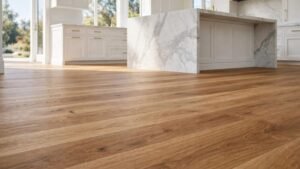
Luxury kitchen flooring needs to handle water, dropped cookware, and constant foot traffic while still matching the design level of the cabinetry above it. Wide-plank engineered hardwood, large-format porcelain tile, and natural stone flooring dominate high-end installations because each resists the daily wear a kitchen floor takes on.
Radiant heated flooring under tile or stone has become a common luxury addition, adding comfort during colder months without requiring visible ductwork or vents.
Smart Kitchen Technology and Home Automation Integration
Smart kitchen technology includes app-controlled ovens, voice-activated faucets, automated lighting scenes, and refrigerators with internal cameras or inventory tracking. These systems integrate with whole-home automation platforms so a kitchen’s lighting, temperature, and appliances respond to the same controls as the rest of the house.
Built-in charging stations, hidden outlets inside drawers, and pop-up countertop outlets keep the technology functional without cluttering the kitchen’s visual design.
Walk-In Pantries and Secondary Prep Kitchens
A walk-in pantry extends kitchen storage into a dedicated room, often including its own counter space, a secondary sink, or small appliances kept out of the main kitchen’s sightline. Secondary prep kitchens, sometimes called scullery kitchens, handle messier cooking tasks like high-heat frying or heavy cleanup so the main kitchen stays presentable for guests.
This layout approach has grown common in larger custom homes where the primary kitchen functions partly as an entertaining space rather than purely a workspace.
Plumbing Fixtures, Sinks, and Faucet Systems
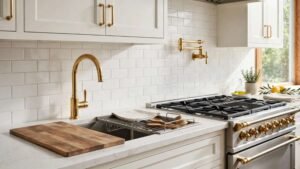
Luxury kitchen plumbing typically includes a workstation-style sink, a dedicated pot filler near the range, and a filtered or instant hot water tap at a secondary location. Workstation sinks come with integrated accessories like cutting boards and drying racks that fit directly over the basin, turning the sink into an additional prep surface rather than just a cleanup station.
Matching faucet and fixture finishes across the sink, pot filler, and cabinet hardware creates visual consistency that buyers and designers both notice immediately.
Energy Efficiency and Sustainable Materials in Luxury Kitchens
ENERGY STAR-certified appliances use roughly 10 to 50 percent less energy than standard models, depending on the appliance category, according to the U.S. Environmental Protection Agency. High-end kitchens increasingly pair premium performance with efficiency rather than treating the two as a tradeoff.
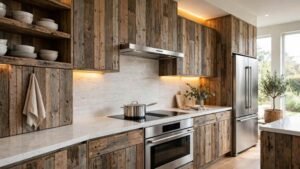
Induction cooktops heat cookware directly through electromagnetic energy instead of heating the surrounding air, cutting cooking energy use substantially compared to gas or standard electric ranges while also running cooler in the kitchen itself. LED-only lighting designs and FSC-certified or reclaimed wood cabinetry have also become standard specification requests in higher-end builds, reflecting a broader shift toward sustainable materials without sacrificing the finish quality clients expect.
Custom Millwork Details and Architectural Finishes
Crown molding, furniture-style cabinet legs, and custom range hood enclosures built from matching wood or plaster elevate a kitchen from installed cabinetry to architectural millwork. These details take significantly longer to fabricate and install than standard cabinet runs, which is part of why they signal a higher construction tier immediately.
Beamed ceilings, coffered ceiling details, and plaster range hood surrounds have become common in kitchens aiming for a more traditional or transitional aesthetic rather than a strictly modern look.
Budgeting for a Luxury Kitchen Build
A luxury kitchen build in California typically ranges from $100,000 to over $250,000, depending on square footage, appliance tier, and the extent of custom cabinetry and millwork involved. Cabinetry and countertops usually consume the largest share of the budget, often 40 to 50 percent combined, with appliances taking up another significant portion depending on brand tier.
| Budget Category | Approximate Share of Total |
| Cabinetry and millwork | 30–40% |
| Countertops and surfaces | 10–15% |
| Appliances | 15–25% |
| Lighting and electrical | 5–10% |
| Plumbing and fixtures | 5–10% |
| Flooring | 5–10% |
| Labor and installation | 15–20% |
Getting accurate numbers early requires a detailed kitchen construction budget breakdown before design decisions lock in, since changing a layout after cabinetry is ordered gets expensive fast.
Choosing a Builder Capable of Delivering Luxury Kitchen Quality
A builder capable of delivering a true luxury kitchen demonstrates verifiable craftsmanship history, coordinates trades precisely around appliance specifications, and manages the project with transparent, documented construction standards. I’ve seen beautifully designed kitchens fall apart in execution because the builder didn’t coordinate electrical rough-in with the final appliance specs, leaving outlets in the wrong spot for a panel-ready fridge.
Ask any builder how they handle construction quality standards on past kitchen projects specifically, not just general home builds, since kitchen work involves tighter trade coordination than almost any other room in a house. A builder’s answer to that single question tells you more than their portfolio photos ever will.
Conclusion
A luxury kitchen comes down to material quality, appliance performance, and precise execution across cabinetry, surfaces, lighting, and ventilation working together as one system.
Each of these elements connects to the broader construction standards that define a well-built home, and getting them right starts with the builder behind the project.
We build kitchens engineered for lasting performance and comfort. Talk to Tiny Home Builders California about your project today.
Frequently Asked Questions
What makes a kitchen “luxury” versus just updated?
A luxury kitchen uses premium materials, professional-grade appliances, and custom construction details rather than surface-level cosmetic upgrades. The distinction lies in build quality and specification depth, not just new paint or hardware.
How much does a high-end kitchen renovation or build cost?
A high-end kitchen build typically costs between $100,000 and $250,000 or more in California. Costs vary based on square footage, appliance tier, and the extent of custom cabinetry involved.
What appliance brands are considered high-end?
High-end appliance brands typically include professional-style ranges, panel-ready refrigeration, and commercial-grade ventilation systems built for heavy daily use. These brands are distinguished by build materials, output capacity, and warranty terms rather than name recognition alone.
Is quartz or natural stone better for a luxury kitchen?
Quartz offers better stain resistance and lower maintenance, while natural stone offers superior heat resistance and unique veining. The better choice depends on cooking habits and maintenance preferences rather than one material being universally superior.
How long does it take to build a custom luxury kitchen?
A custom luxury kitchen typically takes four to eight months from design finalization to completion. Timelines extend when custom cabinetry, specialty appliances, or imported stone materials are involved.
What should I look for in a builder for a luxury kitchen?
Look for a builder with verifiable craftsmanship history, documented construction standards, and clear trade coordination experience specific to kitchen projects. Portfolio photos alone don’t confirm execution quality or project management ability.
Do luxury kitchen features add resale value to a home?
Kitchen upgrades consistently rank among the highest-ROI home renovations, though returns vary by market and upgrade scope. Quality of construction affects long-term value more than finish trends alone.