
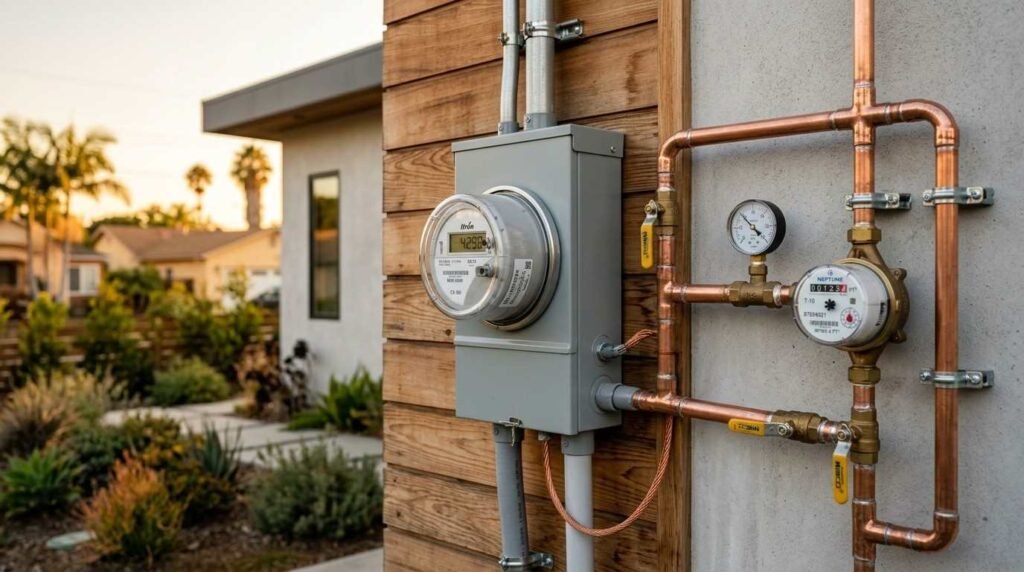
Utility hookups make or break an ADU budget, and separate metering is the decision that shapes everything else. I see homeowners underestimate this step constantly, and it ends up costing more time than the foundation work does. California utility providers treat ADUs differently depending on whether the unit shares a meter with the main house or gets its own connection.
That distinction affects permitting timelines, monthly utility bills, and even resale value down the road. Property owners planning to rent out an ADU need separate metering to bill tenants directly and avoid disputes over shared costs.
I walk through what separate metering actually means, how electrical, water, sewer, and gas hookups differ, and what drives permitting timelines and costs. I close with a practical framework for deciding which setup fits your property and your goals.
What “Separate Metering” Actually Means for an ADU
Separate metering is a utility connection setup that gives an accessory dwelling unit its own dedicated meter, distinct from the primary residence’s meter. It allows the utility provider to measure and bill the ADU’s electricity, water, or gas consumption independently.
I explain this to clients constantly because the term gets used loosely. A separate meter is not the same thing as a separate service line, though the two often go together.
Sub-Metering vs. Fully Independent Utility Service
Sub-metering places a secondary meter downstream of the main house’s existing utility connection. The main meter still records total usage for the property, and the sub-meter isolates the ADU’s portion for billing purposes.
Fully independent service means the ADU gets its own connection straight from the utility company’s infrastructure, bypassing the main house’s line entirely. This costs more upfront because it usually means trenching a new line and coordinating directly with the utility provider.
I recommend sub-metering for owner-occupied properties where the ADU houses a family member. Fully independent service makes more sense when the ADU will be rented long-term to a tenant who is not part of the household.
Electrical Hookup Options for Your ADU
Every ADU needs enough electrical capacity to run appliances, HVAC, and lighting without tripping the main house’s system. California’s electrical code requires this capacity to be verified before final inspection, and skipping that step is one of the most common causes of delayed permits I see.
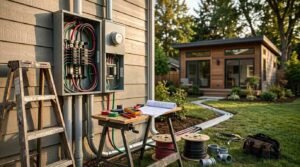
Three electrical hookup paths exist for most ADU projects. The ADU can tap into the existing panel if there’s enough spare capacity, the homeowner can install a sub-panel fed from the main panel, or the property can add an entirely new panel with its own utility meter.
Panel Upgrades, Sub-Panels, and Service Capacity
A panel upgrade increases the main house’s amperage capacity, usually from 100 amps to 200 amps, to accommodate the ADU’s added electrical load. This route works when the existing panel is older or already near capacity before the ADU is even added.
A sub-panel is a secondary distribution panel wired from the main panel, dedicated entirely to the ADU’s circuits. It’s cheaper than a full utility upgrade and works well for most 800 to 1,200 square foot units.
The National Institute of Standards and Technology has documented that residential accessory structures with independent electrical metering show measurably clearer energy consumption data, which helps homeowners track efficiency improvements over time. That data separation becomes valuable when an ADU owner wants to apply for energy rebates tied to the unit specifically.
Service capacity calculations look at the ADU’s square footage, appliance load, and HVAC type to determine whether the existing service can handle the addition. I always push clients to get this calculation done early, because discovering a capacity shortfall mid-construction stalls the whole project.
Water and Sewer Connection Choices
Water and sewer hookups for an ADU follow a different logic than electrical, mostly because water utilities are far less standardized across California jurisdictions. Some municipalities require a separate water meter for any ADU that will be rented, while others allow the unit to share the main house’s connection regardless of occupancy.
I’ve worked in cities where a separate sewer lateral is mandatory for detached ADUs and others where a shared lateral is perfectly acceptable. Local plumbing code and the water district’s own policies decide this, not state law uniformly.
Shared Lines vs. Separate Municipal Connections
Shared lines route the ADU’s water supply and wastewater through the main house’s existing pipes and connection to the municipal system. This keeps costs down significantly because it avoids trenching a new lateral to the street.
Separate municipal connections give the ADU its own water meter and sometimes its own sewer lateral tied directly into the city’s main lines. Property investors planning to rent the ADU separately from the main house often choose this route so tenants receive their own water bill.
Cost differences between the two approaches run substantial. A shared connection might add a few hundred dollars in plumbing work, while a fully separate municipal tie-in can run several thousand dollars once trenching, permitting, and inspection fees stack up.
Gas Metering and Hookup Considerations
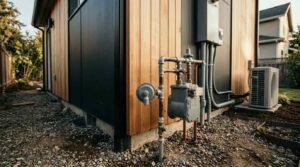
Gas hookups matter most for ADUs with gas ranges, gas water heaters, or gas furnaces. Not every ADU needs gas service at all, and plenty of newer units skip it entirely in favor of all-electric appliances, which simplifies the utility question considerably.
California Energy Commission building energy standards increasingly favor all-electric new construction, and many California jurisdictions now restrict new gas hookups in accessory structures. I bring this up early with every client because it changes the entire mechanical design of the unit.
When a Separate Gas Meter Makes Sense
A separate gas meter makes sense when the ADU will operate as an independent rental unit with its own gas-fired appliances and its own billing relationship with the utility. It also makes sense on larger properties where the main house’s existing gas service doesn’t have spare capacity for an added unit.
I steer most clients away from adding gas service at all when the ADU is a small unit under 800 square feet. Electric heat pump water heaters and induction ranges have gotten efficient enough that skipping gas altogether often saves money on both construction and long-term utility bills.
Permitting, Utility Company Approval, and Cost Factors
Permitting for utility hookups runs on a separate track from the general building permit, and homeowners frequently miss this. The utility company itself has to approve any new meter, service upgrade, or connection point, and that approval process moves at its own pace regardless of how fast the construction crew works.
The California Public Utilities Commission has streamlined some ADU utility connection processes in recent years, but timelines still vary widely by utility provider and region. I tell every client to submit utility applications the same week the building permit gets submitted, not after.
Typical Timeline and Fee Ranges by Utility Type
Electrical service upgrades and new meter installations typically take four to eight weeks from application to utility company approval in most California service territories. Sub-panel installations that don’t require a new meter move faster, often two to four weeks, since they skip the utility company approval step entirely.
Water and sewer connection approvals vary the most by jurisdiction, ranging anywhere from two weeks for a straightforward shared connection to twelve weeks or more for a new municipal tie-in requiring street work. Fee ranges follow a similarly wide spread, from a few hundred dollars for a sub-metering setup to well over ten thousand dollars for a fully independent water and sewer connection requiring trenching and street cuts.
Gas hookup fees, when applicable, tend to fall in the middle of that range, generally a few thousand dollars depending on distance from the existing gas main and whether new piping needs to run under existing hardscape.
Choosing Between Separate and Shared Metering for Your Property
The right choice depends almost entirely on how the ADU will be used. A family member occupying the unit rarely needs separate metering, and the added cost doesn’t buy much practical benefit in that scenario.
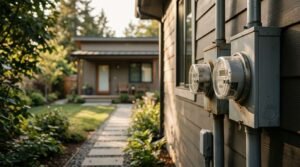
A long-term rental unit is a different story. Separate metering protects both the homeowner and the tenant from billing disputes, and it’s often required by local rental regulations for detached units anyway.
I walk every client through their intended use case before recommending a metering strategy, because the wrong choice here either wastes money on unnecessary infrastructure or creates billing headaches for years afterward.
Questions to Ask Your Builder Before Deciding
Ask your builder whether the property’s existing utility service has spare capacity for the ADU, since that answer determines whether you’re looking at a simple tap-in or a full service upgrade. Ask what your specific utility provider and municipality require for ADU metering, since rules genuinely differ from one jurisdiction to the next.
Ask for a written cost breakdown separating utility company fees from the builder’s own construction costs, because these get bundled together in estimates more often than they should. And ask how long utility approval typically takes in your specific area, since that timeline often becomes the actual critical path for the whole project.
Conclusion
Utility metering shapes an ADU’s cost, timeline, and long-term function more than most homeowners expect going in. Getting electrical, water, sewer, and gas decisions right early prevents delays and billing headaches later.
We help homeowners across California navigate these exact decisions on every ADU project we build. Reach out to Tiny Home Builders California to map out the right utility strategy for your property before you break ground.
Frequently Asked Questions
Does an ADU need its own separate utility meter?
An ADU needs its own separate meter only when local code requires it or when the unit will be rented independently from the main house. Owner-occupied ADUs for family members often share the main meter.
How much does a separate electrical meter cost for an ADU?
A separate electrical meter and service upgrade typically costs between $3,000 and $8,000, depending on distance from the existing panel and utility company fees. Sub-panel installations without a new meter cost considerably less.
Can an ADU share the same water meter as the main house?
Yes, an ADU can share the main house’s water meter in most California jurisdictions unless local code mandates separate metering for rented units. Shared water lines are the more common and less expensive setup.
How long does utility approval take for an ADU?
Utility approval timelines run four to eight weeks for electrical upgrades and two to twelve weeks for water and sewer connections. Submitting utility applications alongside your building permit application keeps this from becoming the project bottleneck.
Do all ADUs need gas hookups?
No, many newer ADUs skip gas service entirely in favor of all-electric appliances, especially units under 800 square feet. California’s building energy standards increasingly favor all-electric construction for new accessory structures.
What’s the difference between sub-metering and a fully independent utility connection?
Sub-metering adds a secondary meter downstream of the main house’s existing connection, while a fully independent connection ties the ADU directly into the utility company’s infrastructure. Fully independent service costs more but gives the ADU complete billing separation.
Should I choose separate metering if I plan to rent out my ADU?
Yes, separate metering is strongly recommended for rental ADUs since it lets tenants get billed directly for their own usage. It also helps avoid disputes over shared utility costs between the homeowner and tenant.


