
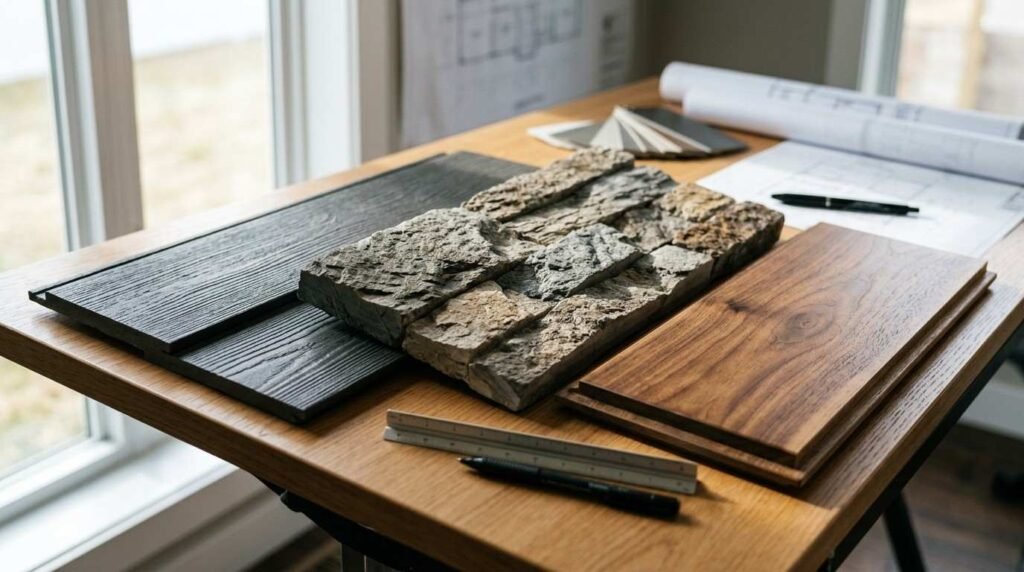
The best building materials for a custom home balance three things at once: how long they last, what they cost over time, and how they look. Concrete foundations, steel or engineered wood framing, fiber cement siding, and metal roofing consistently outperform cheaper alternatives across California’s varied climate zones. I’ve seen homeowners chase the lowest bid only to repair siding or re-roof within a decade.
Material choice determines almost everything about a custom home’s long-term value. It affects energy bills, maintenance costs, resale price, and how the home holds up against California’s heat, coastal humidity, and seismic activity.
This guide covers what actually makes a material high quality, then walks through structural materials like foundations and framing, exterior and climate-facing choices like siding, roofing, and windows, interior materials and insulation performance, and finally cost breakdowns and how to evaluate a builder’s material decisions before you sign anything.
What Makes a Building Material “High Quality” for Custom Homes
Quality in a building material comes down to three measurable factors. I look at durability ratings, cost-per-value over the material’s lifespan, and how much design flexibility it offers.
Durability Ratings and Lifespan Expectations
A durable material is one engineered to resist wear, weather, and structural stress for a defined service life. Fiber cement siding, for instance, is a manufactured material that combines cement, sand, and cellulose fibers to resist rot, fire, and pests better than solid wood.
I always tell clients to ask for expected lifespan numbers, not just warranty length. A 30-year warranty on a material that visibly degrades at year 15 isn’t the same as one engineered to actually last three decades.
Cost-Per-Value vs. Upfront Price
The cheapest material upfront is rarely the cheapest material over 20 years. I calculate cost-per-value by dividing total lifecycle cost, including maintenance and replacement, by expected years of service.
This is where a lot of buyers get burned. They compare quotes on sticker price alone and miss that one option needs repainting every five years while another needs it every fifteen.
Style and Design Flexibility
Material choice shapes what your home can actually look like. Stone veneer opens up a completely different aesthetic than stucco, and steel framing allows for larger open spans than traditional lumber.
I push clients to think about style constraints early, before the framing is locked in. Changing your mind on siding after framing is finished costs real money.
Foundation Materials – Concrete, Rebar, and Soil Considerations
The foundation carries every structural load in the home, so material quality here isn’t optional. Reinforced concrete is a composite construction material made from cement, aggregate, and steel rebar that provides compressive and tensile strength for load-bearing structures.

Poured Concrete vs. Slab-on-Grade Options
Poured concrete foundations with basements work well in cooler, low-water-table regions, but slab-on-grade dominates most of California because of seismic considerations and soil type. I see slab-on-grade chosen on roughly 80% of custom builds I review in this state.
Soil testing determines which foundation type actually makes sense for your lot. Skipping this step is one of the most expensive mistakes a homeowner can make.
Reinforcement Standards and Longevity
Rebar spacing and concrete mix strength directly determine how long a foundation resists cracking. The International Code Council publishes the structural standards most California jurisdictions adopt for residential concrete reinforcement.
I always ask to see the rebar schedule before concrete gets poured. Once it’s covered, you can’t verify it anymore.
Framing Materials – Wood, Steel, and Structural Insulated Panels
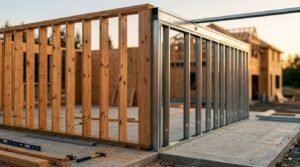
Framing is the skeleton of the home, and the material choice here affects everything from insulation performance to earthquake resilience.
Traditional Lumber Framing
Wood framing remains the most common structural choice in California custom homes because of cost and builder familiarity. Douglas fir and SPF (spruce-pine-fir) lumber grades are graded and stamped to guarantee structural performance.
I still recommend wood framing for most single-family projects. It’s well understood, code-compliant everywhere, and easy for inspectors to verify.
Steel Framing Advantages
Steel framing is a structural system using cold-formed steel studs and tracks that resist warping, rot, and pest damage better than wood. It costs more upfront but doesn’t shrink, twist, or attract termites the way lumber can.
Steel makes the most sense in high-fire-risk zones or for homeowners planning very long ownership timelines. The upfront premium pays off over decades, not years.
SIPs and Engineered Framing Systems
Structural insulated panels sandwich rigid foam insulation between two layers of oriented strand board, creating a framing and insulation system in one step. I’ve watched SIP-framed homes hit R-values that traditional stick framing simply can’t match without extra insulation work.
Exterior Siding Materials – Durability Meets Curb Appeal
Siding takes the brunt of weather exposure, so material choice here shows up directly in maintenance schedules and resale value.
Fiber Cement vs. Wood vs. Vinyl
Fiber cement holds paint longer, resists fire better, and shrugs off pests in ways wood siding can’t. Vinyl costs less upfront but fades and cracks faster in high-UV California climates, and I see it swapped out more often than any other siding type.
Wood siding still wins on pure aesthetic warmth for certain architectural styles. It just demands more upkeep than the alternatives.
Stone and Brick Veneer Applications
Stone and brick veneer add a premium, permanent-feeling exterior without the structural load of full masonry construction. These veneers attach to a standard wood or steel frame, so you get the look without redesigning your entire structural system.
Roofing Materials – Balancing Longevity, Climate, and Cost
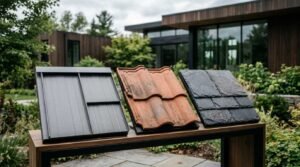
Your roof takes the most direct environmental punishment of any part of the home, so material selection matters enormously.
Asphalt Shingles vs. Metal Roofing
Asphalt shingles remain the most budget-friendly option, typically lasting 20 to 30 years depending on climate exposure. Metal roofing costs more initially but often lasts 40 to 70 years and reflects heat better in hot California regions.
Metal roofing panels are engineered steel or aluminum sheets treated with reflective coatings that reduce attic heat gain and resist fire spread. I recommend metal for any client planning to stay in their home long-term or living in a high-fire-risk area.
Tile and Slate for Long-Term Value
Clay and concrete tile roofing can last 50 years or more and suit Mediterranean and Spanish-style architecture common across California. Slate lasts even longer but carries a much higher material and installation cost, so I only recommend it when the architectural style genuinely calls for it.
Windows and Doors – Energy Efficiency and Material Choice
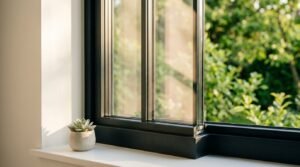
Windows and doors are where a lot of a home’s energy performance either gets locked in or leaks straight out.
Frame Materials Compared
Vinyl window frames cost less and resist moisture well, but they don’t match the strength or aesthetic of fiberglass or aluminum-clad wood frames. Fiberglass frames expand and contract at nearly the same rate as glass, which reduces seal failure over time.
I steer clients toward fiberglass or aluminum-clad wood on south-facing windows specifically, where thermal cycling is most extreme.
Glazing and Insulation Ratings
Double-pane and triple-pane glazing with low-E coatings dramatically cut heat transfer compared to single-pane glass. The U.S. Department of Energy notes that energy-efficient windows can lower energy bills by up to 12% compared to standard double-pane installations.
Interior Structural and Finish Materials
Interior material choices affect comfort, indoor air quality, and how the home feels day to day, even though they’re less visible from the curb.
Drywall, Insulation, and Subfloor Standards
Moisture-resistant drywall in bathrooms and kitchens prevents mold growth in the areas most exposed to humidity. Subfloor material and thickness also determine how much flex and noise transfer happens between floors, something buyers rarely think to ask about.
Flooring Material Comparison
Engineered hardwood handles humidity swings better than solid hardwood while keeping a similar look. Luxury vinyl plank has become popular for its water resistance and lower cost, though it doesn’t carry the same resale value bump as real hardwood in most California markets.
Insulation Materials and Energy Performance
Insulation is invisible once the walls close up, but it’s one of the biggest long-term cost factors in the entire home.
Spray Foam vs. Batt vs. Blown-In
Spray foam insulation seals gaps and air leaks that batt insulation simply can’t reach, particularly around wiring and plumbing penetrations. Blown-in insulation works well for retrofits and attics but doesn’t offer the air-sealing benefit spray foam provides in new construction.
R-Value Standards by California Climate Zone
California’s climate zones each carry different minimum R-value requirements under Title 24 energy code. I always confirm which climate zone a lot falls into before finalizing an insulation plan, since coastal and inland zones just a few miles apart can carry very different requirements.
Cost Breakdown by Material Category
Material costs vary enormously by tier, and understanding where your budget actually goes helps you make smarter tradeoffs.
Budget, Mid-Range, and Premium Material Tiers
| Category | Budget Tier | Mid-Range Tier | Premium Tier |
| Siding | Vinyl | Fiber cement | Stone veneer |
| Roofing | Asphalt shingle | Metal panel | Clay tile/slate |
| Framing | Standard lumber | Engineered lumber | Steel/SIPs |
| Windows | Vinyl frame | Fiberglass frame | Aluminum-clad wood |
| Flooring | Laminate | Engineered hardwood | Solid hardwood |
I walk clients through this table early. It sets realistic expectations before design decisions start driving the budget in directions nobody planned for.
How to Evaluate a Builder’s Material Choices Before Signing

Material quality is only as good as the builder actually installing it. This is where a lot of buyers get misled by vague language in a bid.
Questions to Ask About Material Sourcing
I recommend asking builders exactly which brand and product line they specify for each major material category, not just the generic category name. “Fiber cement siding” means nothing without knowing whether it’s a premium manufacturer or a bottom-tier import.
Ask for the specific product spec sheet, not a verbal assurance. A builder confident in their material choices hands this over without hesitation.
Red Flags in Material Substitutions
Watch for contracts that allow “or equivalent” substitutions without your written approval. That clause lets a builder swap your specified fiber cement siding for vinyl mid-project without telling you.
I also flag any bid that comes in dramatically lower than competitors on the same material specs. It usually means something gets substituted later.
Conclusion
Material quality drives durability, energy performance, and long-term value across every part of a custom home. From foundation to roofing, the choices you lock in early shape decades of maintenance costs and comfort.
We build every project on transparent material specifications, not vague promises. Contact Tiny Home Builders California to discuss the exact materials that fit your budget, climate zone, and design vision.
Frequently Asked Questions
What is the most durable siding material for California homes?
Fiber cement siding offers the strongest combination of fire resistance, pest resistance, and paint longevity for most California climates. It typically outlasts vinyl by 15 to 20 years with proper maintenance.
Is steel framing worth the extra cost over wood?
Steel framing costs more upfront but resists warping, rot, and pests better than lumber over a home’s lifespan. It makes the most sense for long-term ownership or high-fire-risk zones.
How long does a metal roof last compared to asphalt shingles?
Metal roofing typically lasts 40 to 70 years, while asphalt shingles average 20 to 30 years depending on climate exposure. Metal also reflects more heat, which helps in hotter California regions.
What R-value do I need for insulation in California?
Required R-values depend on your specific Title 24 climate zone, since requirements vary significantly across the state. A builder should confirm your exact zone before finalizing an insulation plan.
Does spray foam insulation cost more than batt insulation?
Spray foam costs more upfront than batt insulation but seals air leaks that batt simply can’t reach. The energy savings over time often offset the higher installation cost.
Why do some builders substitute materials without telling me?
Contracts with vague “or equivalent” substitution clauses let builders swap specified materials for cheaper options without written approval. Always require substitutions to get your sign-off in writing.
Is engineered hardwood a good alternative to solid hardwood flooring?
Engineered hardwood handles humidity and temperature swings better than solid hardwood while keeping a similar appearance. It works especially well in coastal California homes with more moisture variation.
What’s the biggest cost difference between budget and premium siding?
Vinyl siding sits at the budget end while stone veneer sits at the premium end, with fiber cement as a durable mid-range option. The gap reflects both material cost and installation labor differences.


