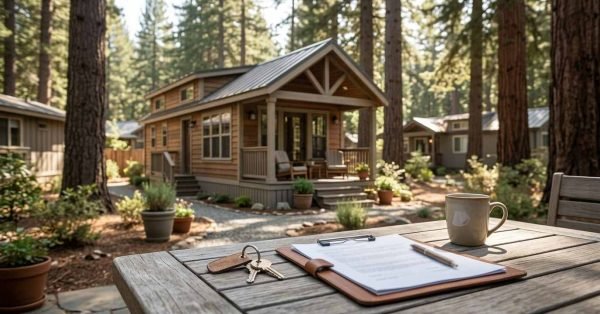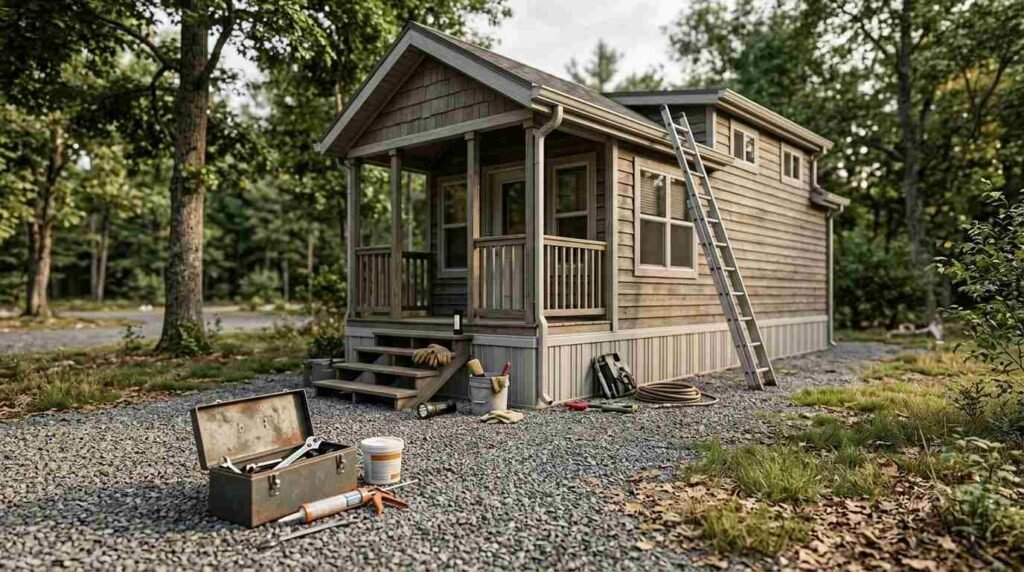
Park model homes require a different maintenance rhythm than site-built houses because they sit on a steel chassis, use lighter-weight materials, and face more direct exposure to weather on all sides. I’ve walked enough of these homes with owners to know that the ones holding up best after ten or fifteen years aren’t the most expensive ones. They’re the ones that got consistent, informed upkeep from day one.
Skipping seasonal checks catches up with you fast in a park model. Small leaks and loose skirting turn into frame rot and foundation shifting within a single wet winter.
This guide covers how park model construction shapes maintenance needs, the seasonal tasks that protect your roof, plumbing, and foundation, how to handle electrical, HVAC, and interior upkeep, and when a repair calls for a professional rather than a weekend project. I’ll also walk through realistic costs and what protects resale value down the road.
What Is a Park Model Home and How Is It Built?
A park model home is a factory-built dwelling constructed on a single steel chassis, typically under 400 square feet, designed to meet ANSI A119.5 standards rather than full residential building codes. That distinction matters more than most new owners realize.
Site-built homes rest on poured foundations with dimensional lumber framing throughout. Park models use lighter steel-and-wood hybrid framing, and the chassis stays part of the structure permanently, even after the home is set and skirted.
This construction approach is efficient and durable when installed correctly, but it also means certain components the chassis, the belly wrap, the roof seams need more frequent attention than they would on a conventional house. The materials are built to last, but they’re not forgiving of neglect the way heavier construction sometimes is.
I’ve seen owners assume their park model behaves exactly like a stick-built house once it’s set on a lot. It doesn’t. The compact structure concentrates stress at specific points: roof penetrations, chassis welds, and skirting seams. Understanding those pressure points early shapes everything else in this guide.
Creating a Seasonal Maintenance Schedule
A seasonal maintenance schedule for a park model home should include roof and gutter checks in spring, ventilation and pest inspection in summer, seal and weatherstripping review in fall, and pipe insulation before winter. Splitting tasks by season keeps the workload manageable and catches problems before they compound.
Spring and summer are when you inspect for winter damage and prepare the home for heat. I walk the roofline for lifted shingles or cracked sealant, check gutters for debris buildup, and look under the skirting for signs of moisture that pooled over winter.
Summer heat also stresses seals around windows and doors, so this is the window to catch gaps before they let in dust, pests, or humidity.
Fall and winter preparation is where most costly repairs get prevented. I recommend insulating exposed plumbing, testing the furnace or heat pump before the first cold snap, and resealing any skirting gaps that opened up over the summer.
Winterizing a manufactured or park model home before the first freeze protects the plumbing system more than any single maintenance task on this list.
Roof Maintenance and Leak Prevention
Roof leaks are the most common and most expensive structural problem in park model homes because the roofline uses shorter seams and lighter materials than a standard residential roof. Catching a small leak early is the difference between a $200 repair and a $15,000 interior rebuild.
Most park model roofs use either rubber membrane (EPDM), metal panel, or asphalt shingle systems, depending on the manufacturer and home age. Each material ages differently, and knowing which one covers your roof changes how often you should inspect it and what sealants are compatible.
Rubber membrane roofs need resealing at seams every few years. Metal roofing holds up longer but shows fastener wear sooner. Shingled roofs on park models wear faster than on full-size homes because the roof pitch is often lower.
Watch for granule loss in gutters, soft spots when you walk the roof, water stains on interior ceilings, and any separation at the roof-to-wall transition. These signs almost always point to moisture intrusion at the roofline before it becomes visible inside the home.
Exterior Siding and Skirting Care
Skirting and siding on a park model home protect the belly wrap, plumbing, and chassis from moisture, pests, and temperature swings, which makes their condition directly tied to the home’s structural lifespan. Gaps or damage here rarely stay cosmetic for long.
Vinyl, metal, and permanent block skirting all fail differently. Vinyl skirting cracks in extreme heat. Metal skirting can rust where it contacts damp ground. Block skirting needs proper drainage behind it or moisture gets trapped against the chassis.
I check the skirting seal every spring and after any major storm, since wind-driven rain finds gaps faster than people expect. A gap smaller than a finger width is enough to let moisture and small pests reach the underside of the home.
Foundation, Chassis, and Leveling Maintenance
A park model home needs releveling when doors stick, windows no longer close flush, or visible gaps appear between interior walls and trim. Leveling issues start at the chassis and foundation piers, not inside the living space, even though that’s where symptoms show up first.
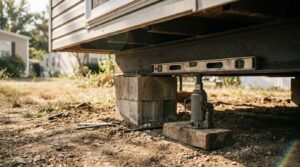
The chassis beneath a park model carries the full structural load, and it sits on piers or blocks rather than a continuous foundation. Soil settling, seasonal ground movement, and poor initial setup all cause the home to shift out of level over time.
An out-of-level home stresses the roof seams, door frames, and plumbing connections simultaneously, which is why leveling problems often show up as several small issues at once rather than one obvious sign. I recommend checking level annually with a basic level tool, more often in California’s clay-heavy soil regions where ground movement is common.
Catching a leveling issue early usually means adjusting a few piers. Letting it go for years can mean structural frame repair that costs many times more.
Plumbing System Maintenance and Winterization
Frozen pipes are the single most preventable and most common plumbing failure in park model homes, because the plumbing runs through the belly cavity with less insulation protection than a site-built home’s crawlspace. A burst pipe from a hard freeze can flood the entire interior within hours.
Insulating exposed plumbing lines, sealing skirting gaps near pipe penetrations, and keeping a trickle of water running during extreme cold snaps all reduce freeze risk significantly. Heat tape on exposed sections adds another layer of protection in colder California regions like the mountains or high desert.
Water heaters in park models are often tankless or compact tank units, and both need annual flushing to clear sediment buildup. Sediment accumulation reduces efficiency and shortens the unit’s working life substantially.
I check supply line connections and shutoff valves twice a year, since vibration during transport or settling can loosen fittings that seemed fine when the home was installed.
Electrical System Care and Safety Checks
Electrical issues in park model homes most often trace back to the power pedestal connection, breaker panel, or wiring runs disturbed during transport and setup. A flickering light or warm outlet cover is never something to wait on.
I recommend testing GFCI outlets monthly, since these protect against shock in bathrooms and kitchens and can fail silently. Breaker panels should get a visual inspection annually, checking for discoloration or a burning smell that signals overheating connections.
Warning signs worth acting on immediately include tripped breakers that reset but trip again quickly, outlets that feel warm to the touch, or any visible scorching near switches. These point to loose connections or overloaded circuits rather than simple wear.
HVAC and Climate Control Maintenance
HVAC systems in park model homes work harder per square foot than in larger houses because compact living spaces cycle heating and cooling more frequently throughout the day. Regular filter changes and annual servicing keep the system from working against itself.
I recommend replacing filters every one to three months depending on use, and scheduling a professional tune-up each spring before cooling season and each fall before heating season. Mini-split systems, common in many park models, need coil cleaning that homeowners often skip entirely.
A system that short-cycles, runs constantly without reaching the set temperature, or makes new noises usually signals a refrigerant or airflow problem rather than something to ignore until it fails completely.
Insulation and Energy Efficiency Upkeep
Insulation failure in a park model home usually shows up as uneven interior temperatures, rising energy bills, or condensation on interior walls during cold months. Because the walls and belly cavity are thinner than standard residential construction, insulation gaps have an outsized effect on comfort.
Common failure points include compressed insulation in the belly wrap from moisture exposure, gaps around plumbing and electrical penetrations, and settling in wall cavities over time. I walk owners through checking for cold spots along exterior walls each winter, since that’s the simplest diagnostic available without opening up the walls.
Addressing insulation early protects both comfort and the home’s structural materials, since trapped moisture behind damaged insulation leads to wood rot over several seasons.
Window, Door, and Seal Maintenance
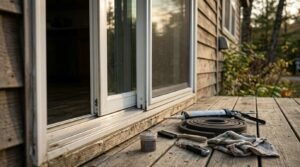
Window and door seals in a park model home wear out faster than in site-built construction because the lighter frame materials expand and contract more with temperature swings. A failed seal lets in drafts, moisture, and pests simultaneously.
I check weatherstripping and caulking every spring and fall, running a hand along each frame to feel for drafts. Caulk that’s cracked, pulled away, or discolored needs replacing before the next temperature swing makes the gap worse.
Sliding windows and doors also need track cleaning and lubrication, since debris buildup causes misalignment that stresses the seal even when the weatherstripping itself is still intact.
Interior Maintenance (Flooring, Walls, Cabinetry)
Interior finishes in a park model home respond quickly to humidity swings because the compact interior volume means moisture levels change faster than in a larger house. Flooring, cabinetry, and wall seams all show early warning signs before bigger problems develop.
Laminate and vinyl flooring can lift or warp when humidity isn’t controlled, while real wood cabinetry swells and sticks in damp conditions. I recommend a dehumidifier in coastal or high-humidity areas of California, since it protects multiple interior surfaces at once rather than treating each symptom separately.
Watch for cabinet doors that stop closing flush, flooring seams that separate, or trim pulling away from walls. These are humidity symptoms first and structural symptoms only if ignored for an extended period.
Pest Prevention and Moisture Control
Pests enter park model homes most often through skirting gaps, utility penetrations, and roof vent openings, since the compact structure has fewer barriers than a full foundation home. Moisture control and pest prevention go hand in hand because pests are drawn to the same damp areas that damage building materials.
I recommend sealing any gap larger than a quarter inch around pipes, vents, and skirting seams, since rodents can access surprisingly small openings. Keeping vegetation trimmed back from the skirting also removes a common pest bridge into the belly cavity.
Regular moisture checks under the skirting catch both problems at once, since standing water or damp insulation attracts pests while also threatening the chassis and subfloor.
Identifying Common Structural Repair Needs
Structural repair needs in a park model home typically involve the wall framing, roof trusses, or chassis welds, and they’re distinguished from cosmetic damage by whether the issue affects the home’s load-bearing capacity. Knowing the difference determines whether a repair is urgent or routine.
Wall and frame repairs become necessary when moisture has compromised the wood framing behind siding or interior walls. Soft spots, visible warping, or a spongy feel when pressing on a wall surface all indicate framing damage that’s progressed past a surface-level fix.
A repair crosses into structural territory when it affects the home’s ability to bear weight evenly, whether that’s a cracked chassis weld, a sagging roof truss, or framing that’s lost integrity from sustained water exposure. At that point, working with a licensed structural contractor isn’t optional, since DIY fixes on load-bearing elements can create liability and safety risks.
DIY Repairs vs. When to Hire a Professional
Caulking, filter changes, minor seal replacement, and cosmetic touch-ups are reasonable DIY tasks for most park model owners, while electrical work, structural repairs, and major plumbing fixes call for a licensed professional. The line comes down to whether a mistake could affect safety or structural integrity.
I always tell owners that confidence with tools doesn’t substitute for code knowledge. California has specific permitting requirements for manufactured and park model housing, and electrical or structural work done without proper permits can complicate insurance claims and resale down the line.
Repairs that require licensed contractors include anything touching the main electrical panel, chassis or frame welding, gas line work, and structural wall or roof truss repairs. These aren’t areas where trial and error makes sense.
Estimated Maintenance and Repair Costs
Annual maintenance for a park model home typically runs $800 to $2,500, depending on climate, home age, and how proactively the owner handles seasonal upkeep. Repair costs vary widely based on what’s failed and how long it went unaddressed.
Budgeting for routine upkeep means setting aside funds for HVAC servicing, roof sealant, seal replacement, and pest prevention each year rather than waiting for a single large expense. Owners who budget seasonally tend to spend less overall than those who defer maintenance until something fails.
Major repairs like roof replacement, chassis leveling, or structural frame work can range from $3,000 to over $20,000, according to the RV Industry Association’s housing cost data, depending on the scope and extent of damage. Catching problems early through the maintenance schedule outlined above keeps costs on the lower end of that range.
Long-Term Care for Resale and Lasting Value
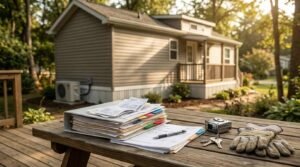
A park model home with documented, consistent maintenance history sells faster and at a higher price than a comparable home without records, because buyers and lenders both treat maintenance history as a proxy for hidden damage risk. Keeping records isn’t just good practice; it’s a financial decision.
I recommend keeping receipts and dates for every service: roof inspections, HVAC tune-ups, releveling, and pest treatments. A folder of consistent records answers a buyer’s biggest unspoken question before they even ask it.
Homes that skip maintenance accumulate deferred problems that eventually surface during a pre-sale inspection, often at the worst possible time in a transaction. Staying ahead of maintenance protects both comfort now and equity later.
Conclusion
Park model homes reward consistent seasonal care across roofing, plumbing, leveling, and seals, since each system depends on the others staying protected.
Working through this guide’s maintenance rhythm builds toward lasting comfort, lower repair costs, and stronger resale value over time.
We built our reputation on homes made to last, and Tiny Home Builders California is here to help you protect that investment for years to come.
Frequently Asked Questions
How often should a park model home be inspected for maintenance?
A park model home should be inspected seasonally, at minimum four times per year. Spring and fall checks catch the most weather-related wear before it becomes costly.
What is the biggest maintenance mistake park model owners make?
The biggest mistake is treating the home like a site-built house and skipping seasonal skirting and roof checks. This neglect lets small leaks become structural problems.
How much does it cost to relevel a park model home?
Releveling typically costs $300 to $1,500 depending on the extent of pier adjustment needed. Costs rise significantly if chassis damage has developed from prolonged unevenness.
Can I winterize my park model home myself?
Yes, basic winterization like pipe insulation and skirting seal checks are manageable DIY tasks. Complex heat tape installation or plumbing drainage may still warrant professional help.
How long do park model home roofs typically last?
Most park model roofs last 15 to 25 years depending on material and maintenance consistency. Rubber membrane roofs need more frequent sealant maintenance than metal roofing.
What are signs my park model home needs professional repair?
Warm outlets, sagging rooflines, sticking doors, and persistent moisture are signs requiring a professional. These symptoms often indicate issues beyond surface-level fixes.
Does regular maintenance affect park model home resale value?
Yes, documented maintenance history increases buyer confidence and resale value significantly. Homes without maintenance records often face lower offers or financing delays.