
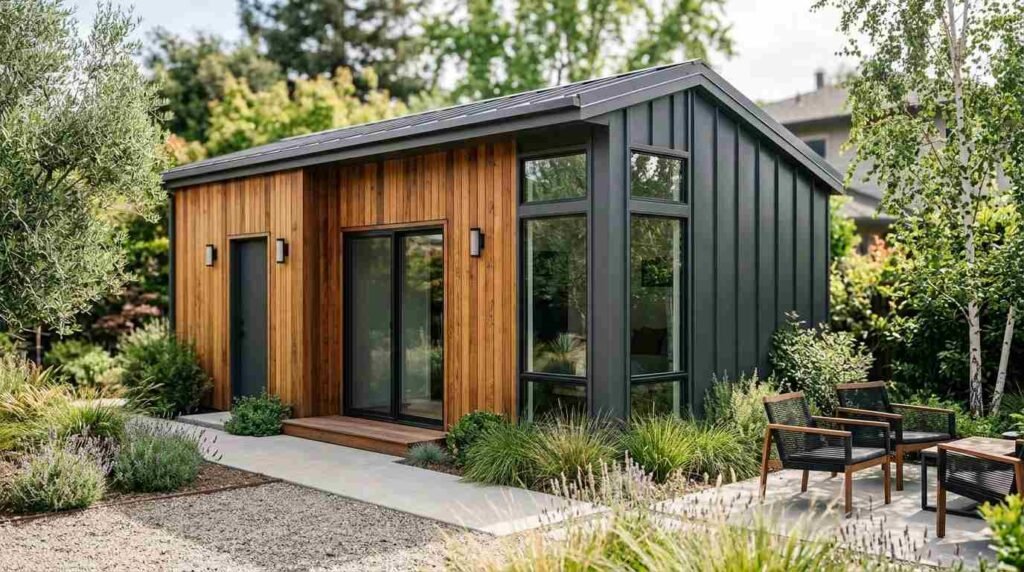
Fiber cement siding lasts 30 to 50 years and resists fire, rot, and pests better than most alternatives on the market. That single fact changes how I approach every ADU siding conversation I have with homeowners. The material you choose shapes your maintenance bill for decades.
California’s climate zones swing from coastal fog to inland heat to wildfire-prone foothills. Your siding has to survive all of it while still looking good. Get this decision wrong, and you’re repainting, patching, or replacing within a decade.
I cover the major material types available for ADU exteriors, how each one performs against California’s climate and fire conditions, the codes and HOA rules that constrain your choices, and how to compare everything by cost and lifespan so you can pick with confidence.
What Siding and Cladding Mean for an ADU’s Performance and Value
Siding is the exterior wall covering that protects your ADU’s structure from weather, moisture, and pests. Cladding is the broader term, covering siding plus stone veneer, metal panels, and other non-traditional exterior finishes.
I think of siding as the first line of defense for the whole building. It keeps water out, holds insulation in place, and takes the brunt of sun, wind, and rain every single day.
The material you pick affects three things at once: how long the ADU lasts, how much energy it wastes, and what it’s worth when you sell. A cheap choice up front often costs more over a 20-year span than a premium one installed correctly.
Why Siding Choice Affects Durability, Energy Efficiency, and Resale Value
I’ve seen ADUs with vinyl siding warp within five years in high-heat inland valleys. And I’ve seen fiber cement hold its shape and color for two decades in the same conditions.
Durability isn’t just about looks. Poor siding lets moisture behind the wall assembly, which leads to mold, rot, and structural damage that costs far more to fix than the siding itself.
Energy efficiency ties directly into this too. Siding with a continuous insulation layer or reflective properties cuts cooling costs in hot California summers, and that shows up on every utility bill going forward.
Wood Siding Options for ADUs
Wood siding brings natural warmth and texture that a lot of homeowners want for a cottage-style or craftsman ADU. It’s one of the oldest cladding materials and still holds real appeal today.
But wood demands more upkeep than almost any other option. Regular sealing, staining, or painting keeps it protected from moisture and pests.
I tell clients straight up: wood is a commitment, not a set-it-and-forget-it choice.
Cedar, Redwood, and Pine Cost, Look, and Maintenance
Cedar and redwood both carry natural oils that resist decay and insects without heavy chemical treatment. Pine costs less upfront but needs more frequent maintenance to match that same resistance.
Cedar runs higher on material cost but rewards you with a 20- to 30-year lifespan when maintained properly. Redwood performs similarly and holds a rich color that many homeowners prefer for a premium look.
Pine works fine on a tighter budget, but expect to repaint or reseal every three to five years to keep moisture out.
Engineered Wood Siding (LP SmartSide and Similar Products)
Engineered wood siding uses treated wood strands bonded with resin, giving you the wood look with better resistance to moisture and insects. LP SmartSide is a well-known example built specifically to close the durability gap that plain wood struggles with.
I like recommending engineered wood to clients who want a natural look without the constant maintenance cycle. It typically carries a 30-year warranty from manufacturers, which tells you something about how confident they are in its performance.
Fiber Cement Siding for ADUs
Fiber cement siding is a composite material made from cement, sand, and cellulose fibers, engineered to resist fire, rot, insects, and warping. James Hardie is the most recognized manufacturer in this category.
I recommend fiber cement more than any other siding material for California ADUs. It handles temperature swings, resists cracking, and holds paint for 15 years or longer without fading badly.
The upfront cost sits higher than vinyl, but the 30- to50-yearr lifespan makes the math work in your favor over time.
Why Fiber Cement Is a Popular Choice for California ADUs
Fire resistance is the big one here. Fiber cement carries a Class A fire rating, which matters enormously in wildfire-prone regions across the state.
It also stands up to moisture without warping or rotting, which protects against the coastal humidity and inland heat cycles California throws at exterior materials. That combination of fire safety and weather resistance is hard to beat.
Vinyl Siding Options and Limitations
Vinyl siding is a plastic-based exterior cladding valued for its low upfront cost and minimal maintenance requirements. It never needs painting and cleans easily with a garden hose.
Cost is vinyl’s biggest selling point, running noticeably lower than fiber cement or wood per square foot. For budget-conscious ADU builds, that difference adds up fast.
But vinyl has real limits in extreme heat, where it can warp, sag, or crack under direct sun exposure over time.
Where Vinyl Makes Sense and Where It Doesn’t
Vinyl works well in coastal and moderate-climate areas of California where temperature swings stay mild. I’ve seen it perform reliably for 20-plus years in those conditions without major issues.
Inland valleys and desert regions push vinyl past its comfort zone. Extended high heat causes warping, and vinyl carries a lower fire rating that matters in wildfire zones.
Metal Siding and Cladding (Steel, Aluminum, Corrugated Panels)
Metal cladding uses steel, aluminum, or corrugated panels to create a modern, industrial exterior finish that’s gaining popularity on contemporary ADU designs. It resists fire, pests, and rot better than almost any other material category.
Steel panels typically outlast aluminum, running 40 to 60 years with proper coating and maintenance. Aluminum costs less but dents more easily and needs recoating sooner to prevent corrosion.
Metal isn’t for every aesthetic, but for homeowners chasing a modern look with serious longevity, it delivers.
Modern Metal Cladding for Contemporary ADU Design
I see more clients requesting corrugated metal panels paired with wood accents for a modern farmhouse or industrial look. The contrast reads well and photographs beautifully for resale listings.
Metal’s Class A fire rating also makes it a strong option in wildfire-prone foothill communities where insurance and code requirements push homeowners toward non-combustible exteriors.
Stucco Cladding for ADUs
Stucco is a cement-based plaster applied over a wire lath and weather-resistant barrier, creating a seamless, textured exterior finish. It’s one of the most common cladding choices across California for good reason.
Stucco handles heat exceptionally well and gives you a fire-resistant, low-maintenance surface once properly cured. It also matches the architectural style of a huge share of existing California homes, which helps an ADU blend into its surroundings.
Traditional vs. Synthetic Stucco Systems
Traditional stucco uses a three-coat cement plaster process applied directly over the wall assembly. It’s durable and time-tested, but installation takes longer and depends heavily on the applicator’s skill.
Synthetic stucco, also called EIFS (Exterior Insulation and Finish System), adds a foam insulation layer beneath the finish coat. That improves energy efficiency but requires careful installation to prevent moisture trapping behind the wall.
Natural and Manufactured Stone Veneer Accents
Stone veneer adds texture and visual weight to an ADU exterior, typically used as an accent on lower walls, entryways, or foundation lines rather than covering the whole structure. Natural stone costs significantly more than manufactured versions.
Manufactured stone veneer replicates the look of natural stone using molded concrete, cutting material and installation costs substantially. It performs nearly as well for most residential applications and holds up fine against California weather conditions.
I recommend stone veneer as an accent rather than full coverage for most ADU budgets. It elevates curb appeal without the cost of cladding an entire structure in real stone.
Comparing Siding Materials by Cost, Lifespan, and Climate Performance
| Material | Cost per Sq Ft | Lifespan | Fire Rating | Best Climate Fit |
| Vinyl | 3–8 | 20–30 years | Class B/C | Coastal, moderate |
| Wood (cedar/redwood) | 6–12 | 20–30 years | Class C (untreated) | Moderate, low fire risk |
| Engineered wood | 5–10 | 30 years | Class A (treated) | Most zones |
| Fiber cement | 6–13 | 30–50 years | Class A | All California zones |
| Metal | 7–15 | 40–60 years | Class A | Inland, wildfire zones |
| Stucco | 6–9 | 25–50 years | Class A | Inland, hot climates |
| Stone veneer (accent) | 10–30 | 50+ years | Class A | All zones (as accent) |
This table gives you a starting point, not a final answer. Local labor rates, wall complexity, and installer experience all shift these numbers.
California Climate Zones and Material Suitability
Coastal zones deal with salt air and moisture, which favors fiber cement, stucco, and treated wood over untreated materials that corrode or rot faster. Inland valleys hit extreme heat, where vinyl struggles and metal, stucco, and fiber cement perform best.
Foothill and mountain regions carry wildfire risk that pushes most homeowners toward Class A fire-rated materials regardless of budget preference. That usually means fiber cement, stucco, or metal over vinyl or untreated wood.
Building Codes, Fire Ratings, and HOA Considerations for ADU Siding
California’s building code sets minimum requirements for exterior wall coverings, and local jurisdictions often add stricter rules on top of the state baseline. Always confirm requirements with your local building department before finalizing material selection.
HOAs frequently restrict siding colors, materials, and styles to maintain neighborhood consistency. I’ve seen homeowners fall in love with a material only to find their HOA doesn’t allow it, so checking this early saves a lot of frustration later.
Wildfire-Prone Areas and WUI (Wildland-Urban Interface) Requirements
Properties in designated Wildland-Urban Interface zones face stricter material requirements under California’s Chapter 7A building code, which mandates ignition-resistant construction for exterior walls. This typically rules out vinyl and untreated wood in favor of fiber cement, stucco, or metal.
I always recommend confirming your parcel’s fire hazard severity zone before committing to a siding material. That single lookup can eliminate half your options before you even start comparing costs.
How to Choose the Right Siding and Cladding for Your ADU
Start with your climate zone and fire risk designation, since those two factors eliminate unsuitable materials fast. From there, weigh upfront cost against long-term maintenance and lifespan.
I always tell homeowners to think in decades, not just the initial invoice. A material that costs 30% more but lasts twice as long almost always wins financially over a 20-year hold.
Match the siding to your ADU’s architectural style too. A modern metal panel looks out of place on a craftsman-style main house, and mismatched exteriors hurt resale appeal more than people expect.
Questions to Ask Your Builder Before Choosing a Siding Material
Ask your builder directly about warranty terms, expected lifespan in your specific climate zone, and whether the material meets your local fire hazard requirements. A builder who can’t answer these clearly is a warning sign.
Also ask about installation experience with the specific material. Fiber cement and stucco both demand skilled installation, and poor workmanship undermines even the best material choice.
Conclusion
Siding shapes how long your ADU lasts, what it costs to maintain, and what it’s worth at resale. Fiber cement, stucco, and metal consistently deliver the best balance of durability and fire resistance across California’s varied climate zones.
Your specific location, budget, and architectural style all factor into the right choice. No single material wins every scenario.
We help homeowners across California navigate these decisions every day. Contact Tiny Home Builders California to talk through the best siding option for your ADU project.
Frequently Asked Questions
What is the most durable siding option for an ADU?
Fiber cement offers the best combination of durability and fire resistance, lasting 30 to 50 years with minimal maintenance. It handles California’s varied climate conditions better than vinyl or untreated wood.
Is vinyl siding a good choice for California ADUs?
Vinyl works well in coastal and moderate climates but struggles with warping in extreme inland heat. It also carries a lower fire rating, which limits its use in wildfire-prone zones.
Does ADU siding need to meet special fire codes in California?
Properties in Wildland-Urban Interface zones must use ignition-resistant materials under Chapter 7A of the state building code. Fiber cement, stucco, and metal typically meet these requirements, while vinyl and untreated wood do not.
How much does fiber cement siding cost compared to vinyl?
Fiber cement runs $6 to $13 per square foot installed, while vinyl typically costs $3 to $8 per square foot. The higher upfront cost of fiber cement often pays off through its longer 30- to 50-year lifespan.
Can I use stone veneer on my entire ADU exterior?
Stone veneer is typically used as an accent rather than full coverage due to its higher material and installation cost. Most homeowners pair it with fiber cement, stucco, or wood siding for the majority of the exterior.
Do HOAs restrict what siding materials I can use on an ADU?
Many HOAs set specific rules on siding materials, colors, and styles to maintain neighborhood consistency. Check your HOA guidelines before finalizing a siding choice to avoid costly changes later.
How do I know which siding material fits my climate zone?
Check your property’s fire hazard severity zone and general climate conditions coastal, inland, or foothill before narrowing your options. Fiber cement, stucco, and metal perform reliably across most California climate zones.


