
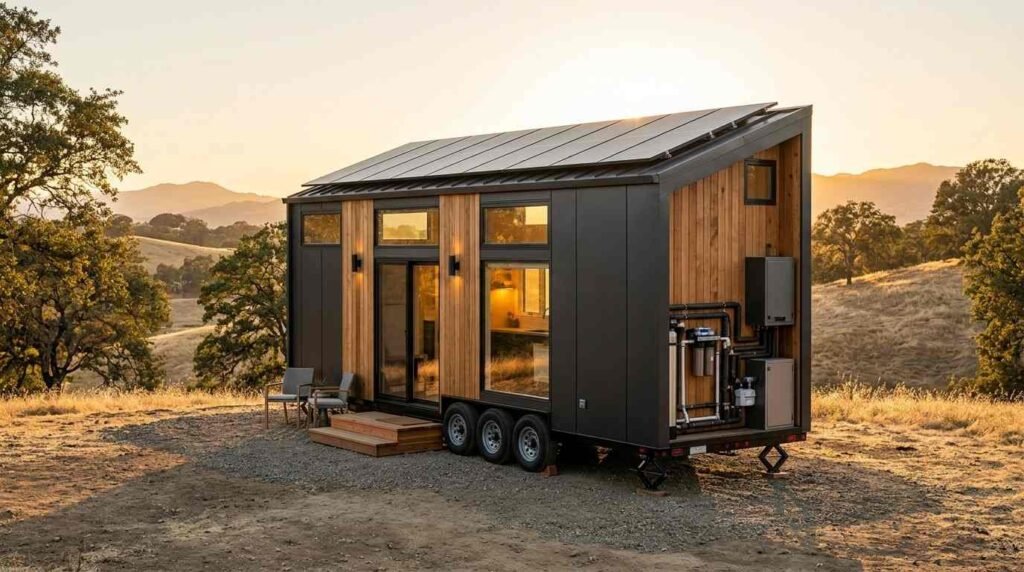
An off-grid tiny house on wheels runs on three core systems working together: solar power for electricity, a self-contained water supply, and a waste management setup that doesn’t rely on municipal hookups. I’ve walked through dozens of these builds, and the ones that actually work long-term get all three systems sized correctly from day one.
Most people planning a tiny home focus on the build itself and treat off-grid systems as an afterthought. That’s backwards. Power, water, and waste decisions shape the layout, weight distribution, and daily livability of the entire home.
In this guide, I cover the power systems that keep your tiny home running, the water and waste setups that make daily life work without hookups, backup power and climate factors that affect performance year-round, and the legal groundwork you need before you park anywhere in California.
What Makes a Tiny House on Wheels Truly Off-Grid
A tiny house on wheels is a small, mobile dwelling built on a trailer chassis that functions as a full-time or part-time residence. Off-grid means the home generates its own power, stores its own water, and manages its own waste without connecting to public utility lines.
I get asked constantly whether “off-grid” and “mobile” mean the same thing. They don’t. A tiny home can sit on wheels and still plug into shore power at an RV park every night.
True off-grid capability means the home can function indefinitely without outside utility input. That’s a design decision, not a location.
Off-Grid vs. Grid-Tied Tiny Homes: The Key Differences
Grid-tied tiny homes plug into standard electrical, water, and sewer connections, just like a stationary house. Off-grid tiny homes generate their own power through solar, store their own water in onboard tanks, and process waste through composting or self-contained systems.
The difference shows up in cost and complexity. A grid-tied setup is simpler and cheaper upfront, but it chains you to developed land or RV infrastructure.
I always tell clients that off-grid systems cost more initially but buy you freedom. You can park on raw land, move seasonally, or live somewhere with no utility access at all.
Sizing Your Off-Grid Power Needs Before You Build
Every off-grid power system starts with one question: how much electricity does this home actually need per day? Get this number wrong and you’ll either overspend on unused capacity or run out of power constantly.
I walk clients through a full appliance inventory before touching solar panel specs. Refrigerators, water pumps, lighting, and any cooking equipment all draw power differently, and stacking those loads gives you a realistic daily number.
Most tiny homes land somewhere between 2 and 5 kilowatt-hours per day depending on appliance choices and how often the home is occupied.
Calculating Daily Energy Consumption for a Tiny Home
Daily energy consumption is the total electricity a home uses across 24 hours, measured in kilowatt-hours. You calculate it by listing every electrical device, multiplying its wattage by daily hours of use, then adding everything together.
A refrigerator running constantly might pull 1-2 kWh per day on its own. Add lighting, a water pump, and a laptop charger, and you’re looking at a modest but real daily draw.
I recommend padding this number by 20% for unexpected use and seasonal variation. Underestimating power needs is the most common mistake I see in first-time off-grid builds.
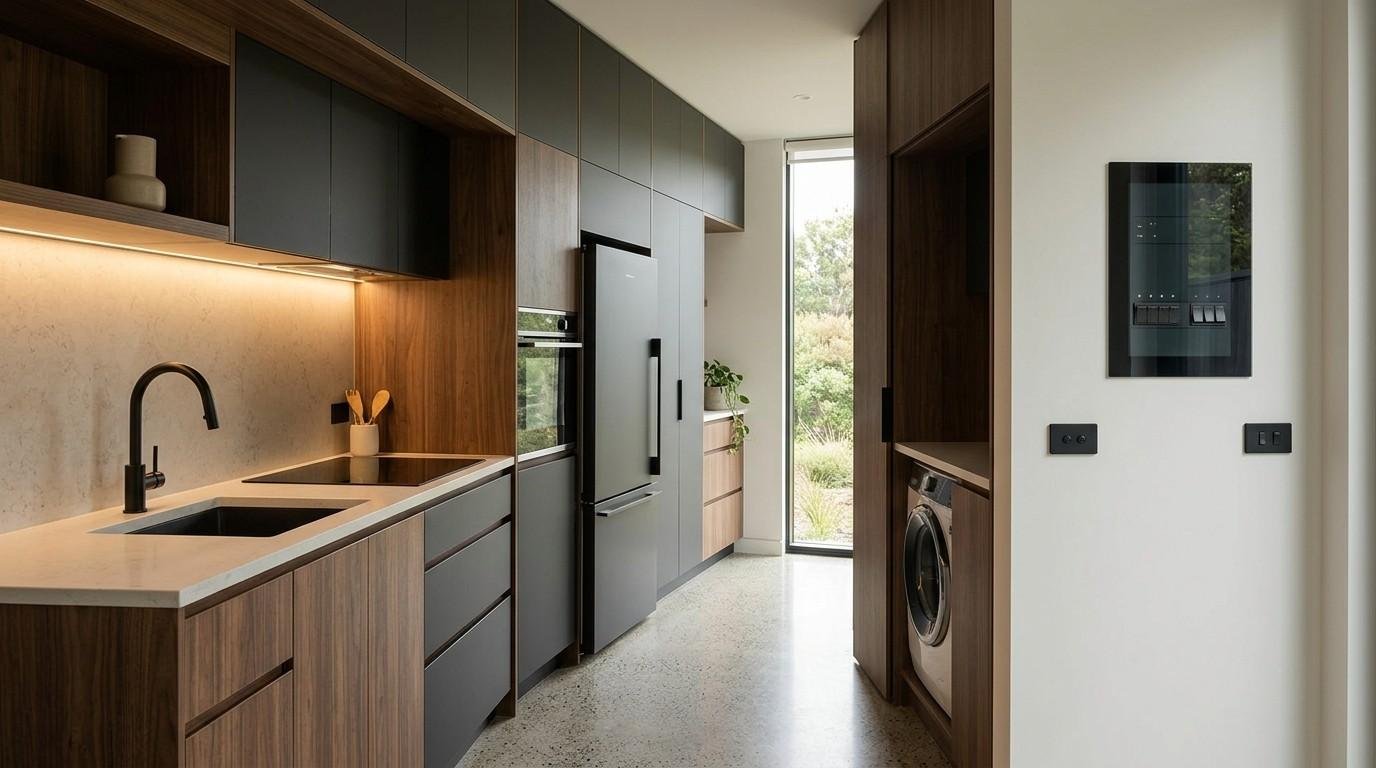
Solar Panel Systems for Tiny Houses on Wheels
Solar panels convert sunlight into electricity that charges your battery bank, and they’re the primary power source for almost every off-grid tiny home. Panel capacity gets measured in watts, and most tiny homes run somewhere between 400 and 800 watts of total panel capacity.
Roof space is the real constraint here, not budget. A typical tiny house trailer gives you maybe 100-150 square feet of usable roof, and panels need direct sun exposure to perform well.
I always factor in roof orientation and shading from nearby trees or structures before finalizing a panel count. A perfectly sized system on paper underperforms badly if it sits in partial shade most of the day.
Rigid vs. Flexible Solar Panels for Mobile Homes
Rigid solar panels use a glass and aluminum frame construction, similar to residential rooftop panels, and they last longer with higher efficiency ratings. Flexible panels use thinner materials that bend to curved surfaces and weigh significantly less.
Weight matters enormously on a trailer-based home where every pound affects towing capacity and axle load. Flexible panels shave off weight but typically don’t last as long as rigid options.
I lean toward rigid panels whenever roof space and weight budget allow it. The efficiency and lifespan trade-off usually pays for itself over a five-year ownership window.
Battery Storage and Power Management Systems
Battery storage holds the electricity your solar panels generate so you have power available at night or during cloudy stretches. Capacity gets measured in amp-hours or kilowatt-hours, and your battery bank needs to cover at least one to two days of use without sun.
I size battery banks based on the daily consumption number calculated earlier, then add a buffer for cloudy weather. California gets excellent solar exposure most of the year, but winter storms in northern regions can knock out sun for days.
Undersized battery banks are the number one reason off-grid tiny homes run out of power unexpectedly.
Lithium vs. Lead-Acid Batteries for Off-Grid Living
Lithium batteries are a battery storage technology that weighs less, lasts longer, and charges faster than traditional lead-acid batteries. Lead-acid batteries cost less upfront but weigh nearly three times as much for the same usable capacity.
On a weight-sensitive trailer build, that difference matters. I’ve seen tiny homes go over their axle rating specifically because of an oversized lead-acid battery bank.
Lithium costs more initially, but the weight savings, longer lifespan, and faster charging usually make it the better long-term choice for a mobile off-grid home.
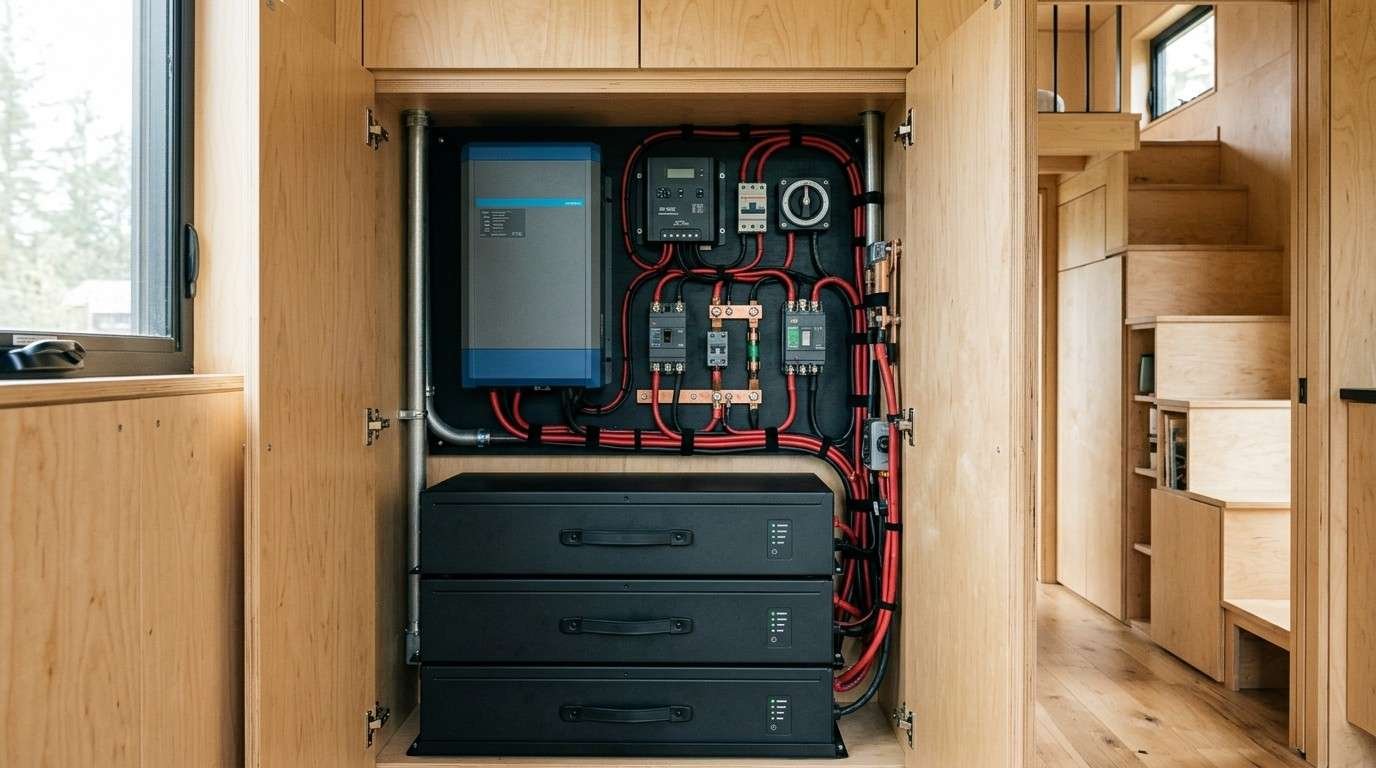
Inverters, Charge Controllers, and Wiring Essentials
An inverter converts the direct current power stored in your batteries into the alternating current power that standard household appliances use. A charge controller regulates how much power flows from your solar panels into your battery bank, preventing overcharging and damage.
These two components sit at the center of your entire electrical system. Undersized or poorly matched components create bottlenecks that limit how much power you can actually use, even with plenty of solar capacity and battery storage available.
I always spec these components to handle slightly more load than the current system needs, since most owners add appliances or expand their solar array within the first few years.
Matching Your Inverter to Your Appliance Load
An inverter’s wattage rating needs to exceed your highest simultaneous appliance draw, or it will shut down under load. Adding up the running wattage of every appliance that might operate at the same time gives you your minimum inverter size.
A refrigerator, water pump, and microwave running together can easily pull 2,000 watts or more. I size inverters with headroom above that peak number, because appliance motors often draw extra power during startup.
Getting this wrong means tripped breakers and frustrated homeowners during the exact moments they need power most.
Fresh Water Systems for Off-Grid Tiny Homes
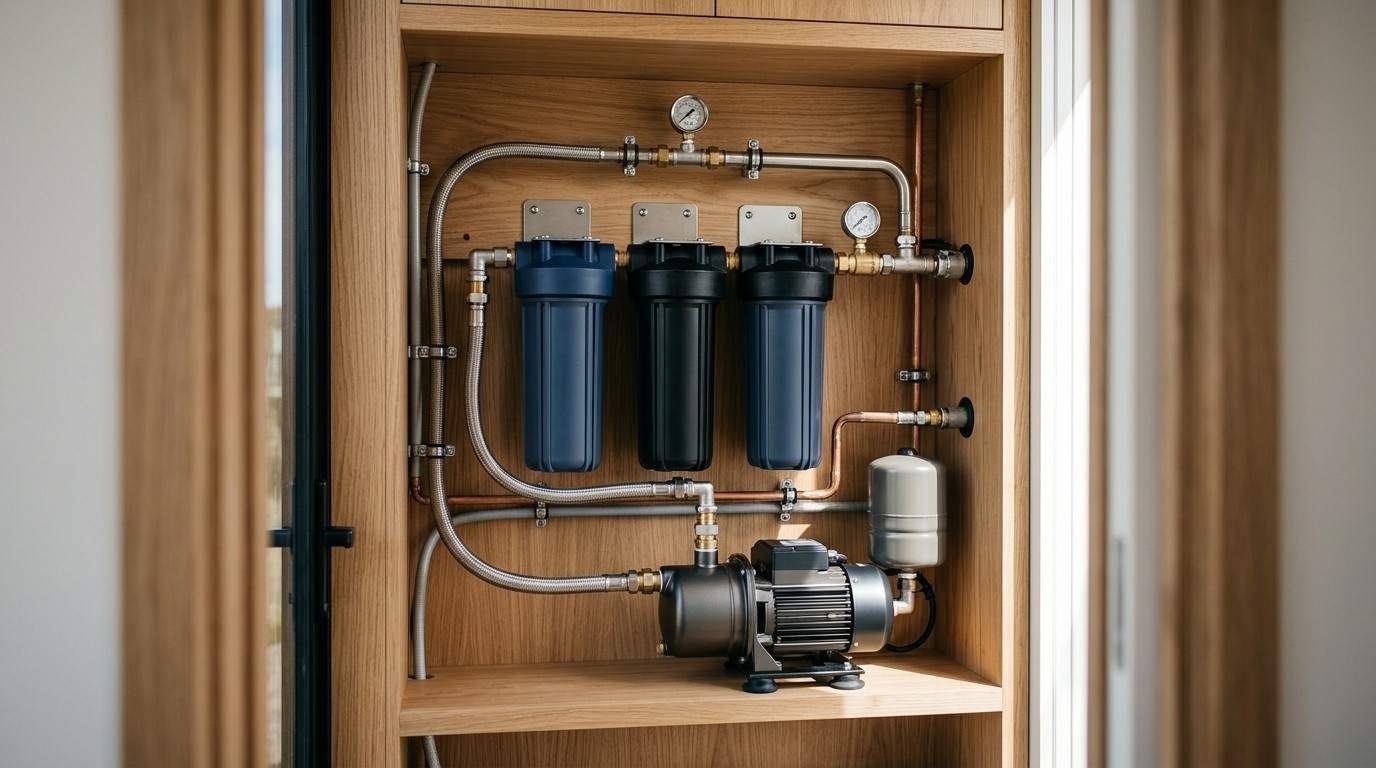
A fresh water system for an off-grid tiny home consists of a storage tank, a pump to move water through the plumbing, and typically a filtration stage before use. Tank sizes generally range from 20 to 60 gallons depending on the home’s size and how many people live there full-time.
I ask every client how they plan to refill their tank, because that answer shapes the whole system design. Some owners refill weekly at a water station, while others source from a well or catch rainwater on-site.
Water weighs about 8.3 pounds per gallon, so a 40-gallon tank adds over 330 pounds to your trailer when full.
Water Tank Sizing and Filtration Options
Tank sizing depends on daily usage per person, typically estimated between 5 and 15 gallons per day for off-grid living with conservative habits. A two-person household using 10 gallons daily would drain a 40-gallon tank in roughly four days without a refill.
Filtration typically happens in stages, starting with a sediment filter to catch particles, followed by a carbon filter for taste and chemical removal. Some owners add a UV sterilization stage for well or rainwater sources.
I recommend sizing your tank around your actual refill schedule rather than guessing. If you’re parked somewhere remote for weeks at a time, a larger tank saves constant hauling trips.
Greywater and Blackwater Waste Management Solutions
Greywater is the wastewater from sinks and showers, while blackwater comes from toilet waste, and off-grid tiny homes handle each differently. Greywater often gets filtered and released or reused for irrigation, while blackwater requires composting, incineration, or holding tank removal.
California has specific rules around greywater discharge that vary by county, so I always check local requirements before finalizing a waste system design. Some counties allow simple greywater release onto landscaping, while others require containment.
Getting waste management right affects daily comfort just as much as power and water do. Nobody wants to deal with tank odors or overflow because a system was sized incorrectly.
Composting Toilets vs. Traditional Waste Systems
Composting toilets separate solid and liquid waste, using natural decomposition and ventilation to break down solids without water or a sewer connection. Traditional systems rely on a holding tank that stores blackwater until it’s pumped out at a dump station.
Composting toilets eliminate the need for blackwater tanks entirely, which saves weight and removes dump station trips from your routine. They do require more hands-on maintenance, since solids need periodic removal and composting management.
I generally recommend composting toilets for full-time off-grid living, since they reduce dependency on finding dump stations in remote locations.
Backup Power and Generator Integration
A backup generator provides supplemental power during extended cloudy periods or unusually high energy demand that outpaces your solar and battery capacity. Most off-grid tiny homes use a propane or gas generator sized to recharge batteries quickly rather than run continuously.
I treat generators as insurance, not a primary power source. A well-sized solar and battery system should only need generator backup a handful of times per year, mostly during winter storm stretches.
Running a generator constantly defeats the purpose of going solar in the first place and adds fuel costs and noise that most owners want to avoid.
When a Generator Makes Sense for Off-Grid Setups
A generator makes sense when your solar and battery system can’t reliably meet demand during predictable low-sun periods, like extended winter cloud cover. It also serves as an emergency backup for unexpected equipment failure or unusually high power draw.
I size backup generators around battery recharge speed rather than full home power capacity. A generator that recharges your battery bank in a few hours gets you through a rough stretch without running continuously.
Owners who move between climates or park in areas with inconsistent sun exposure benefit most from having this backup in place.
Climate Considerations for Off-Grid System Performance
Climate directly affects how well your solar, water, and waste systems perform throughout the year. Solar output drops in winter months due to shorter days and lower sun angles, while extreme heat can affect battery efficiency and water tank insulation needs.
California’s climate varies dramatically by region, from desert heat in the south to coastal fog and mountain cold in the north. I design systems around the specific climate zone a client plans to park in, not a generic statewide assumption.
A system perfectly sized for San Diego sun performs very differently parked near Lake Tahoe in January.
Adjusting Solar and Water Systems for Seasonal Change
Seasonal solar output can drop 30-40% during winter months compared to peak summer production, depending on latitude and cloud cover. Owners in northern California or mountain regions need larger panel arrays or generator backup to offset this seasonal dip.
Water systems also need seasonal adjustment, since freezing temperatures can damage exposed tanks and plumbing lines. I recommend insulated tank enclosures and heat tape for any tiny home parked in colder California regions during winter.
Planning for seasonal swings during the design phase prevents scrambling for fixes once winter actually arrives.
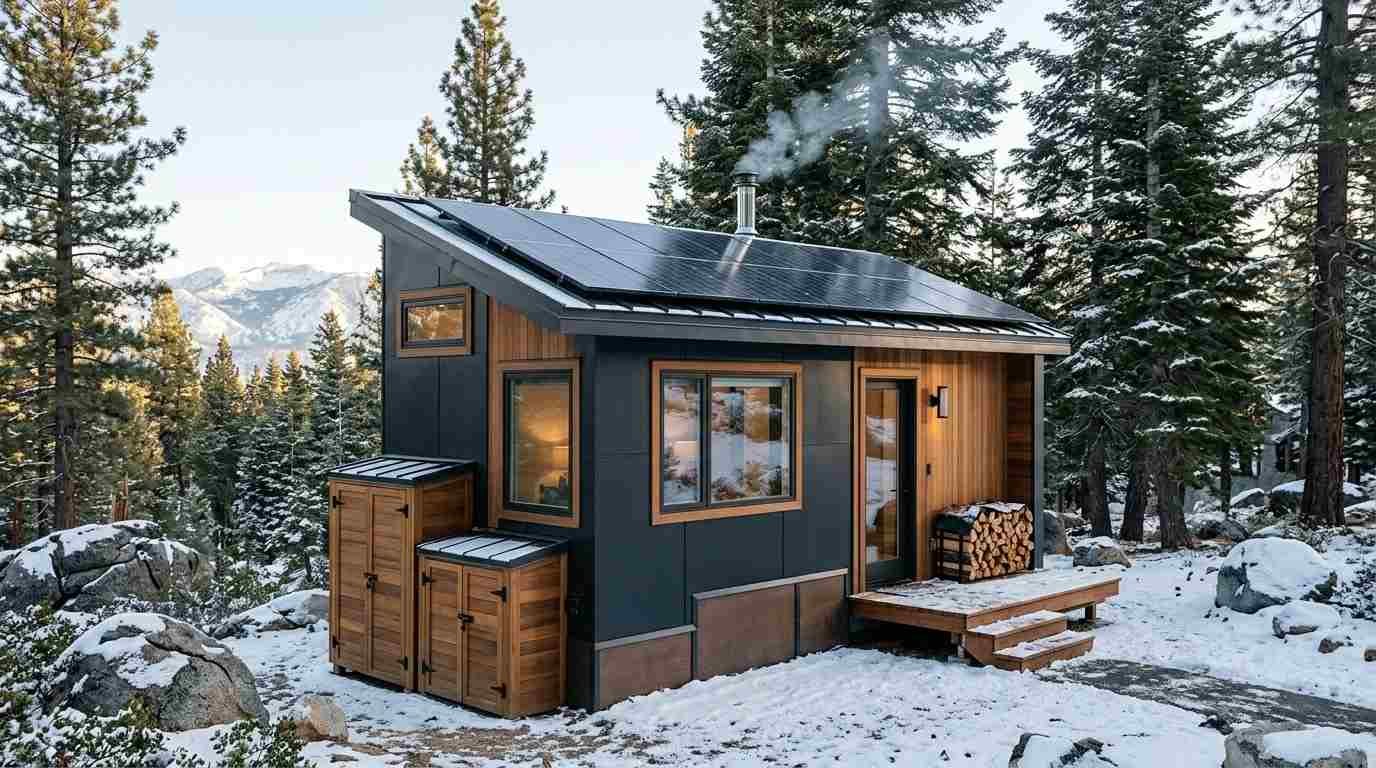
Legal, Zoning, and Parking Considerations in California
Tiny houses on wheels occupy a legal gray area in California, since they’re often classified as recreational vehicles rather than permanent dwellings. This classification affects where you can legally park and live full-time, and rules vary significantly by county and city.
I always tell prospective owners to research local zoning before finalizing their build, because a beautifully designed off-grid home is useless if you can’t legally park it anywhere. Some counties actively support tiny home living, while others restrict it heavily.
Building codes, RV certification requirements, and local zoning ordinances all intersect here, and getting ahead of these questions early saves major headaches later.
Off-Grid Regulations Every California Owner Should Know
California counties regulate off-grid tiny homes differently, with some requiring RVIA certification for legal placement and others enforcing strict limits on full-time RV living. Waste disposal rules also vary, particularly around greywater discharge and composting toilet legality.
I recommend contacting your target county’s planning department directly before finalizing your system design, since informal information online often lags behind actual current rules. Some California counties have updated tiny home ordinances significantly in the past few years.
Confirming these details before you build prevents costly system redesigns after the fact.
Conclusion
Building a reliable off-grid tiny house on wheels means getting your solar, water, and waste systems sized correctly from the start. Every decision connects, from panel wattage to tank capacity to composting versus holding tanks.
California’s varied climate and county-by-county regulations add real complexity to these decisions. Getting local guidance early prevents expensive rework later.
We help California homeowners plan and build off-grid tiny homes that perform reliably for years. Reach out to Tiny Home Builders California to start your custom build the right way.
Frequently Asked Questions
How much solar power does an off-grid tiny house need?
Most off-grid tiny homes need 400-800 watts of solar panel capacity, depending on daily energy consumption and appliance choices. I calculate this based on actual appliance load rather than a generic estimate.
How long does a tiny house battery bank last?
Lithium battery banks typically last 8-15 years with proper maintenance, while lead-acid batteries usually last 3-5 years. Lithium costs more upfront but delivers significantly better long-term value for full-time off-grid living.
Do I need a composting toilet for an off-grid tiny house?
A composting toilet isn’t required, but it eliminates blackwater tank dependency and dump station trips. I recommend it for full-time off-grid living, especially in remote parking locations.
How much water storage does a tiny house need?
Tank sizing depends on usage, but most off-grid tiny homes carry 20-60 gallons of fresh water storage. Two people using conservative habits typically need a refill every four to seven days with a 40-gallon tank.
Is it legal to live off-grid in a tiny house in California?
Legality depends on county zoning and RV classification rules, which vary significantly across California. I always recommend confirming local ordinances before finalizing your build.
Do off-grid tiny homes need a backup generator?
A backup generator isn’t mandatory, but it provides valuable insurance during extended cloudy periods or equipment issues. I size generators around battery recharge speed rather than full home power needs.
How does climate affect off-grid tiny house systems?
Climate affects solar output, battery performance, and water system durability, with winter months reducing solar production by 30-40% in some regions. I design systems around the specific climate zone where the home will park.
What’s the difference between greywater and blackwater in a tiny house?
Greywater comes from sinks and showers, while blackwater comes from toilet waste, and California regulates each differently. Greywater often allows simpler discharge options, while blackwater requires composting or holding tank removal.


