
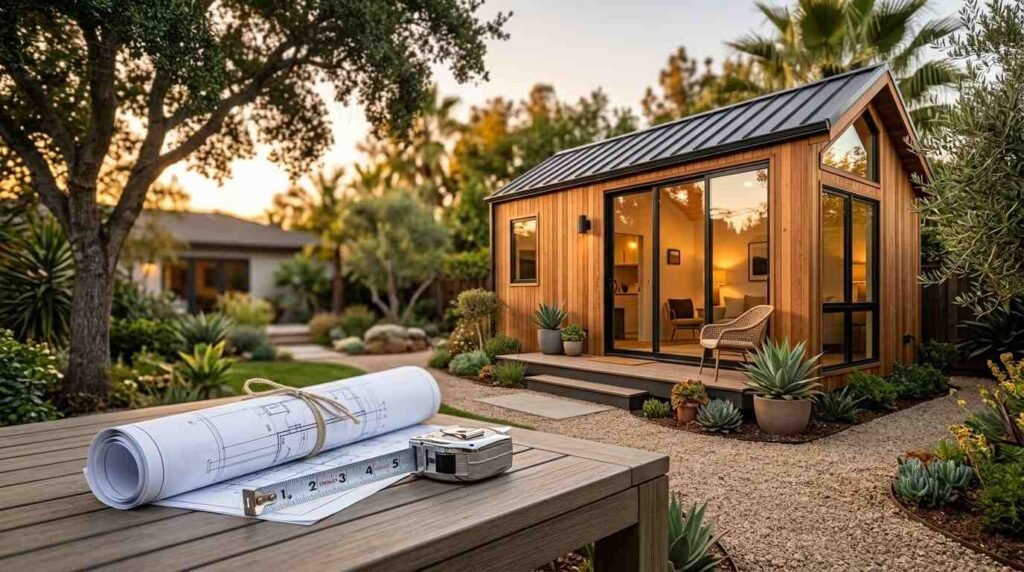
An ADU in California typically costs $150,000 to $400,000 to build, depending on size, type, and finish level. I’ve watched this number surprise a lot of homeowners who expected something closer to a home renovation price tag.
Building an ADU is a serious investment, and the cost swings wildly based on decisions you make early. Getting this wrong means budget overruns, stalled permits, or a unit that doesn’t match your actual needs.
I’m walking you through the cost fundamentals that shape your ADU budget, how pricing breaks down across detached, attached, and garage conversion units, what materials and site work actually add to your bill, and how to budget and finance the whole project without getting blindsided.
What Determines the Cost of an ADU
An ADU’s final cost comes down to a handful of core variables working together. Size, type, finish level, site conditions, and labor availability all move the number in different directions.
I always tell homeowners to think of these as dials, not fixed prices. Adjust one, and the whole budget shifts.
Size and Square Footage Impact
Square footage is the single biggest cost driver in most ADU projects. A 400-square-foot unit and a 1,200-square-foot unit are not the same project scaled up. They’re different builds entirely, with different foundation needs, roofing spans, and mechanical runs.
Bigger isn’t always proportionally more expensive per square foot, though. Smaller units often carry a higher cost per square foot because fixed costs like kitchens and bathrooms get spread across less space.
ADU Type (Attached, Detached, Garage Conversion)
The three main ADU types come with very different cost structures. A detached ADU is a standalone structure, an attached ADU shares a wall with the primary home, and a garage conversion repurposes existing framing and foundation.
Garage conversions tend to run cheapest because so much structure already exists. Detached units cost the most since they require a full foundation, roof, and utility connections from scratch.
Average ADU Cost Ranges in California
California ADU costs vary more by region and size than almost any other factor. I’ve seen identical floor plans price out tens of thousands apart depending on the county.
Cost by ADU Size
A studio or one-bedroom ADU under 600 square feet generally lands in the $150,000 to $220,000 range in California. A two-bedroom unit closer to 1,000 square feet often runs $250,000 to $350,000, and larger units above 1,200 square feet can exceed $400,000.
These ranges assume standard finishes and typical site conditions. Difficult lots or premium materials push every bracket higher.
Cost by Region Within California
Coastal and metro areas like the Bay Area and Los Angeles consistently price higher than inland regions. Permit fees, labor rates, and land costs all compound in these markets.
The Terner Center for Housing Innovation at UC Berkeley found that ADU construction costs in California average $150 to $500 per square foot, with significant variation by region and project complexity. That spread alone explains why two homeowners can build nearly identical units and pay very different totals.
Detached ADU Cost Breakdown
A detached ADU is a fully standalone structure built from the ground up. This type requires a new foundation, complete framing, a full roof system, and independent utility connections to water, sewer, and electrical.
Because nothing existing gets reused, detached units usually fall between $180,000 and $400,000 in California, depending on size and finish. I generally recommend this route to homeowners who want maximum flexibility in placement and design, since a detached unit isn’t constrained by the existing home’s footprint or garage dimensions.
Attached ADU Cost Breakdown
An attached ADU shares at least one wall with the primary residence, which reduces some structural costs. Foundation work is often simpler, and utility tie-ins can sometimes connect directly into existing home systems rather than running entirely new lines.
Attached units in California typically run $160,000 to $320,000. The savings compared to detached units come mostly from shared structural elements, not from a smaller footprint, since attached ADUs can still be built at a comparable size.
Garage Conversion ADU Cost Breakdown
Garage conversions repurpose an existing structure, which is why they’re consistently the most budget-friendly ADU type. The foundation and basic framing already exist, cutting a major cost category out of the project entirely.
Conversions in California generally cost $100,000 to $180,000. The final number depends heavily on the garage’s existing condition, since older garages sometimes need foundation reinforcement or full electrical rewiring before conversion work can even begin.
Material and Finish Costs
Materials and finishes make up a large, controllable slice of any ADU budget. This is where homeowners have the most direct influence over the final price tag.
Standard vs. Premium Finish Packages
Standard finish packages use mid-grade cabinetry, laminate or basic tile countertops, and builder-grade fixtures. These packages keep material costs predictable and generally add $15,000 to $30,000 to a typical ADU build.
Premium packages bring in quartz or stone countertops, custom cabinetry, and higher-end flooring. This tier can add $40,000 to $80,000 or more, and the gap between standard and premium is often the single largest swing factor in final project cost.
Site Work, Permits, and Utility Connection Costs
Site work and permitting costs get overlooked constantly, and they shouldn’t be. These expenses happen before a single wall goes up, and they vary dramatically by property and jurisdiction.
California Permit Fees by Jurisdiction
Permit fees across California range from $3,000 to $20,000 depending on the city and county. Some jurisdictions have streamlined ADU permitting specifically to encourage construction, while others still apply fees closer to full new-home permitting.
The California Department of Housing and Community Development reports that state law caps certain ADU permit fees for units under 750 square feet, though local agencies still charge separately for utility connections and inspections. I always tell clients to get exact fee schedules from their specific city before finalizing a budget.
Utility Hookup and Sewer/Septic Costs
Connecting an ADU to water, sewer, and electrical service adds real cost, especially for detached units. Sewer connections alone can run $5,000 to $15,000, and properties on septic systems sometimes need system upgrades to handle the added load.
Electrical panel upgrades are common too, since many older homes weren’t wired to support a second full living unit. That upgrade typically adds another $3,000 to $8,000 to the project.
Labor and Construction Management Costs
Labor is usually the largest single line item in an ADU budget, often representing 40 to 50 percent of total project cost. Skilled trades, general contracting oversight, and construction management all factor into this number.
Construction management fees typically run 10 to 20 percent of the total project cost. This covers scheduling, subcontractor coordination, and quality oversight throughout the build, and it’s money well spent on a project with this many moving parts.
Hidden and Additional Costs to Budget For
Every ADU budget I’ve reviewed eventually runs into costs that weren’t part of the original estimate. Planning for these upfront prevents a painful mid-project scramble.
Design fees, soil testing, survey costs, and impact fees frequently add $10,000 to $25,000 combined. Landscaping, driveway extensions, and fencing around the new unit rarely make it into initial quotes but almost always come up before the project wraps.
How to Budget and Finance Your ADU Project
A realistic ADU budget accounts for the full project scope, not just construction costs. I recommend building in a 10 to 15 percent contingency on top of your quoted price for exactly this reason.
Financing Options for ADU Construction
Homeowners typically finance ADUs through construction loans, home equity lines of credit, cash-out refinances, or renovation-specific loan products. Each option carries different qualification requirements and repayment structures.
The California Housing Finance Agency offers a dedicated ADU grant program that provides up to $40,000 toward pre-development costs for qualifying homeowners. That kind of program can meaningfully offset the design and permitting phase before construction even starts.
How to Get an Accurate Quote from a Builder
A detailed quote breaks down materials, labor, permits, site work, and contingency separately rather than bundling everything into one number. We walk every client through this exact breakdown before signing anything, because vague lump-sum quotes are where budget surprises hide.
Ask any builder for a line-item estimate and a clear change-order policy upfront. Those two documents tell you more about a builder’s transparency than almost anything else in the sales process.
Conclusion
ADU costs in California span a wide range, shaped by size, type, materials, and site conditions unique to every property. Detached units cost the most, garage conversions cost the least, and finishes swing the budget significantly in between.
Understanding these cost drivers turns a confusing estimate into a clear, plannable investment. A well-budgeted ADU adds lasting value and living space to a property for years to come.
We help homeowners build ADUs with transparent, line-item pricing from day one. Contact Tiny Home Builders California for a detailed cost breakdown tailored to your property.
Frequently Asked Questions
How much does a small ADU cost in California?
A small ADU under 600 square feet typically costs $150,000 to $220,000 in California. Cost depends heavily on finish level and site conditions, even at this smaller size.
Is a garage conversion cheaper than a detached ADU?
Yes, garage conversions are consistently the most affordable ADU type. They reuse existing foundation and framing, generally costing $100,000 to $180,000 compared to $180,000 to $400,000 for detached units.
What adds the most cost to an ADU project?
Labor and construction management typically represent the largest cost category, often 40 to 50 percent of the total budget. Site work, permits, and premium finishes are the next biggest contributors.
Do ADU permit fees vary by city in California?
Yes, permit fees range from $3,000 to $20,000 depending on the city and county. State law caps certain fees for units under 750 square feet, but local utility and inspection charges still vary.
How much should I budget for hidden ADU costs?
I recommend budgeting an extra 10 to 15 percent contingency beyond your quoted price. Design fees, soil testing, and landscaping frequently add costs that don’t appear in initial estimates.
Can I get financial assistance to build an ADU in California?
Yes, the California Housing Finance Agency offers a grant program providing up to $40,000 toward pre-development costs for qualifying homeowners. Construction loans and home equity products cover the remaining build costs for most projects.
Does an attached ADU cost less than a detached one?
Yes, attached ADUs typically cost $160,000 to $320,000, less than detached units in most cases. The savings come from shared structural elements and simpler utility connections, not from a smaller footprint.
What should a builder’s quote include?
An accurate quote breaks down materials, labor, permits, site work, and contingency as separate line items. A vague lump-sum number without this detail is a warning sign worth questioning before you sign.


