
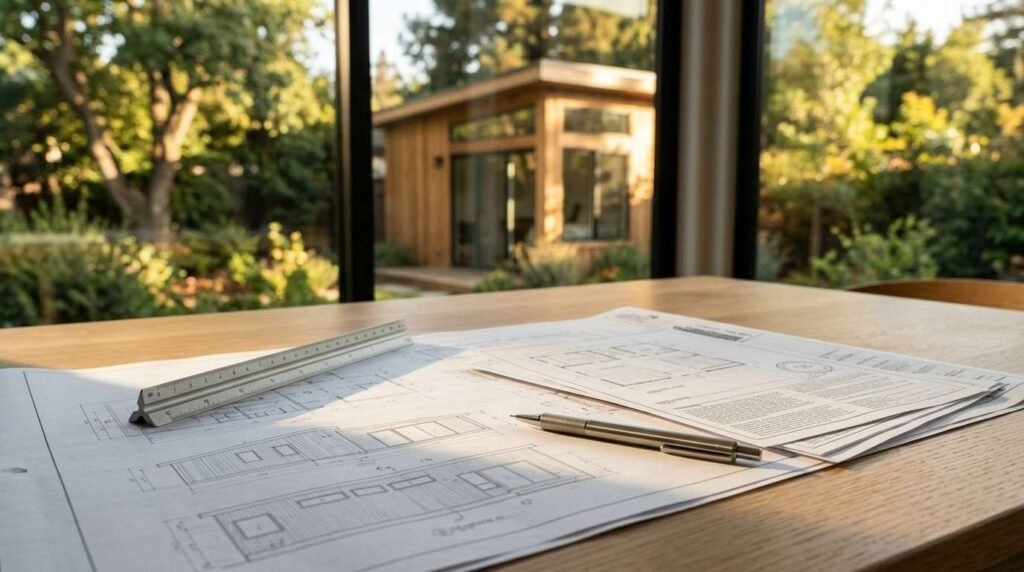
An ADU is a permanent, permitted structure attached to or built on the same lot as a primary residence, while a tiny house is often a movable dwelling under 400 square feet, and a guest house is a standalone unit built mainly for visitors rather than long-term rental income. I see homeowners mix these terms up constantly, and that confusion costs real money once permits and construction plans are on the table.
Picking the wrong structure type means fighting zoning rules you didn’t expect or building something that can’t legally generate rental income. California’s ADU laws changed fast over the last few years, and the differences between these three options now matter more for property value than most homeowners realize.
I’ll walk through how each structure is defined and regulated, what separates them in size and foundation type, the permit and zoning rules specific to California, and how costs and long-term property value stack up. By the end, you’ll know exactly which option fits your lot and your goals.
What Is an ADU, a Tiny House, and a Guest House?
An accessory dwelling unit is a secondary housing unit that shares a lot with a primary residence and includes its own kitchen, bathroom, and sleeping area. I think of it as a second, fully legal home sitting on the same property as the main house.
A tiny house is typically a compact dwelling under 400 square feet, built either on a permanent foundation or on a trailer chassis for mobility. A guest house occupies a middle ground; it’s usually a fixed structure meant for visitors or family, without the same rental-focused design an ADU often has.
How an ADU Is Defined and Regulated
California defines ADUs under state housing law as permanent structures with independent living facilities, subject to specific size, height, and setback rules. I always tell clients that “ADU” is a legal classification first and a construction style second; the label determines which building codes apply.
State law now requires most cities to approve ADUs that meet baseline standards, which is part of why ADU construction surged across California in recent years. That legal backing is exactly why an ADU can be rented out separately from the main home.
How a Tiny House Is Defined and Classified
A tiny house on wheels typically falls under RV or trailer regulations rather than residential building codes, and a tiny house on a permanent foundation gets classified as an ADU or standard dwelling depending on the jurisdiction. This classification split creates real confusion for buyers who assume “tiny house” means one consistent legal category.
I’ve seen homeowners buy a tiny house expecting ADU-level flexibility, only to find their city treats it as a recreational vehicle with zero long-term occupancy rights. The classification decides everything from insurance to resale value.
How a Guest House Differs From Both
A guest house is generally a smaller secondary structure on a property, built without a full kitchen in some jurisdictions, which excludes it from ADU classification entirely. Without a full kitchen, many guest houses can’t legally be rented as independent housing.
That single kitchen requirement separates a guest house from an ADU in most California counties. It’s a meaningful distinction if rental income factors into your decision at all.
Size, Structure, and Foundation Differences
Size and foundation type drive most of the practical differences between these three structures. I walk clients through square footage limits first, because that number determines what’s even possible on a given lot.
Square Footage and Layout Standards
ADUs in California can typically reach up to 1,200 square feet depending on local ordinances, while tiny houses generally stay under 400 square feet by definition. Guest houses fall somewhere in between, often ranging from 400 to 800 square feet depending on the property and local rules.
A larger ADU supports a full one- or two-bedroom layout with separate living space, while a tiny house layout usually combines sleeping, cooking, and living areas into one open room. That layout difference affects everything from daily comfort to long-term livability for a full-time occupant.
Foundation Type and Permanence
An ADU sits on a permanent foundation and connects to utilities the same way the main house does. A tiny house on wheels sits on a trailer axle system, which keeps it mobile but excludes it from most standard residential financing options.
Guest houses almost always use permanent foundations similar to ADUs, since they’re built as fixed additions to the property. Foundation type ends up mattering for financing, insurance, and whether a lender even considers the structure part of the property’s assessed value.
Permits, Zoning, and Legal Requirements
Permitting is where these three structures diverge the most, and it’s the area I get the most questions about. Getting this wrong before construction starts is the single most expensive mistake I see homeowners make.
ADU Permitting and Zoning Rules in California
California’s statewide ADU legislation requires local jurisdictions to streamline approval for ADUs that meet size, height, and setback standards, and many cities now issue ADU permits within 60 days. The California Department of Housing and Community Development confirms that state law limits how much cities can restrict ADU construction on single-family lots.
That streamlined process is a major reason ADUs have become the more predictable path for homeowners planning rental income or multigenerational living. Local setback and parking rules still apply, but the baseline approval path is far more consistent than it was a decade ago.
Tiny House and Guest House Legal Considerations
A tiny house on wheels often falls outside standard residential permitting entirely, since many counties classify it as a recreational vehicle rather than a dwelling. That classification means it can’t always be used as a permanent, legal residence even if someone lives in it full-time.
Guest houses need standard building permits similar to ADUs but face different occupancy restrictions depending on whether they include a kitchen. I always recommend confirming a county’s specific guest house occupancy rules before finalizing a design, since these vary more than people expect across California counties.
Cost Comparison: Building and Ownership
Cost is usually the deciding factor once homeowners understand the legal differences. Construction costs vary by structure type, materials, and local labor rates, but some clear patterns hold across most California markets.
Upfront Construction Costs by Type
ADU construction costs in California typically run higher per square foot than a tiny house due to permanent foundation work, utility connections, and full residential-grade finishes. A prefab tiny house can cost significantly less upfront, though site-built tiny houses on permanent foundations close much of that cost gap.
Guest houses land in a similar cost range to ADUs since they use comparable foundation and construction methods. The real cost driver isn’t the label on the structure; it’s the foundation type, utility connections, and finish level chosen for the build.
Long-Term Ownership and Maintenance Costs
An ADU built to full residential code typically requires less specialized maintenance over time since it uses the same materials and systems as a standard home. A tiny house on wheels needs additional maintenance tied to its trailer chassis, tires, and mobile utility hookups that a permanent structure never faces.
Guest houses are maintained similarly to ADUs long-term, assuming both use comparable construction quality and materials. I tell clients to weigh 20-year maintenance costs alongside the upfront price tag, because the cheaper option today isn’t always cheaper over a decade of ownership.
Property Value and Investment Potential
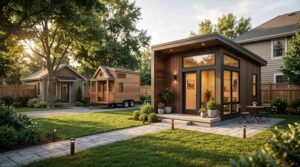
Property value impact differs significantly across these three structure types, and it’s often the deciding factor for investors specifically. An ADU adds assessed value and rentable square footage in a way a mobile tiny house typically cannot.
Rental Income and Resale Value by Structure Type
A permitted ADU with its own kitchen and bathroom can be legally rented as an independent unit, generating consistent rental income and adding directly to a property’s assessed value. A tiny house on wheels generally isn’t recognized as a permanent property improvement, which means it doesn’t add the same resale value even if it generates some rental income informally.
A guest house without a full kitchen usually can’t be rented as independent housing, limiting its income potential compared to a true ADU. Investors focused on rental income and long-term appraisal value consistently favor ADUs over the other two options for exactly this reason.
Which Option Fits Your Property and Goals
Choosing between these three structures comes down to your specific goals for the space, your lot’s zoning allowances, and your budget. I walk every client through their actual use case before recommending a structure type.
Best Fit for Multigenerational Living
A full ADU with a complete kitchen and bathroom gives extended family members genuine independence within shared property boundaries. That independence matters for aging parents or adult children who need privacy alongside proximity to the main household.
Best Fit for Rental Income or Guest Space
An ADU remains the strongest option for anyone planning to generate rental income, since it’s the only structure of the three built specifically for independent legal occupancy. A guest house works well for occasional visitors or extended family stays without the goal of separate rental income.
Conclusion
ADUs, tiny houses, and guest houses each serve distinct purposes shaped by size, permitting, and long-term value. Understanding these differences protects your budget and your property’s future resale potential.
We build homes designed around your specific goals, whether that means rental income, multigenerational living, or extra guest space. Contact Tiny Home Builders California to plan a structure that fits your property and delivers lasting value.
Frequently Asked Questions
Is an ADU the same as a tiny house?
No, an ADU is a permanently built, code-compliant secondary residence, while a tiny house is often a mobile structure under 400 square feet. The two have different legal classifications and financing options.
Can a guest house be rented out in California?
A guest house can only be rented independently if it includes a full kitchen and meets ADU classification requirements. Without a kitchen, most counties restrict it to non-rental guest use only.
Do tiny houses on wheels need a building permit in California?
Tiny houses on wheels typically fall under RV or trailer regulations rather than standard building permits. Permanent foundation tiny houses require standard residential permits instead.
Which adds more property value, an ADU or a guest house?
An ADU generally adds more assessed property value since it supports independent rental income and full residential classification. A guest house adds value but usually less due to occupancy restrictions.
How long does it take to get an ADU permit in California?
Many California cities now approve qualifying ADU permits within 60 days under state streamlining laws. Timelines vary by city and project complexity, so local zoning offices confirm exact expectations.
What size can an ADU be in California?
ADUs in California can typically reach up to 1,200 square feet depending on local ordinances and lot size. Some cities set slightly different maximums, so checking local rules before designing is essential.
Is building an ADU cheaper than a tiny house?
A prefab tiny house is often cheaper upfront than a full ADU, though site-built tiny houses close much of that price gap. Long-term, ADUs typically cost less to maintain due to standard residential construction.


