
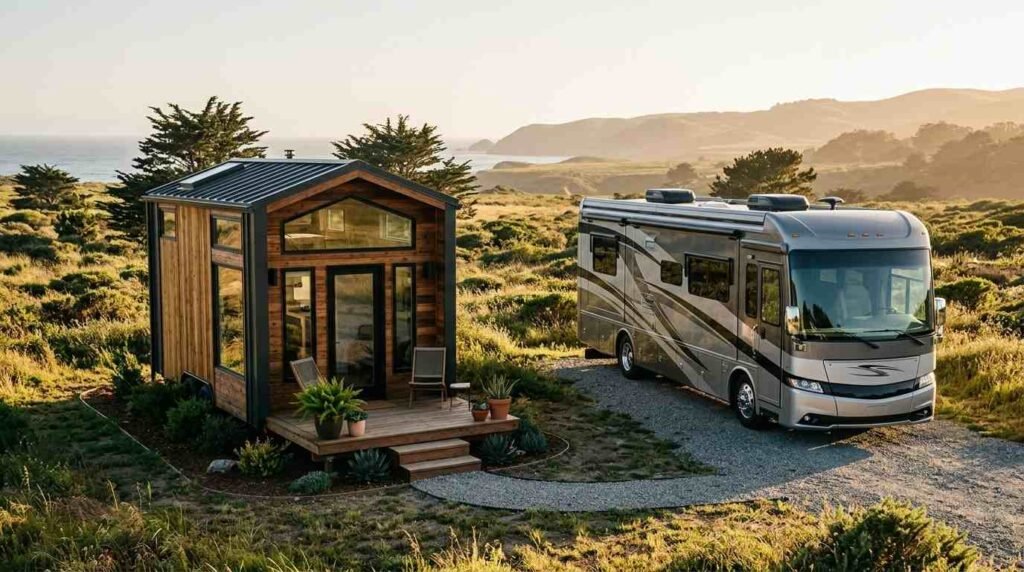
I get this question constantly from California homeowners trying to decide between a tiny house and an RV. The short answer: tiny houses cost more upfront but hold value better and qualify as real property in more places, while RVs cost less initially but depreciate fast and face tighter zoning restrictions for full-time living. Neither option is universally better; it depends on what you’re actually trying to build toward.
This decision affects your finances, your legal standing with the county, and honestly, your quality of life for years to come. Get the classification wrong, and you could face code enforcement action or an unsellable asset down the road.
I’m going to walk you through the fundamentals of cost and what actually separates these two structures, then get into the legal and permitting maze that trips up so many buyers in California. From there, I’ll cover livability and construction quality side by side, and close with the practical stuff: utilities, insurance, and which option actually fits your goals.
Tiny House vs RV: What Actually Sets Them Apart
People throw these terms around like they’re interchangeable. They’re not, and the difference matters more than most buyers realize going in.
A tiny house is a dwelling built to residential construction standards, typically on a foundation or a trailer chassis, designed for permanent or long-term habitation. An RV is a vehicle built under federal transportation standards, designed primarily for temporary or recreational use.
That classification difference drives almost everything else in this comparison. I’ve seen buyers assume a tiny house on wheels gets treated like an RV by their county. It doesn’t, and that assumption costs people real money in fines and forced relocations.
Construction Standards and Classification Differences
Tiny houses built to IRC (International Residential Code) standards get treated like real homes for permitting purposes. RVs are certified under NFPA 1192 and built to standards set by the RV Industry Association, which classifies them as vehicles, not dwellings.
This distinction determines whether your county treats your structure as real property or personal property. Real property classification opens doors to permanent placement and standard mortgage financing. Personal property classification does not.
Mobility, Foundation, and Intended Use
RVs are built for regular movement: road trips, seasonal relocations, weekend getaways. A tiny house on wheels can move, but it’s not engineered for the same frequency or distance.
Tiny houses on foundations don’t move at all. They function exactly like a small conventional home, which is often the whole point for buyers chasing long-term stability.
Upfront Cost Comparison: Tiny House vs RV

The sticker price gap between these two options surprises a lot of first-time buyers. I want to break down actual numbers here instead of vague ranges.
Average Price Ranges for Each Option
A new tiny house built to residential code typically runs $45,000 to $150,000, depending on size, materials, and whether it’s on a foundation or a trailer. Custom builds with high-end finishes push past that.
RVs span a much wider range. A basic travel trailer starts around $15,000, while a Class A motorhome with residential-grade features can exceed $300,000. Most buyers comparing RVs to tiny houses are looking at travel trailers or fifth wheels in the $25,000 to $80,000 range.
Financing and Loan Availability
RV loans function as auto loans with shorter terms, and the vehicle itself depreciates as collateral. Tiny houses on a permanent foundation can sometimes qualify for construction loans or even conventional mortgages, though lender familiarity with tiny homes still varies a lot by region.
Tiny houses on wheels sit in an awkward middle ground for financing. Many lenders treat them like RVs for loan purposes even though they’re built like homes, which catches buyers off guard during the application process.
Long-Term Cost of Ownership
Upfront price only tells part of the story. What happens to that asset over the next ten years matters just as much, maybe more.
Depreciation and Resale Value
RVs depreciate like vehicles, often 20% in the first year alone and continuing to decline steadily after that. A tiny house built to residential standards on a foundation tends to hold value more like a conventional home, especially in markets with rising land value.
I’ve watched clients get blindsided by RV depreciation when they tried to sell after five years of full-time living. The resale numbers just don’t compare to a well-built tiny house on real property.
Maintenance, Repairs, and Utility Costs
RVs use lighter-weight materials designed for mobility, which means more frequent repairs to seals, tires, and appliances built for intermittent rather than daily use. Tiny houses built with residential-grade materials and systems tend to need less frequent major repairs when maintained properly.
Utility costs run lower in a well-insulated tiny house too. RV insulation is rated for occasional use, not California’s full range of summer heat and winter cold snaps.
Legal Classification and Zoning Rules in California

This is where most people run into trouble, and it’s the section I’d read most carefully if I were you.
How California Defines Tiny Houses vs RVs
California recognizes tiny houses on wheels as a distinct category under state building code amendments adopted in recent years, separate from both site-built homes and recreational vehicles. RVs remain governed under vehicle code and are not permitted as permanent dwellings in most jurisdictions.
Counties still vary significantly in how they interpret and enforce these classifications locally. What flies in one county can get flagged in the next, so local zoning research isn’t optional here; it’s essential.
Where You Can Legally Park or Place Each One
RVs used as permanent residences on private land face restrictions in most California municipalities, with many limiting stays to 30 to 90 days per year outside designated RV parks. Tiny houses on foundations generally follow standard residential zoning, meaning they need to sit on a lot zoned for residential use.
Tiny houses on wheels occupy a gray area that depends heavily on local accessory dwelling unit (ADU) ordinances. Some California cities now permit them as ADUs on existing residential lots, which has opened up options that didn’t exist even five years ago.
Building Codes and Permit Requirements
Permitting is where the paperwork gets real, and where a lot of buyers underestimate the timeline involved.
Tiny House Permitting Process
A tiny house built to IRC standards on a foundation requires the same permitting process as a standard home addition plan review, inspections at multiple construction stages, and final sign-off before occupancy. Tiny houses on wheels permitted as ADUs go through a separate but related process specific to accessory structures.
Expect this process to take weeks to months depending on your county’s current permit backlog. Rushing it or skipping steps creates problems that surface later during resale or refinancing.
RV Registration and Inspection Requirements
RVs require standard DMV registration like any other vehicle, plus periodic safety inspections depending on age and type. There’s no residential building permit involved because the RV is never classified as a dwelling in the eyes of the county.
That simplicity is part of the appeal for buyers who want to avoid the permitting timeline entirely. It also means an RV never builds the kind of long-term real property value that comes with permitted residential construction.
Livability and Everyday Comfort

Cost and legality matter, but you’re the one living inside this thing every day. Comfort deserves real weight in this decision.
Interior Space and Layout Differences
Tiny houses typically offer more usable vertical space and residential-height ceilings, since they’re built to home construction standards rather than vehicle height restrictions. RV interiors prioritize weight reduction and aerodynamics, which usually means lower ceilings and more compact storage solutions.
Layout flexibility runs higher in a tiny house too. You’re working with residential framing techniques instead of a manufacturer’s fixed floor plan options.
Insulation, Climate Control, and Year-Round Living
Residential-grade insulation in a properly built tiny house handles California’s temperature swings far better than standard RV insulation, which is rated for seasonal or intermittent use. This becomes a real comfort and cost issue if you’re living in the structure full-time through actual summer and winter conditions.
I’ve talked to full-time RV residents in California’s Central Valley who run air conditioning nearly constantly through summer months just to stay comfortable. A well-insulated tiny house cuts that energy burden significantly.
Durability and Construction Quality
This section gets at something buyers often overlook until years two or three of ownership.
Materials Used in Tiny Houses vs RVs
Tiny houses built to residential code use standard home-building materials: dimensional lumber framing, house-grade windows, and residential roofing systems designed for decades of exposure. RVs use lightweight materials chosen specifically to minimize weight for towing and fuel efficiency, which trades off against long-term durability.
That materials difference shows up in how each structure ages. Residential materials are engineered for permanence; RV materials are engineered for mobility.
Expected Lifespan of Each Structure
A well-built tiny house on a solid foundation can last 50 years or more with proper maintenance, similar to a conventional home. RVs typically have a functional lifespan of 10 to 20 years before major systems require significant investment or replacement.
That lifespan gap compounds the cost-of-ownership numbers I covered earlier. Buying an asset built to last changes your total cost picture dramatically over a decade or two.
Utilities, Off-Grid Capability, and Hookups
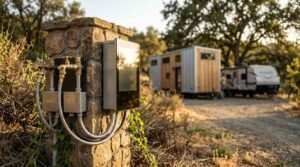
Getting water, power, and waste systems right shapes your daily experience more than almost anything else on this list.
Water, Electric, and Septic Setup Differences
Tiny houses on foundations typically connect to standard municipal water, sewer, and electrical service just like any conventional home. RVs rely on onboard tanks for fresh water and waste, requiring regular dumping at designated stations unless connected to full hookups at an RV park.
Off-grid capability actually favors RVs in one specific way: they’re built from the factory with self-contained systems designed for independence. Tiny houses can be built off-grid too, but it requires additional planning and equipment that isn’t standard.
Insurance and Financing Differences
Insurers see these two structures very differently, and that affects your ongoing costs in ways people don’t always anticipate.
How Insurers Classify and Price Each Option
RV insurance functions similarly to auto insurance, covering the vehicle for collision, liability, and comprehensive damage during travel and storage. Tiny houses on foundations typically get insured like a conventional home, while tiny houses on wheels often require specialized policies that blend RV and homeowner coverage elements.
Premium costs vary widely based on this classification. Specialized tiny house insurance can run higher than either standard option because underwriters have less historical data to price the risk accurately.
Which One Fits Your Lifestyle and Goals

Everything I’ve covered points toward one final question: what are you actually trying to accomplish with this purchase?
Best Fit for Full-Time Living vs Travel
If year-round comfort and long-term residency matter most, a tiny house built to residential standards makes more practical sense given the insulation, space, and durability advantages. If frequent travel and flexibility rank higher on your list, an RV’s mobility and factory-installed systems serve that purpose better.
Neither choice is wrong. They’re built for genuinely different use cases, and being honest about your actual lifestyle prevents an expensive mismatch.
Best Fit for Long-Term Investment
A tiny house on a foundation or qualifying as an ADU builds real property value over time, similar to any home improvement. An RV functions as a depreciating asset from day one, more comparable to a vehicle purchase than a real estate investment.
Property investors and landowners in California increasingly favor tiny houses specifically because of ADU zoning changes that let them add legitimate rentable square footage to existing lots.
Conclusion
Tiny houses and RVs solve different problems for different people. Cost, legal classification, and construction quality separate them far more than most marketing materials let on.
We’ve walked through the real numbers on price, permitting, and livability across California’s evolving zoning landscape. Your decision comes down to whether you’re building lasting value or buying flexibility.
We help California homeowners navigate exactly this decision every day. Reach out to Tiny Home Builders California to talk through your specific lot, budget, and long-term goals before you commit.
Frequently Asked Questions
Is a tiny house cheaper than an RV in California?
Not usually upfront. RVs typically cost less initially, but tiny houses hold value better and cost less to maintain over a decade of ownership.
Can I legally live in an RV full-time in California?
Most California municipalities restrict full-time RV living on private land to 30 to 90 days annually outside designated RV parks. Check your specific county’s zoning ordinance before committing.
Do tiny houses need a building permit in California?
Yes, tiny houses built to residential code require standard permitting, including plan review and inspections. Tiny houses used as ADUs follow a related but separate permitting track.
Are tiny houses considered real property?
Tiny houses on permanent foundations are generally classified as real property. Tiny houses on wheels occupy a gray area depending on local ADU ordinances and county interpretation.
How long does a tiny house last compared to an RV?
A well-built tiny house can last 50 years or more with proper maintenance. RVs typically last 10 to 20 years before major systems need significant replacement.
Can I get a mortgage for a tiny house?
Tiny houses on permanent foundations sometimes qualify for construction loans or conventional mortgages. Tiny houses on wheels often face financing treated more like RV or personal loans.
Is RV insurance different from tiny house insurance?
Yes, RV insurance functions like auto insurance, covering the vehicle itself. Tiny houses on foundations typically get insured like conventional homes, while tiny houses on wheels need specialized blended policies.
Which option is better for full-time living?
Tiny houses generally offer better insulation, space, and durability for full-time year-round living. RVs offer more mobility and flexibility but less comfort for permanent residency.


