
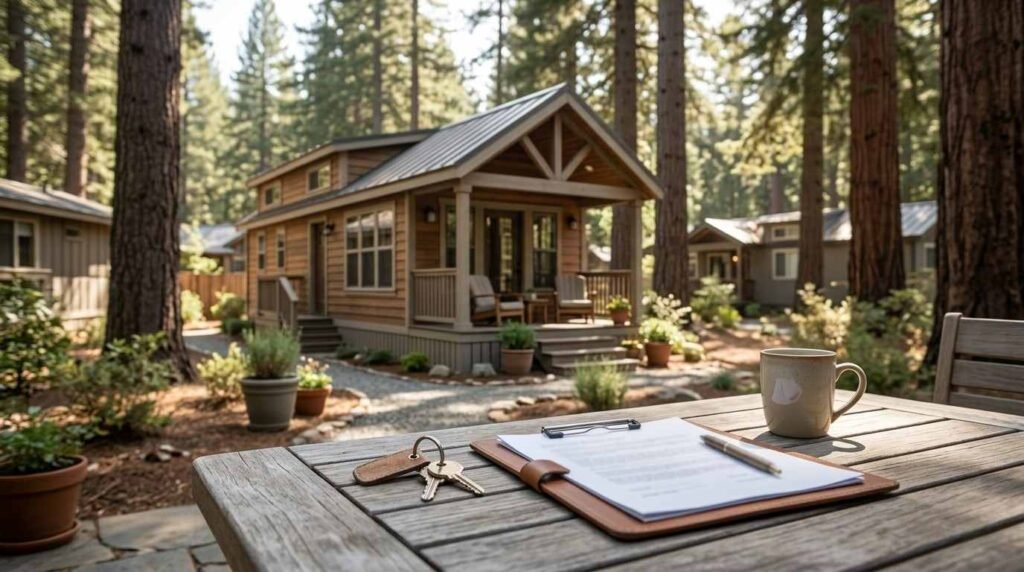
A park model home’s resale value depends on its depreciation rate, construction quality, park location, and lease terms, and most units lose 20-30% of their value within the first five years before leveling off. I’ve walked enough California parks and sat through enough closing tables to know that number catches people off guard every time. Homeowners expect these units to behave like houses. They don’t.
And that’s exactly the gap this guide closes.
We cover how park models depreciate year over year, what separates a unit that holds value from one that doesn’t, how appraisals and comps actually work in this niche market, and the practical steps for pricing and selling when the time comes. I’ve grouped everything around the questions that matter most: why these homes lose value the way they do, how to slow that loss down, and how to walk away from a sale with the strongest possible number.
What Determines a Park Model Home’s Resale Value?
A park model home’s resale value is shaped primarily by its legal classification, age, condition, and the terms of the land or lot it sits on. I’ve seen two nearly identical units sell for wildly different prices because one sat on a month-to-month lot lease and the other had a long-term, transferable lease attached.
Most park models are titled as personal property, similar to an RV, rather than real property like a traditional house. That single distinction changes how the unit is financed, appraised, and ultimately valued at resale. Personal property classification means the home depreciates on a curve closer to a vehicle than a residence, and buyers factor that into every offer.
Lot lease terms matter just as much as the structure itself. A transferable, long-term lease with reasonable rent increases adds real value. A lease that’s about to expire or one that resets to market rate scares off buyers fast, and I’ve watched that single issue kill deals that otherwise looked clean.
How Park Model Homes Depreciate Over Time
Park model homes typically depreciate between 20% and 30% in their first five years of ownership, then settle into a slower decline of roughly 3-5% annually after year ten. The curve isn’t linear, and anyone comparing it to a stick-built home’s appreciation pattern is going to be disappointed.
The steepest drop happens in years one through five. This mirrors what happens with RVs and manufactured housing more broadly: the newest-unit premium evaporates fast once a buyer isn’t the original owner. A study on manufactured housing depreciation from the Urban Institute found that factory-built homes depreciate significantly faster than site-built homes in the early ownership years, largely due to financing structures and market perception rather than actual physical deterioration.
After the ten-year mark, depreciation slows considerably. The unit has already shed most of its “new” premium, and from that point forward, value loss tracks closer to actual wear, mechanical systems, and cosmetic condition rather than age alone. I think this is the part most sellers misunderstand. They assume a 15-year-old unit should be worth almost nothing, when in practice a well-maintained one in a desirable park can hold a respectable price.
Traditional manufactured homes on owned land follow a different trajectory entirely. Because they’re classified as real property and sit on land the owner controls, they can appreciate alongside the land value even as the structure itself ages. Park models rarely get that benefit because the land underneath them is almost always leased, not owned.
| Ownership Year | Typical Depreciation Range | Primary Driver |
| Year 1-2 | 15-20% | New-unit premium loss |
| Year 3-5 | 5-10% additional | Market perception, financing limits |
| Year 6-10 | 2-4% annually | Wear, cosmetic condition |
| Year 10+ | 3-5% annually | Mechanical systems, maintenance |
Factors That Slow Down Depreciation
Construction quality, documented maintenance, and strategic upgrades are the three factors most likely to slow a park model home’s depreciation rate. A unit built with better materials and tighter construction standards simply ages more gracefully than one built to minimum code.
Roofing, siding, and window quality show up disproportionately in resale conversations. Buyers walking a unit for sale notice water stains, warped siding, and foggy double-pane windows before anything else, and those details anchor their mental price long before they ask about square footage.
Upgrades that preserve value tend to be functional rather than purely cosmetic. Updated HVAC systems, newer water heaters, and reinforced skirting all signal to a buyer that the unit has been cared for mechanically, not just painted and staged for a quick sale.
Factors That Accelerate Depreciation
Deferred maintenance and outdated interior finishes are the two factors that most accelerate depreciation in park model homes. I’ve toured units where a $200 roof repair, left undone for three years, turned into a $4,000 problem that knocked tens of thousands off the eventual sale price.
Weather damage compounds quickly in units that sit exposed in California’s coastal or desert parks. Sun-bleached siding, cracked seals around windows, and warped flooring from humidity all accumulate silently until a buyer’s inspector catches them all at once.
Interiors that haven’t been touched since the original build also drag down value faster than the structure’s actual age would suggest. Buyers mentally subtract the cost of a kitchen or bathroom remodel from their offer, and that subtraction is almost always higher than what the update would have actually cost the seller.
Park Model Homes vs. Traditional Homes: Resale Comparison

Traditional site-built homes generally appreciate over time while park model homes generally depreciate, and the difference comes down to land ownership rather than construction quality. This is the single most important distinction for anyone comparing the two as an investment.
A traditional home’s value is driven heavily by the land beneath it, and land in most California markets appreciates steadily regardless of what happens to the structure. Park models almost never include owned land in the transaction, so that appreciation engine simply isn’t present.
| Factor | Park Model Home | Traditional Home |
| Land ownership | Typically leased | Typically owned |
| Value trend | Depreciates like personal property | Appreciates with land value |
| Financing | Chattel loans, shorter terms | Standard mortgages, 30-year terms |
| Resale pool | Smaller, park-dependent | Broad open market |
| Average holding period before sale | 3-7 years | 8-13 years |
Land ownership changes the entire financial equation. When a buyer purchases a traditional home, they’re buying an appreciating asset wrapped around a depreciating structure. When they buy a park model, they’re usually buying a depreciating structure sitting on someone else’s appreciating land, and only the depreciating part belongs to them.
How Park Size, Class, and Zoning Affect Value
A park model home’s resale value shifts significantly based on the size classification of the unit and the zoning status of the park it sits in. Units built to the ANSI A119.5 standard for park models have specific size caps, and units at the upper end of that range tend to hold value better than the smallest footprints.
Zoning status of the park itself matters just as much as the unit. A park zoned for permanent residential use, with reliable utility hookups and long-term operating permits, supports stronger resale than a park zoned primarily for recreational or seasonal use. Buyers researching a purchase almost always ask about zoning before they ask about the unit’s finishes.
The Role of Park/Community Rules in Resale
Park and community rules directly shape who can buy a given unit, and restrictive rules shrink the pool of eligible buyers and suppress resale price. Age-restricted communities, for example, cut out an entire generation of potential buyers with young families.
Age restrictions are the most common limiting factor. A 55-plus community might offer a peaceful atmosphere for current residents, but it narrows the buyer pool considerably when it’s time to sell, which tends to extend time on market and soften final offers.
Transfer fees and approval processes add friction that buyers factor into their offers before they ever submit one. A park with a lengthy background check, a steep transfer fee, or a right of first refusal clause for park management can delay a closing by weeks and push cautious buyers toward a different listing entirely.
Financing Challenges and Their Impact on Resale
Limited financing options reduce the pool of qualified buyers for park model homes, which in turn suppresses resale prices compared to traditionally financed real estate. Most lenders treat park models as chattel, meaning the loan is secured by the home itself rather than the land, similar to an auto loan.
Chattel loans typically carry shorter terms and higher interest rates than conventional mortgages, and that higher monthly payment narrows the field of buyers who can comfortably qualify. A seller who can offer owner financing or has already identified a lender familiar with park model chattel loans often closes faster and at a better price than one who leaves financing entirely up to the buyer.
How to Accurately Appraise a Park Model Home
An accurate park model home appraisal combines a physical condition assessment, a review of comparable sales within similar parks, and an evaluation of the lot lease terms attached to the unit. Skipping any one of these three inputs produces a number that won’t hold up once a buyer’s own inspector or lender gets involved.
The appraisal process typically follows these steps:
- A licensed appraiser inspects the structure, noting age, square footage, and visible wear.
- The appraiser documents all upgrades, including HVAC, roofing, and interior finishes.
- Comparable sales are pulled from similar parks within the same general market, not from traditional real estate listings.
- Lot lease terms, transferability, and remaining lease length are factored into the final figure.
- A final value range is produced, often wider than a traditional home appraisal due to limited comps.
Finding comparable sales is the hardest part of this process in most California markets. Park model sales rarely get listed on the MLS, which means the most reliable comps often come directly from park management offices or from specialized dealers who track sales within specific communities.
Preparing a Park Model Home for Sale
The repairs and updates that add the most resale value to a park model home are the ones addressing function over appearance, starting with roofing, seals, and mechanical systems. I always tell sellers to fix what an inspector will flag before they spend a dollar on paint.
- Reseal windows and doors to stop water intrusion before it becomes structural
- Service or replace an aging HVAC system rather than letting a buyer negotiate it off the price
- Address any soft flooring or subfloor damage immediately, since buyers treat this as a major red flag
- Repaint and declutter interiors last, once the functional items are handled
Staging a park model home for sale works best when it emphasizes the space efficiency that drew the original buyer to this format in the first place. Clearing clutter, maximizing natural light, and showing the unit fully furnished tend to help buyers picture themselves living in a smaller footprint more easily than an empty shell does.
Pricing Your Park Model Home Competitively
The most reliable way to price a park model home competitively is to anchor the number to recent comparable sales within the same park or a similar nearby community, then adjust for condition and remaining lease term. Pricing based on original purchase price minus a flat percentage almost always misses the mark because it ignores park-specific demand.
A unit priced even 10% above what similar units in the same park recently sold for can sit unsold for months while comparable listings move quickly. Buyers shopping this niche market tend to know the local comps better than sellers expect, especially if they’re already renting in the same community.
Where and How to Sell a Park Model Home
Most park model homes sell either directly within the park community through word of mouth and posted notices, or through specialized online marketplaces built for manufactured and park model housing. Each path reaches a different type of buyer.
Selling within the park often moves faster because the buyer pool already understands and accepts the lifestyle, the lease structure, and the community rules. Park managers frequently keep informal waiting lists of people interested in buying into a specific community, and tapping into that list can shortcut the entire marketing process.
Listing platforms built specifically for manufactured and park model homes reach a broader geographic audience than relying on word of mouth alone. These specialized sites tend to outperform general real estate portals for this property type, since mainstream platforms aren’t built to handle the lease and title nuances involved.
Legal and Title Considerations When Selling
Selling a park model home requires transferring a certificate of title rather than a traditional property deed, and the process varies depending on whether the unit is registered as a vehicle or as manufactured housing. Getting this step wrong can delay or derail an otherwise agreed-upon sale.
Sellers need to confirm which agency holds the title record, whether that’s the Department of Housing and Community Development or a similar state body, and resolve any liens before listing. A title with an unresolved lien or a mismatched owner name on record is one of the most common reasons park model sales stall at the closing stage.
Tax Implications of Selling a Park Model Home
Selling a park model home can trigger capital gains tax if the sale price exceeds the owner’s adjusted basis, though the personal property classification often changes how that gain is calculated compared to a traditional home sale. This is an area where sellers benefit from talking to a tax professional before listing, not after closing.
Because many park models are titled as personal property rather than real estate, they typically don’t qualify for the same primary residence capital gains exclusion that applies to traditional homes. Depreciation claimed on the unit, if it was ever used as a rental or business asset, can also affect the final tax calculation at sale.
Timing the Market: When to Sell for Maximum Value
The best time to sell a park model home is typically in early spring through mid-summer, when buyer activity in most California park communities peaks alongside the broader seasonal housing market. Listing during the off-season usually means a smaller buyer pool and more negotiating leverage sitting with the buyer.
Selling before major depreciation milestones also protects value. A unit listed just before it crosses the ten-year mark, for instance, often commands a better price than the identical unit listed a year later, even if nothing about its physical condition has changed. Sellers who track their unit’s position on the depreciation curve and time their listing accordingly tend to walk away with noticeably stronger offers.
Conclusion
Park model resale value comes down to depreciation timing, construction quality, lease terms, and how well a seller prepares before listing. Every factor we’ve covered connects back to these fundamentals.
Buyers and sellers who understand this market outperform those relying on guesswork or comparisons to traditional real estate. The depreciation curve rewards preparation and timing.
We build homes designed to hold their value longer. Talk to Tiny Home Builders California before your next purchase or sale.
Frequently Asked Questions
What is the average resale value of a park model home?
Resale value typically runs 50-70% of original purchase price within the first five years, depending on condition, park location, and remaining lease terms. Units in desirable, permanently zoned parks hold value better than those in seasonal communities.
Do park model homes appreciate or depreciate?
Park model homes generally depreciate over time, similar to RVs or manufactured housing, because they’re classified as personal property rather than real estate. The land they sit on is almost always leased, not owned.
How much does a park model home depreciate per year?
Depreciation runs 15-20% in year one, tapering to roughly 3-5% annually after the ten-year mark. The steepest losses happen in the first five years of ownership.
Can you get a mortgage on a park model home?
Most park model homes are financed through chattel loans rather than traditional mortgages, since they’re titled as personal property. These loans typically carry shorter terms and higher interest rates than conventional home financing.
Is it hard to sell a park model home?
Selling can be slower than a traditional home due to a smaller buyer pool, limited financing options, and park-specific rules like transfer fees or age restrictions. Pricing based on accurate local comps significantly improves time on market.
What adds the most resale value to a park model home?
Functional upgrades like new roofing, updated HVAC systems, and resealed windows add more resale value than cosmetic changes alone. Documented maintenance history also reassures buyers during inspection.
How long do park model homes typically last?
A well-maintained park model home can last 30-55 years, though most buyers see the steepest resale value within the first 10-15 years of ownership. Construction quality and climate exposure significantly affect this lifespan.


