An eco-friendly bathroom remodel is a renovation project that reduces water and energy consumption through efficient fixtures, sustainable materials, and smarter system design. I’ve watched water bills drop by hundreds of dollars a year just from swapping a handful of fixtures. Families across California are rethinking what a bathroom should cost to run, not just to build.
Rising utility rates and tightening state codes make this decision urgent for anyone remodeling now in California. We’ve seen homeowners regret skipping efficiency upgrades during a remodel, only to retrofit later at double the cost.
This guide covers what actually qualifies a remodel as eco-friendly, the fixtures and water systems that cut consumption fastest, the energy-efficient heating and lighting choices that pay for themselves, the sustainable materials worth specifying, and how California’s codes, rebates, and contractor selection all fit together.
What Makes a Bathroom Remodel “Eco-Friendly”?
An eco-friendly bathroom remodel is one that measurably reduces water use, energy use, or material waste compared to a standard renovation. I look at three things first: fixture efficiency ratings, the water heating source, and the materials specified for floors and counters.
Not every “green” label holds up under scrutiny, and I’ve seen plenty of marketing that outpaces the actual performance data. A fixture claiming eco-friendly status without a WaterSense or Energy Star certification is a claim I’d verify before trusting it.
Low-Flow Fixtures and Water-Efficient Faucets
Low-flow fixtures use 20% to 60% less water than standard models while maintaining comparable performance through pressure-compensating aerators and flow restrictors. I specify these on nearly every remodel because the water savings start the day the fixture is installed, with no behavior change required from the homeowner.
Gallons-per-minute (GPM) ratings tell you exactly how efficient a faucet or showerhead really is, and standard faucets run around 2.2 GPM. A WaterSense-certified faucet caps out closer to 1.5 GPM, which is the single easiest upgrade in any bathroom remodel.
The EPA’s WaterSense program independently verifies that a fixture meets both water efficiency and performance standards. I always check for this label before recommending a product, since not every “low-flow” claim on a box has been tested.
| Fixture Type | Standard GPM | WaterSense GPM | Annual Savings (avg. household) |
| Bathroom faucet | 2.2 | 1.5 | ~700 gallons |
| Showerhead | 2.5 | 2.0 | ~2,700 gallons |
| Toilet (per flush) | 1.6 gal | 1.28 gal | ~13,000 gallons |
Dual-Flush and High-Efficiency Toilets
A dual-flush toilet is a fixture that offers two flush volumes, typically a lower setting for liquid waste and a higher one for solid waste, cutting average water use per flush by roughly 30%. I recommend these most often in California remodels, where water costs and drought restrictions make every gallon count.
High-efficiency single-flush models now match dual-flush savings in many cases, using 1.28 gallons per flush instead of the older 1.6-gallon standard. Either option meets the state’s current plumbing fixture requirements without sacrificing flush performance.
Water-Saving Showerheads and Aerators

A water-saving showerhead delivers the same shower experience at 2.0 GPM or less by mixing air into the water stream, rather than simply restricting flow. I’ve installed plenty that homeowners genuinely cannot tell apart from a standard showerhead once the pressure is dialed in correctly.
Aerators serve the same function on faucets, and swapping one takes under five minutes with no plumbing changes. This is the cheapest line item on any eco-friendly remodel budget, usually under fifteen dollars per fixture.
Greywater Recycling Systems for Bathrooms
A greywater recycling system is a plumbing setup that captures lightly used water from showers and sinks and redirects it for irrigation or toilet flushing instead of sending it to the sewer. I only recommend this for homeowners planning a full remodel, since retrofitting the plumbing afterward gets expensive fast.
California permits greywater systems under its plumbing code, but local jurisdictions still vary on what inspection and permitting steps apply. I always confirm requirements with the local building department before a system gets designed into the remodel plans, since a system built without the right permit can delay final inspection on the entire project.
Tankless and Heat-Pump Water Heaters
A tankless water heater heats water on demand rather than storing it, cutting standby energy loss and typically reducing water heating costs by 24% to 34% for homes using less than 41 gallons of hot water daily, according to the U.S. Department of Energy. I specify these often in bathroom remodels where space is tight, since the unit mounts on a wall instead of taking up a utility closet.
Energy Factor (EF) ratings measure how efficiently a water heater converts fuel or electricity into hot water, and higher EF numbers mean lower operating costs over the unit’s lifespan. A heat-pump water heater can post an EF rating over 3.0, compared to roughly 0.9 for a standard electric tank unit.
The upfront cost of a tankless or heat-pump system runs higher than a standard tank, often by $1,500 to $3,000 installed. I walk homeowners through the break-even math on every project, since the payback period typically lands between five and ten years depending on household hot water use.
LED and Motion-Sensor Lighting Solutions
LED bathroom lighting uses about 75% less energy than incandescent fixtures and lasts up to 25 times longer, which matters in a room where lights run daily for years. I pair these with motion sensors on secondary fixtures, like closet or cabinet lighting, so nothing stays on by accident.
Dimmable LED fixtures also let homeowners control both ambiance and energy draw from the same switch. This combination has become close to standard in any remodel I’d call genuinely efficient.
Energy-Efficient Ventilation and Exhaust Fans
An energy-efficient exhaust fan moves moist bathroom air outside using less wattage than a standard fan, often paired with a humidity sensor that only runs the fan when needed. I consider ventilation non-negotiable in any remodel, since trapped moisture drives mold growth and damages finishes regardless of how efficient the rest of the room is.
ENERGY STAR-rated fans use roughly 70% less energy than standard models while moving comparable airflow. The humidity-sensing versions add a few dollars to the fixture cost but cut unnecessary runtime significantly over a year.
Sustainable Flooring and Surface Materials

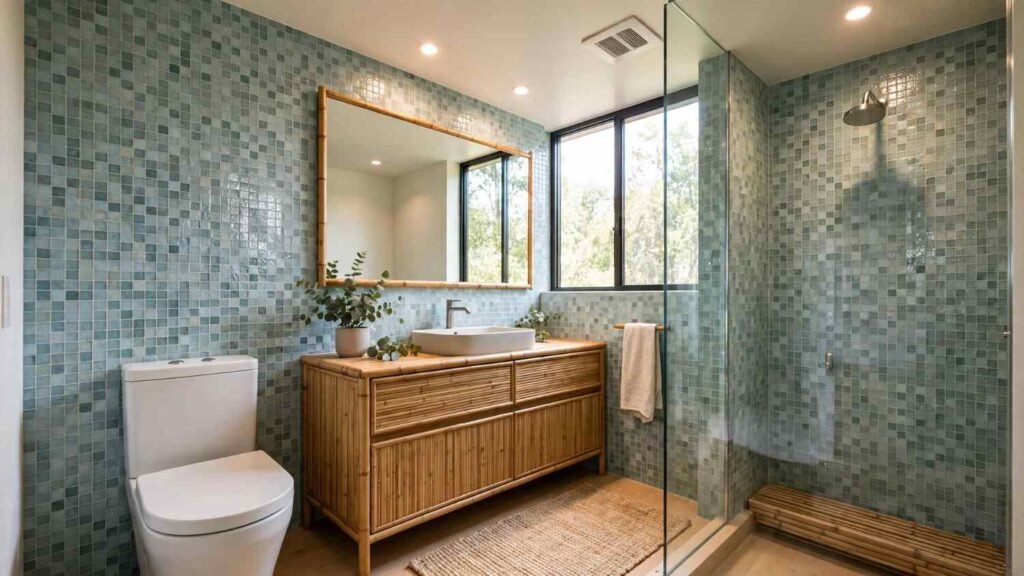
Sustainable bathroom flooring is material sourced or manufactured with a reduced environmental footprint, commonly recycled glass tile, rapidly renewable bamboo, or reclaimed ceramic. I steer homeowners toward these when durability and moisture resistance can both be confirmed, since not every “sustainable” material performs well in a wet room.
Recycled glass tile holds up to moisture exceptionally well and comes in finishes that rival traditional ceramic. Reclaimed tile offers a lower embodied-carbon footprint but requires careful sourcing to confirm the material meets current slip-resistance standards for bathroom floors.
Non-Toxic, Low-VOC Paints and Sealants
Low-VOC paint is formulated with a reduced concentration of volatile organic compounds, which lowers off-gassing and improves indoor air quality during and after a remodel. I specify these on essentially every project now, since the price difference compared to standard paint has nearly disappeared.
Grout sealants and caulking also come in low-VOC formulations, which matters in a small, enclosed room like a bathroom where ventilation is already working overtime. This is a detail many remodels skip, even though it costs almost nothing extra to get right.
California Title 24 and Green Building Codes
Title 24 is California’s building energy efficiency standard that sets mandatory requirements for water heating, lighting, and ventilation systems in residential remodels. I build every project around these requirements first, since a remodel that fails Title 24 compliance cannot pass final inspection regardless of how it looks.
Inspectors checking a bathroom remodel for Title 24 compliance look closely at water heater efficiency ratings, lighting fixture types, and exhaust fan specifications. California’s Building Energy Efficiency Standards require newly installed lighting in bathrooms to be high-efficacy, which rules out standard incandescent fixtures outright.
Rebates, Tax Incentives, and Utility Programs in California
California utility companies and water districts offer rebates ranging from $50 to several hundred dollars per fixture for qualifying low-flow toilets, water heaters, and greywater systems. I check current program listings before finalizing any remodel budget, since these programs change frequently and vary significantly by utility provider and county.
Programs like TECH Clean California offer incentives specifically for heat-pump water heater installations, which can offset a meaningful portion of the upfront cost difference. Some municipal water districts also run turf and fixture rebate programs that extend to bathroom remodels specifically.
Cost vs. Long-Term ROI of Eco-Friendly Upgrades

Eco-friendly bathroom upgrades typically cost 10% to 20% more upfront than standard fixtures and materials, but recover that difference through utility savings within five to eight years on average. I walk every homeowner through this math project by project, since the payback period shifts depending on local utility rates and household water use patterns.
Low-flow fixtures and LED lighting post the fastest payback, often inside two years. Tankless water heaters and greywater systems take longer to break even but add resale value that standard fixtures don’t carry in a market increasingly aware of water costs.
Choosing a Contractor for a Sustainable Bathroom Remodel
A contractor experienced in sustainable remodeling understands water heater sizing, Title 24 documentation, and fixture certification requirements well enough to avoid costly inspection delays. I’d ask any contractor directly how many eco-friendly remodels they’ve completed in the past year, not just whether they’re willing to install the fixtures a homeowner requests.
Credentials matter here, but so does a contractor’s willingness to walk through the cost-versus-savings math honestly rather than upselling every green option available. We treat this transparency as a baseline requirement, not a bonus, on every project we take on.
Conclusion
An eco-friendly bathroom remodel ties together efficient fixtures, smarter water heating, sustainable materials, and California’s code requirements into one cohesive project.
These choices compound over the life of the home, cutting utility costs while adding resale value most standard remodels never capture.
We build these details into every project from day one, and Tiny Home Builders California can help you plan a bathroom remodel that performs for decades.
Frequently Asked Questions
How much water can an eco-friendly bathroom remodel actually save?
A full eco-friendly bathroom remodel typically cuts water use by 30% to 50% compared to a standard renovation. Combining a dual-flush toilet, low-flow showerhead, and WaterSense faucet drives most of that reduction.
Is a low-flow toilet enough to meet California water codes?
Yes, a 1.28-gallon-per-flush toilet meets California’s current plumbing fixture standard. Older 1.6-gallon models no longer satisfy new installation requirements under the state plumbing code.
Do tankless water heaters work well for small bathrooms?
Yes, tankless water heaters work especially well in small bathrooms since they mount on a wall and eliminate the need for tank storage space. They also reduce standby energy loss compared to traditional tank units.
What rebates are available for green bathroom remodels in California?
Rebates vary by utility provider and typically range from $50 to several hundred dollars per qualifying fixture. Heat-pump water heaters often qualify for the largest available incentives through state and utility programs.
Are eco-friendly bathroom materials more expensive?
Eco-friendly materials generally cost 10% to 20% more upfront than standard options. Utility savings and rebates typically offset this difference within five to eight years.
How long does a sustainable bathroom remodel take?
A sustainable bathroom remodel typically takes four to eight weeks, similar to a standard remodel timeline. Permitting for greywater systems or major plumbing changes can add extra time.
What should I ask a contractor about eco-friendly remodeling?
Ask how many eco-friendly remodels the contractor has completed and how they handle Title 24 compliance documentation. Also ask them to walk through the cost-versus-savings timeline honestly before signing a contract.