Kitchen remodel styles in 2026 center on warm minimalism, natural materials, and layouts built for real daily use rather than trend-chasing. I’ve walked enough California kitchens this year to see the pattern clearly: homeowners want a space that photographs well but, more importantly, holds up to a decade of actual cooking, gathering, and mess. The all-white, all-matching kitchen is losing ground to warmer tones, mixed textures, and finishes that show character instead of hiding it.
Getting this choice wrong is expensive, and a kitchen remodel isn’t something most people redo every few years.
This guide walks through the major 2026 kitchen styles, the materials and colors driving them, how layout and lighting reinforce each look, and how to land on the right style for your home and budget. I’ll also cover what it takes to execute that vision well once you’ve picked a direction.
What Defines a Kitchen Remodel Style in 2026?
A kitchen remodel style is the combination of layout, cabinetry, color palette, materials, and hardware that gives a kitchen a consistent visual identity. I think of style as the sum of several smaller decisions rather than one single choice; the cabinet door profile, the countertop material, the backsplash, the lighting fixtures, and the hardware finish all have to agree with each other or the room feels disjointed.
2026 styles lean warmer and more textured than the kitchens of the early 2020s. Where the last cycle favored stark white cabinetry and bright quartz, this year’s kitchens use wood tones, matte finishes, and more visible material variation.
Core Elements That Shape a Kitchen Style
Five elements define any kitchen style: cabinet color and door style, countertop material, backsplash treatment, hardware finish, and lighting fixture design. Change any one of these and the kitchen reads differently even with the same layout underneath it.
How 2026 Styles Differ From Past Trends
The biggest shift this year is away from pure monochrome kitchens and toward intentional contrast: dark lower cabinets with lighter uppers, warm wood accents against painted surfaces, and textured stone instead of uniform slab quartz.
Modern Kitchen Style – Clean Lines and Minimalist Function
Modern kitchen style is defined by flat-panel cabinetry, minimal ornamentation, and a restrained material palette built around clean horizontal and vertical lines. I see this style holding steady in 2026, though it’s softened compared to the stark, all-white modern kitchens of a few years back.
Handleless or integrated-pull cabinets stay central to this look, paired with waterfall-edge countertops and hidden appliances. The 2026 version swaps pure white for warmer neutrals greige, soft taupe, and muted sage while keeping the same uncluttered geometry.
Modern kitchens photograph well and suit smaller footprints because the lack of visual noise makes a room feel larger than it is.
Contemporary Kitchen Style – Evolving With Current Trends
Contemporary kitchen style describes a look that shifts with current design trends rather than locking into one fixed aesthetic, which makes it the most changeable of all 2026 kitchen styles. Unlike modern, which has fairly fixed rules, contemporary borrows whatever is current this year, which means mixed metals, natural stone with heavy veining, and two-tone cabinetry.
A contemporary kitchen in 2026 often combines a matte black faucet, a warm wood island, and a patterned tile backsplash in one room, something a strict modern kitchen would never do.
This style ages faster than others precisely because it’s built to reflect the current moment, which is worth knowing before committing to it for the long term.
Transitional Kitchen Style – Blending Traditional and Modern
Transitional kitchen style blends traditional details like shaker-style cabinet doors with the simplified color palettes and clean countertops of modern design. It remains one of the most requested styles I come across because it resists dating the way pure modern or pure traditional kitchens can.
The shaker cabinet door is the anchor of transitional style, and in 2026 it’s showing up in warmer wood tones and soft matte paint colors rather than the cool gray that dominated a few years ago.
Transitional kitchens pair well with a range of architectural home styles, which is part of why the look holds broad appeal across different buyers.
Farmhouse and Modern Farmhouse Kitchen Styles

Farmhouse kitchen style uses apron-front sinks, shaker cabinetry, open shelving, and warm wood tones to create a lived-in, functional aesthetic rooted in rural design traditions. Modern farmhouse strips out some of the more rustic elements reclaimed wood, exposed beams and replaces them with cleaner lines and simpler hardware while keeping the apron sink and shaker door.
2026 farmhouse kitchens are moving away from the black-and-white “modern farmhouse” look that dominated the last several years, trading it for warmer wood tones and cream or butter-yellow cabinetry.
Traditional Kitchen Style – Timeless Craftsmanship Details
Traditional kitchen style relies on raised-panel cabinetry, decorative molding, and furniture-like detailing to create a formal, classic look that has stayed in demand for decades. This style tends to show up most in larger, older homes where the architecture already leans formal.
Granite and marble countertops remain common choices here, along with ornate hardware and detailed crown molding above the cabinets.
Traditional kitchens require more skilled trim and millwork than most other styles, which affects both cost and the craftsmanship bar a builder needs to clear.
Japandi Kitchen Style – Minimalism Meets Warmth
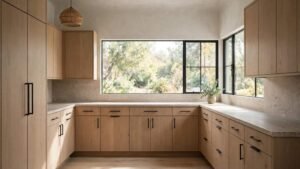
Japandi kitchen style combines Japanese minimalism with Scandinavian warmth, using natural wood, muted earth tones, and uncluttered surfaces to create a calm, functional space. This is one of the fastest-growing styles I’ve tracked heading into 2026, likely because it answers the complaint people had with stark modern kitchens that they felt were cold.
Japandi kitchens favor light oak or ash cabinetry, matte black or bronze hardware, and heavily reduced counter clutter, often paired with closed storage to keep surfaces clear.
Coastal and California Casual Kitchen Styles
Coastal kitchen style uses light woods, soft blues and whites, and natural textures to evoke a relaxed, beach-adjacent aesthetic, while California casual softens that palette further with warm neutrals suited to inland and urban homes. Both styles lean on natural light and airy layouts, which makes them popular across much of the state given the climate and architecture already common here.
California casual in particular blends well with the mid-century and ranch-style homes found throughout much of the state, rather than forcing a beach theme onto an architecture that doesn’t naturally support it.
Industrial Kitchen Style – Raw Materials and Exposed Elements
Industrial kitchen style uses exposed materials metal, brick, concrete, and reclaimed wood to create a raw, utilitarian aesthetic borrowed from converted warehouse spaces. Open shelving on metal brackets, exposed ductwork, and dark matte cabinetry define this look.
Industrial remains a smaller niche among 2026 styles, best suited to loft-style homes or additions where the architecture already supports exposed structural elements rather than hiding them behind drywall.
Warm Minimalist Kitchen Style – 2026’s Leading Direction

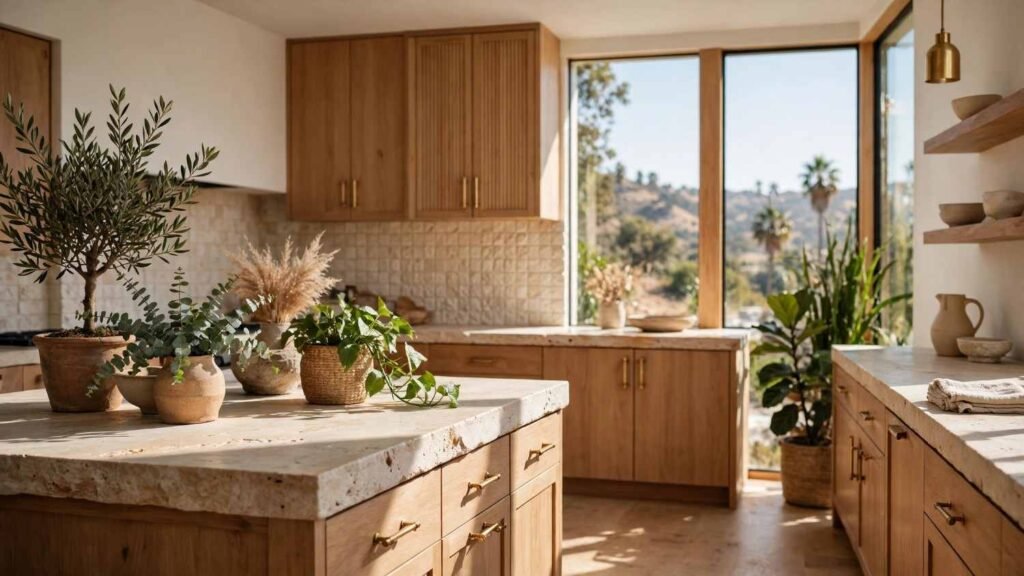
Warm minimalist kitchen style strips a kitchen down to simple forms and clean lines, the same as modern design, but replaces the cool, stark palette with warm wood tones, soft whites, and tactile natural materials. This is the style I’d call the defining direction for 2026; it shows up across nearly every builder and designer forecast I’ve reviewed this year.
The core move is swapping the cold materials of 2020-era modern kitchens (stark white quartz, chrome, glossy lacquer) for warmer equivalents: honed stone, brushed brass or matte black hardware, and white oak cabinetry.
Warm minimalism also tends to age better than stricter modern or contemporary looks because the warmth keeps the room from feeling clinical five or ten years down the line, which matters more to most homeowners than chasing the newest trend.
This style works particularly well paired with open-concept kitchen layouts since the simplified material palette keeps a larger connected space from feeling visually busy.
Color Trends Shaping 2026 Kitchen Remodels
The dominant color trend in 2026 kitchens is warm, earthy neutrals replacing the cool grays and stark whites that defined the previous design cycle. Sage green, warm taupe, terracotta, and deep forest tones are all showing up as cabinet colors, especially on kitchen islands paired with lighter perimeter cabinetry.
Two-tone cabinetry a different color on the island than on the surrounding cabinets continues gaining ground, and it’s one of the easier ways to add visual interest without fully committing to a bold color throughout the room.
Cabinet Color Trends
Warm wood tones, particularly white oak and walnut, are leading cabinet material choices in 2026, often left unpainted to show the natural grain rather than covered in solid color. Where paint is used, it tends toward warm, muted tones rather than pure white or cool gray.
Countertop and Backsplash Color Pairings
| Kitchen Style | Common Countertop Color | Common Backsplash Pairing |
| Warm Minimalist | Honed cream or beige stone | Matching stone slab or simple tile |
| Farmhouse | Soft white or warm marble-look | Subway tile or beadboard |
| Japandi | Light warm stone | Minimal stone or matte tile |
| Traditional | Granite or marble | Patterned mosaic |
| Contemporary | Bold veined stone | Mixed-material or textured tile |
This table shows how countertop and backsplash color choices shift across styles, even when the underlying cabinet layout stays similar.
Cabinet Styles and Material Choices by Design Style
Cabinet door style is the single biggest visual signal of kitchen design style, with flat-panel, shaker, and raised-panel doors each signaling a different aesthetic direction. Flat-panel doors read as modern or Japandi, shaker doors read as transitional or farmhouse, and raised-panel doors read as traditional.
Material choice matters as much as door profile. Solid wood cabinetry in white oak or walnut dominates warm minimalist and Japandi kitchens in 2026, while painted MDF remains common and cost-effective for transitional and farmhouse styles.
Countertop Materials Matched to Each Kitchen Style
Countertop material should match the durability needs of the household as much as the visual style, since quartz, granite, marble, and butcher block each perform differently under daily use. Quartz remains the most practical choice across nearly every style because it resists staining and scratching without the sealing maintenance that natural stone requires.
Natural stone, particularly honed granite or soapstone, suits traditional and farmhouse kitchens where some material variation and patina over time is part of the appeal rather than a flaw.
Kitchen Layouts That Support Each Style
Kitchen layout and style are connected because an open-concept island layout reads differently in a modern kitchen than the same layout does in a traditional one. Galley layouts suit smaller farmhouse and traditional kitchens where enclosed, defined spaces match the architecture, while large islands suit modern, contemporary, and warm minimalist kitchens built for open floor plans.
L-shaped layouts remain the most flexible option across styles since they accommodate an island without requiring the larger footprint a full open-concept layout demands.
Lighting Choices That Reinforce a Kitchen’s Style
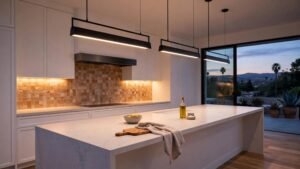
Lighting fixture choice reinforces kitchen style as much as cabinetry does, since a linear black pendant signals a different aesthetic than a woven rattan or brass lantern fixture over the same island. Matte black and brushed brass dominate warm minimalist and Japandi kitchens in 2026, while traditional kitchens continue favoring more ornate, multi-arm fixtures.
Under-cabinet lighting has become close to standard across every style now, both for task lighting and for the way it highlights backsplash and countertop material texture after dark.
How to Choose the Right Kitchen Style for Your Home
Choosing the right kitchen style starts with matching the remodel to your home’s existing architecture rather than picking a style purely from inspiration photos. A strict modern kitchen can feel out of place in a Spanish Revival home, while an ornate traditional kitchen can overwhelm a smaller mid-century ranch.
Budget and durability needs narrow the field further. A family with young children and heavy daily kitchen use benefits more from durable quartz and warm minimalist simplicity than from high-maintenance natural stone or delicate open shelving.
Matching Style to Architecture and Existing Home Features
Homes with strong existing architectural character, original millwork, specific window styles, and established flooring tend to look best with a kitchen style that complements rather than fights those existing features.
Budget, Durability, and Long-Term Value Considerations
Style choices with long-term resale value tend to avoid extremes in either direction. Warm minimalist and transitional styles consistently test well with buyers because they read as current without feeling trend-locked to one specific year.
Working With a Builder to Execute Your Kitchen Style Vision
Executing a chosen kitchen style well depends on a builder’s craftsmanship, material sourcing, and project management as much as the design plan itself. A great style concept falls apart quickly if cabinet installation is uneven, if countertop seams are visible, or if the builder substitutes lower-grade materials than what was specified.
I’d tell any homeowner to ask a prospective builder directly about their material sourcing, their trade partners for specialty work like custom millwork or natural stone fabrication, and how they handle changes mid-project. The answers tell you more about construction quality than any portfolio photo does.
A kitchen remodel is also a smaller, contained version of the same craftsmanship and project management standards that matter on a full custom home build; the same questions about materials, sequencing, and transparency apply either way.
Conclusion
A kitchen’s 2026 style comes down to layout, cabinetry, material, color, and lighting working together as one cohesive decision, not five separate ones.
Warm minimalism leads the broader shift this year, but transitional, Japandi, and farmhouse styles each hold their own long-term appeal depending on your home’s architecture.
We build kitchens with the same craftsmanship standard behind every home we construct. Reach out to Tiny Home Builders California to start planning your remodel.
Frequently Asked Questions
What is the most popular kitchen style for 2026?
Warm minimalism is the most popular kitchen style for 2026. It replaces the stark white, cool-toned modern kitchen with warm wood tones and softer neutrals.
What’s the difference between modern and contemporary kitchen styles?
Modern kitchen style follows fixed design rules centered on clean lines and minimal ornamentation. Contemporary style shifts with current trends instead of locking into one fixed look.
Is the all-white kitchen trend over in 2026?
The all-white kitchen trend has significantly declined in 2026. Homeowners are favoring warm neutrals, wood tones, and two-tone cabinetry over stark, monochrome white kitchens.
What cabinet color is trending most in 2026?
Warm wood tones like white oak and walnut are trending most in 2026. Sage green and warm taupe are the leading painted cabinet colors where paint is used.
How much does a kitchen remodel cost by style?
Costs vary most by material choice rather than style name alone. Natural stone, custom millwork, and solid wood cabinetry raise costs more than the style label itself.
Can I mix two kitchen styles in one remodel?
Mixing two kitchen styles works well when done intentionally, such as pairing transitional cabinetry with modern countertops. Unplanned mixing tends to make a kitchen feel disjointed instead.
How do I know which kitchen style will stay timeless?
Styles that avoid extreme trend elements tend to stay timeless longest. Transitional and warm minimalist styles consistently age better than highly trend-specific looks.