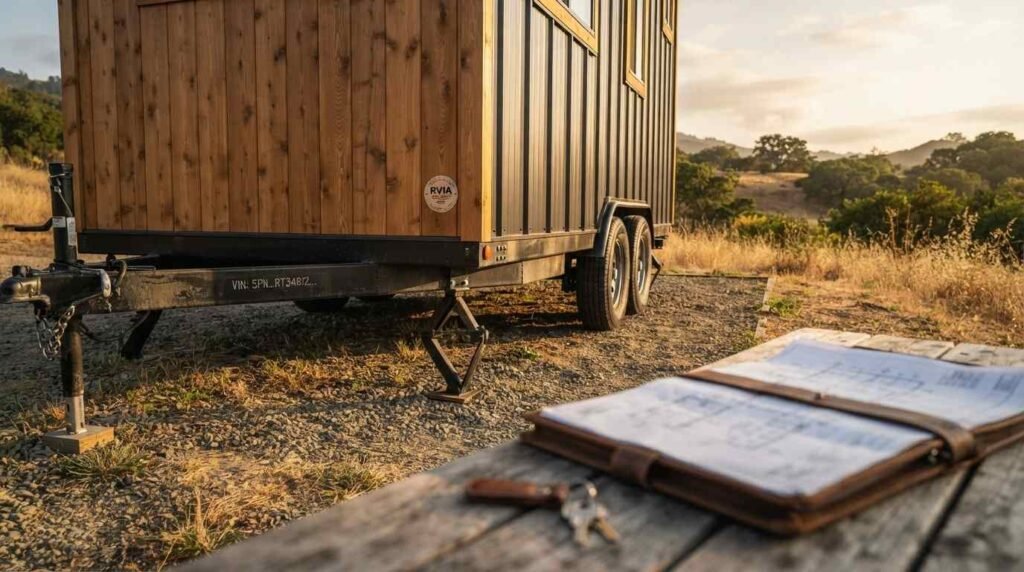
A tiny house on wheels, or THOW, is a permanently framed dwelling built on a road-legal trailer chassis, and it moves through a permitting and certification path that looks nothing like standard home construction. I walk buyers through this process constantly, and the confusion is almost always the same.
Getting this wrong costs real money. Uncertified builds get denied financing, rejected by insurers, and flagged during placement review, which leaves owners holding an expensive structure they cannot legally occupy.
This guide covers what the process includes, the agencies involved, certification standards, trailer titling, building and placement permits, the inspection sequence, documentation, timelines, and quality signals.
What the THOW Permitting and Certification Process Actually Covers
The THOW approval process is not one permit. It is three parallel tracks that each answer a different question: is the trailer road legal, is the structure built to a recognized standard, and is the site allowed to host it?
I explain it that way because most people arrive expecting a single building permit. That expectation causes delays.
A tiny house on wheels sits in a regulatory gray zone by design. It has a chassis, axles, and a VIN like a vehicle. It also has framing, insulation, plumbing, and electrical like a house.
Tiny House on Wheels vs. Park Model vs. Manufactured Home
These three categories get used interchangeably, and they are not the same thing. A manufactured home is built to the federal HUD Code administered by the Office of Manufactured Housing Programs and carries a red certification label.
A park model RV is built to ANSI A119.5 and stays under 400 square feet of floor area. A THOW usually gets certified as a park model RV or a recreational vehicle, depending on the builder’s chosen pathway.
Understanding your classification determines every downstream approval. It sets your inspection route, your registration requirements, and where you are allowed to park.
Why THOWs Fall Under Vehicle Rules Instead of Building Codes
California treats most tiny homes on wheels as vehicles first. That means the Department of Motor Vehicles and the Department of Housing and Community Development lead, not your city building department.
The logic is simple. A structure on a licensed trailer chassis is registered and titled as a trailer, so it falls outside the California Building Standards Code that governs foundation-built homes.
Local jurisdictions still control where the unit lands. That is a separate approval entirely, and I cover it further down.
The Three Approval Tracks: Vehicle, Certification, Placement
Track one is vehicle registration through the DMV, which produces a title, license plate, and VIN record. Track two is third-party certification, which proves the structure meets a recognized construction standard.
Track three is local placement approval, which covers zoning, utility hookups, and any site work required. All three tracks run on different timelines and involve different reviewers.
I sequence them deliberately on every project we build. Certification finishes before placement review begins, because local planners want to see the label.

The Regulatory Bodies That Govern THOWs in California
Four distinct authorities touch a THOW project. Knowing which one answers which question saves weeks of phone calls.
California DMV and Trailer Registration
The DMV handles the chassis. It issues the title, assigns or verifies the VIN, records the weight rating, and produces the registration that makes the unit legally towable.
Every THOW we deliver gets a verified VIN and a clean title before it leaves our shop. Without that record, the unit is not transportable on public roads.
California HCD and Recreational Vehicle Classification
HCD governs recreational vehicle and park model classification within the state. It also administers the Employee Housing Act and mobilehome park regulations that determine where certified units are permitted to sit long term.
HCD insignia and third-party certification labels serve overlapping roles here. Which one applies depends on how the unit is classified and where it will be placed.
Local Building Departments and Planning Commissions
Your city or county controls placement, zoning compliance, utility connections, and any permanent site improvements. This is the layer with the widest variation across California.
Two neighboring counties routinely reach opposite conclusions on the same unit. I always verify local rules before construction starts, never after.
Third-Party Certification Standards for Tiny Homes on Wheels
Certification is the single strongest quality signal in this entire industry. It is independent proof that a licensed inspector reviewed the build against a published standard.
Anyone can weld a frame and screw down sheathing. Certification separates real builders from hobbyists with a nail gun.
ANSI A119.5 Park Model RV Standard
ANSI A119.5 is the recognized consensus standard for park model recreational vehicles. It governs structural loads, egress, electrical systems, plumbing, propane, fire safety, and thermal envelope requirements.
The RV Industry Association maintains the standards development process behind it. A unit built to A119.5 is engineered for long-term occupancy, not weekend camping.
NOAH and RVIA Certification Pathways
NOAH certification inspects tiny homes on wheels against A119.5 and NFPA standards, with inspections performed during construction rather than after completion. RVIA membership certification applies to manufacturers and covers units built to RV standards.
Both produce a physical label and an inspection record. The pathway matters because lenders and insurers recognize specific programs.
What a Certification Label Proves to Lenders and Insurers
A certification label is the document that turns a tiny home from a project into an asset. Lenders use it to underwrite. Insurers use it to write policies.
Park owners use it to approve tenancy. I have watched uncertified units sit unfinanced for months while identical certified units closed in weeks.
Trailer Registration, VIN Verification, and Titling Requirements
The trailer is the legal foundation of the entire structure. Everything above it depends on that chassis being properly documented.
SPCNS Titling and VIN Assignment
Custom-built trailers in California go through Specially Constructed vehicle titling, which requires a VIN verification appointment and documentation of the build. Purpose-built tiny house trailers from established manufacturers arrive with a VIN already assigned.
I strongly prefer manufacturer-titled trailers. The paperwork is cleaner, and the weight ratings are certified.
Weight Ratings, GVWR, and Road-Legal Dimensions
Gross vehicle weight rating sets your hard ceiling on finished weight, and exceeding it makes the unit illegal to tow. Federal dimensional limits generally cap width at 8 feet 6 inches and height at 13 feet 6 inches for movement without a permit.
Every design decision affects this math. Tile, hardwood, and steel siding add hundreds of pounds fast.
Insurance Documentation Tied to Registration
Insurers require the title, the VIN, the certification label, and often photographs of the finished unit. Coverage type follows classification, so a certified park model RV gets different treatment than an unregistered structure.
Building Permits and Placement Approvals for THOWs
This is where most projects stall. The unit itself is finished and certified, and then the site becomes the bottleneck.
When a Building Permit Is Required Versus Exempt
A THOW on a registered trailer typically does not need a building permit for the structure itself. The exemption exists because it is classified as a vehicle, not a building.
The moment you add a permanent foundation, a deck, a carport, or a fixed utility connection, permits apply. That work is real construction on real property.
Zoning, ADU Ordinances, and Movable Tiny House Rules
California’s statewide accessory dwelling unit framework has expanded dramatically, and HCD publishes the current ADU handbook and standards that local jurisdictions must follow. Several cities, including Fresno, San Jose, and Los Angeles, have adopted specific movable tiny house ordinances.
Others still classify THOWs as recreational vehicles with occupancy time limits. I check the current municipal code and speak with a planner before committing to any site.
Utility Connection and Site Improvement Permits
Water, sewer or septic, and electrical service connections require local permits and inspections. Septic systems bring in the county environmental health department as an additional reviewer.
Off-grid systems change the equation but do not eliminate review. Solar arrays, greywater, and composting toilets each carry their own approval requirements.
The Inspection Sequence From Build Start to Final Approval
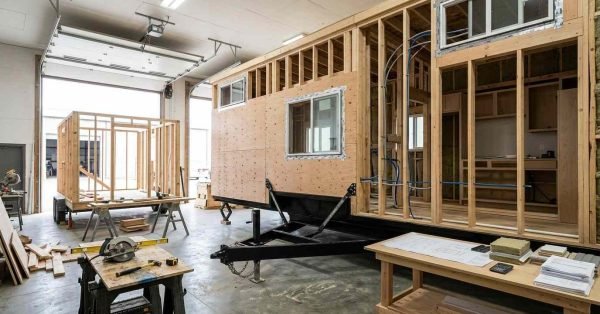
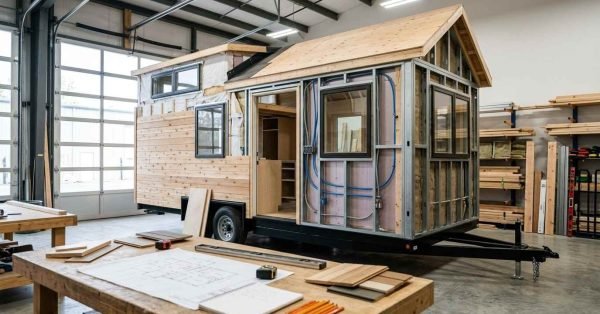
Certification inspections happen during construction, not at the end. That timing is deliberate, because inspectors need to see systems before they get covered.
I schedule inspections around framing milestones. Missing a window means opening up finished walls.
Frame, Anchoring, and Structural Inspections
The first inspection reviews the trailer, the sill attachment, the wall framing, and the roof structure. Inspectors verify anchoring hardware, fastener schedules, sheathing, and load paths from the roof down to the axles.
Wind and transport loads govern here. A THOW experiences forces at highway speed that a stationary house never sees.
Electrical, Plumbing, and Propane Inspections
Rough-in inspection covers wiring runs, panel sizing, GFCI and AFCI protection, water supply, drainage, venting, and propane line pressure testing. Propane gets the most scrutiny because leaks in a small sealed volume are genuinely dangerous.
Standards here follow the National Electrical Code published by NFPA alongside RV-specific requirements. Both apply to a certified unit.
Insulation, Egress, and Fire-Safety Checks
Inspectors verify insulation values, vapor control, and continuity of the thermal envelope before drywall or paneling goes up. Egress windows, smoke alarms, carbon monoxide detectors, and fire extinguisher placement all get confirmed.
Loft egress is the detail people underestimate. Sleeping lofts need a compliant exit route, and retrofitting one is expensive.
Final Inspection and Certificate Issuance
Final inspection confirms all systems function, all corrections were completed, and the finished unit matches the approved plans. The inspector then issues the certification label and data plate.
That label goes permanently on the unit. It carries the standard, the inspection agency, and the identifying build number.
Documentation Every THOW Owner Should Keep on File
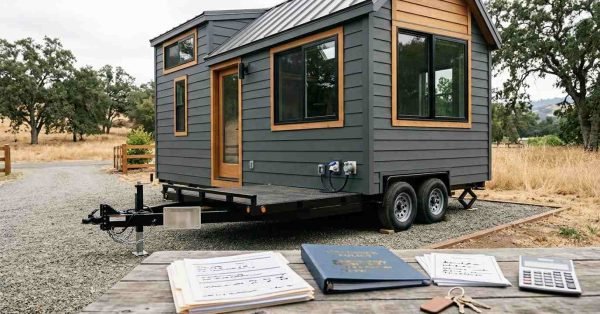
Your paperwork is your proof of quality, and it directly affects resale value. I hand every client a complete build package at delivery.
Build Records, Load Calculations, and Material Specs
Keep the approved plans, engineering calculations, weight distribution documentation, and specifications for framing, insulation, windows, and roofing. Appliance manuals, warranty registrations, and system diagrams belong in the same file.
Future buyers ask for these records. Future inspectors ask for them too.
Certification Labels, Data Plates, and Inspection Reports
Photograph the certification label and data plate, then store copies with your title and registration. Inspection reports document exactly what was verified and when.
Timelines, Costs, and Common Delays in the Approval Process
Realistic expectations prevent most of the frustration I see. The approval work runs parallel to construction rather than after it.
Typical Permit and Certification Timeframes
Trailer titling and VIN verification move in days to a few weeks. Certification inspections align with build milestones across the construction schedule.
Local placement approval is the wild card. Simple ADU permits clear in weeks, while discretionary reviews and variances stretch across months.
Rework, Re-Inspection, and Jurisdiction Delays
Failed inspections trigger corrections and a re-inspection fee. The costly version involves opening finished surfaces to fix concealed work.
Jurisdictional confusion causes the longest delays. I have seen projects bounce between a building department and a planning department for weeks over classification alone.
How do I know a builder handles permits and certification correctly?
How Permitting Discipline Signals Construction Quality
Compliance discipline reveals more about a builder than any showroom photo. A builder who navigates certification cleanly has systems, documentation habits, and accountability built into their process.
The reverse holds too. Builders who avoid inspection avoid oversight, and unsupervised work hides shortcuts.
Questions to Ask a Builder About Compliance
Ask which certification program they use and request a sample inspection report. Ask how they document weight calculations and who verifies their electrical and propane work.
Ask for the address of a completed unit that passed local placement review. Specific answers indicate real experience.
Red Flags in Uncertified or Undocumented Builds
Missing certification labels, absent engineering documentation, and vague answers about weight ratings are serious warnings. A builder who calls certification unnecessary is telling you their work has never been independently reviewed.
Sub-market pricing usually reflects skipped steps. Certification, engineering, and inspection all cost money to do properly.

How Certification Affects Financing, Insurance, and Resale Value
Certification converts a tiny home into a financeable, insurable asset. RV lenders, credit unions, and specialty tiny home lenders all require a recognized label before underwriting.
Insurance follows the same logic. Carriers price certified units as known quantities and treat uncertified structures as unquantified risk.
Resale is where the gap widens most. Certified units sell faster, appraise higher, and qualify for placement in RV parks and tiny home communities that reject uncertified builds outright.
Conclusion
You now understand the three approval tracks, the agencies involved, certification standards, the inspection sequence, and the documentation that proves real build quality.
Each of these areas deserves deeper study, and dedicated guides on trailer selection, ADU zoning, and inspection preparation expand on what this hub introduced.
We build certified, fully documented tiny homes across California. Talk with Tiny Home Builders California and start your project with compliance handled from day one.
Frequently Asked Questions
Do tiny homes on wheels need a building permit in California?
Usually no, because a THOW on a registered trailer counts as a vehicle. Permanent foundations, decks, and utility connections do require local permits.
What certification should a tiny house on wheels have?
Look for ANSI A119.5 park model certification through a recognized inspection program. That label proves independent verification of structural, electrical, plumbing, and fire-safety systems.
Can I legally live in a THOW full time in California?
It depends on local zoning. Cities with movable tiny house ordinances allow full-time occupancy, while others limit residency under recreational vehicle rules.
How is a THOW different from a manufactured home?
A manufactured home meets the federal HUD Code and sits on a permanent chassis foundation. A THOW is certified as a recreational vehicle and stays registered and towable.
Who inspects a tiny home on wheels during construction?
Third-party certification agencies inspect during the build, checking frame, systems, insulation, and safety features. Local inspectors review site work and utility connections separately.
Does certification affect tiny home financing?
Yes, significantly. Lenders require a recognized certification label to underwrite a tiny home loan, and uncertified units typically get denied outright.
How long does the THOW approval process take?
Trailer titling takes days to weeks, certification runs alongside construction, and local placement approval ranges from several weeks to several months.