
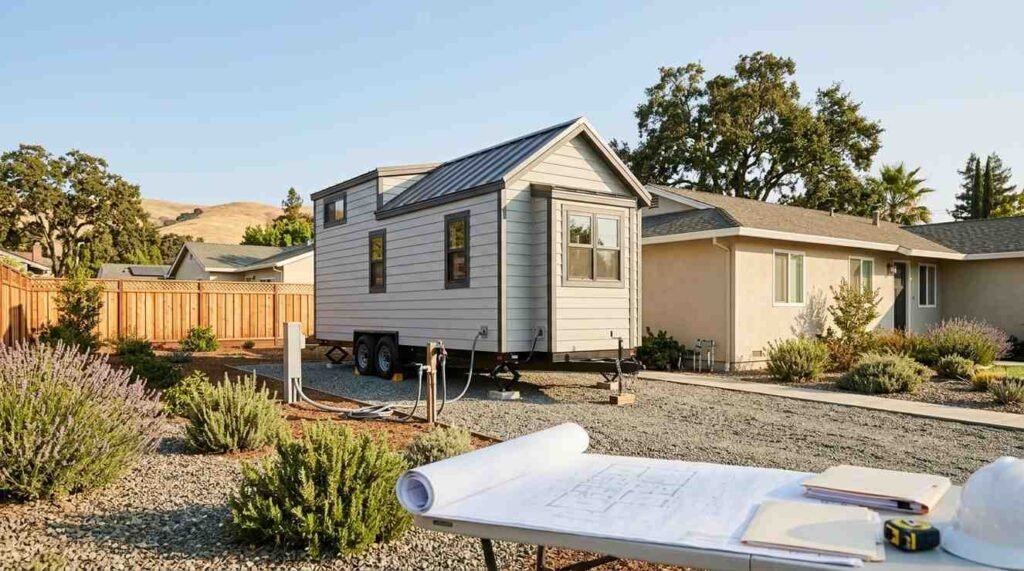
A tiny home on wheels is a compact dwelling built on a trailer chassis, and in California its legality depends far less on the home itself than on the zoning code of the parcel you park it on. I have watched buyers fall in love with a build before checking a single land use rule.
That order costs money. Placement legality drives financing, insurance, resale, and whether you keep the home where you put it. Getting it backward creates real loss.
This guide covers classification, zoning authority, ADU pathways, private land placement, parks, rural parcels, utilities, permits, fire zones, financing, enforcement, verification, and builder quality.
What Counts as a Tiny Home on Wheels Under California Law
Classification comes first, because every placement rule downstream keys off it. California does not have one single label for a small dwelling on a trailer. It has several, and each one unlocks a different set of parking options.
I always start here with clients. The exact same 300-square-foot home behaves like an RV in one county and like an accessory dwelling unit in the next.
THOW vs. Park Model RV vs. Manufactured Home
A tiny home on wheels usually falls into one of three buckets. A recreational vehicle built to ANSI or NFPA 1192 standards, a park model RV under 400 square feet, or a manufactured home built to federal HUD standards on a permanent chassis.
Manufactured homes carry a HUD label and get treated as housing in most residential zones. Park models and RVs get treated as vehicles, which limits long-term occupancy in many jurisdictions. The U.S. Department of Housing and Urban Development maintains the federal construction and safety standards that separate manufactured housing from recreational vehicles.
Why HCD, DMV, and Building Code Classifications Matter
Three agencies touch a tiny home on wheels in California. The Department of Housing and Community Development oversees manufactured housing and park models, the DMV registers vehicles, and local building departments enforce the California Residential Code.
Your paperwork trail decides which door you walk through. A home with an HCD insignia opens permitting conversations that a DMV-registered trailer simply cannot. I tell every buyer to collect the certification documents before the deposit clears.
Certifications That Change Where You Can Park
Certification is the single highest-leverage factor in placement. An RVIA seal signals recreational vehicle compliance. An HCD or HUD label signals dwelling-grade construction and inspection.
Some cities accept only certified units in specific zones. Others allow any unit that meets health and safety review. The California Department of Housing and Community Development publishes the current state standards that local agencies build their rules around.
How California Zoning Actually Controls Tiny Home Placement
Zoning is the real gatekeeper. It answers a simple question with complicated math: what uses are allowed on this specific parcel, and does a movable dwelling count as one of them?
Two parcels across the street from each other produce different answers. That happens constantly in California.
Zoning Districts, Land Use, and Permitted Uses
Every parcel sits inside a zoning district with permitted, conditionally permitted, and prohibited uses. Residential districts allow dwellings. Agricultural districts allow farm-related housing. Commercial and industrial districts usually prohibit residential occupancy outright.
A tiny home on wheels needs a permitted use category to attach to. Sometimes that category is accessory dwelling unit. Sometimes it is caretaker housing, farmworker housing, or temporary occupancy during construction.
State Law vs. City and County Authority
California sets a statewide floor and local governments build on top of it. State accessory dwelling unit law preempts many local restrictions, which is why the ADU route became the most reliable placement pathway in the state.
Local agencies still control setbacks, height, design standards, and utility requirements within state limits. So I read the state law first, then the local ordinance, then the specific parcel conditions.
Reading a Zoning Code Before You Buy Land
I pull three documents on any parcel: the zoning designation, the general plan land use designation, and the parcel-specific overlays. Overlays cover fire zones, coastal jurisdiction, flood areas, and historic districts.
Conflicts between these documents are common and expensive. Buying land without resolving them is the most costly mistake I see.
The ADU and JADU Pathway for Tiny Homes on Wheels
The ADU pathway is where most legal tiny home placements happen in California. State law requires cities to allow accessory dwelling units on lots with existing single-family or multifamily homes, subject to objective standards.
Movable tiny homes fit this pathway in a growing number of jurisdictions.
Movable Tiny Homes as ADUs
Cities including Fresno, San Luis Obispo, and Los Angeles County have written movable tiny homes into their ADU ordinances. The definitions vary, and that variation matters more than any statewide summary suggests.
Most ordinances require a minimum square footage, permanent utility connections, and skirting or foundation attachment. Some require removal of the wheels or the tongue.
Foundation, Utility, and Permanence Triggers
The line between vehicle and dwelling usually comes down to permanence. Permanent water, sewer, and electrical connections push a unit toward dwelling status.
Dwelling status brings building code and permit obligations along with legitimacy. That tradeoff sits at the center of nearly every placement decision I help evaluate.
Placement Rules on Private Residential Land
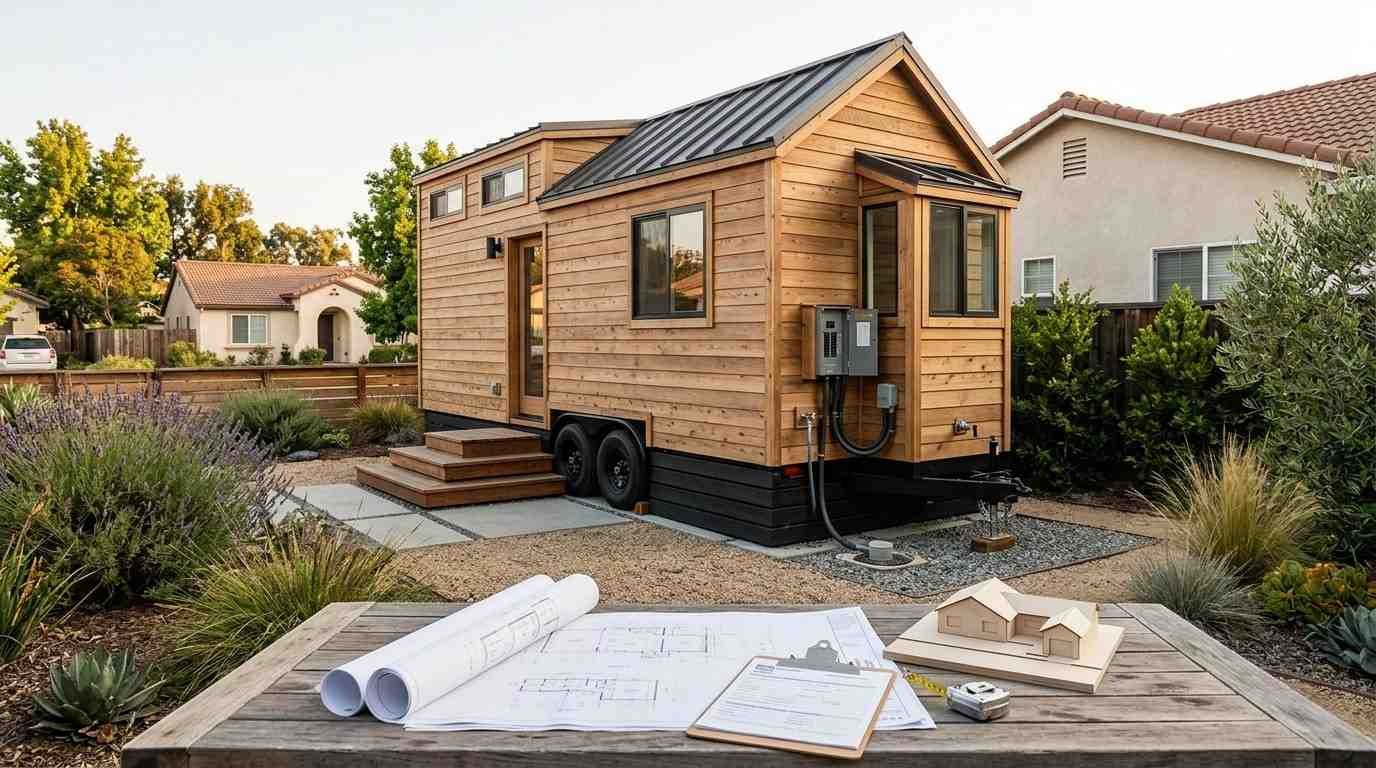
Private residential land is the most common placement target and the most heavily regulated. Owning the lot does not grant occupancy rights to a movable dwelling.
I explain it this way: the land gives you standing, the code gives you permission.
Setbacks, Lot Coverage, and Access
Setbacks dictate how close a structure sits to property lines. Rear and side setbacks for ADUs are often reduced to four feet under state law, which helps small units considerably.
Lot coverage limits total building footprint. Access requirements cover driveway width, emergency vehicle turning radius, and pathway lighting. A tiny home tucked behind a main house still needs a compliant path to the street.
Owner-Occupancy and Rental Restrictions
Some jurisdictions require the property owner to live on site when an ADU is rented. Short-term rental prohibitions apply to many movable ADUs.
These rules shape investment math directly. I walk investors through the local rental ordinance before we discuss build specifications.
Tiny Home Communities, RV Parks, and Mobile Home Parks
Parks solve the placement problem by handling zoning at the community level. The park already holds the entitlement, so residents inherit compliant land use.
The tradeoff is control. You follow park rules, pay space rent, and accept occupancy limits.
Long-Term Occupancy Limits
RV parks often cap continuous stays, sometimes at 30 days, sometimes at nine months, depending on local ordinance and park licensing. Mobile home parks permitted under the Mobilehome Parks Act allow permanent residency.
That distinction determines whether a park is a home or a stopover. I check the park’s HCD permit classification every time.
Park Model and RV Park Regulations
Park model RVs sized under 400 square feet fit many California park spaces cleanly. Larger custom builds sometimes exceed space dimensions or utility capacity.
Space width, hookup amperage, and sewer connection type all constrain what a park accepts. Confirming these before construction prevents an expensive redesign.
Rural, Agricultural, and Unincorporated County Placement
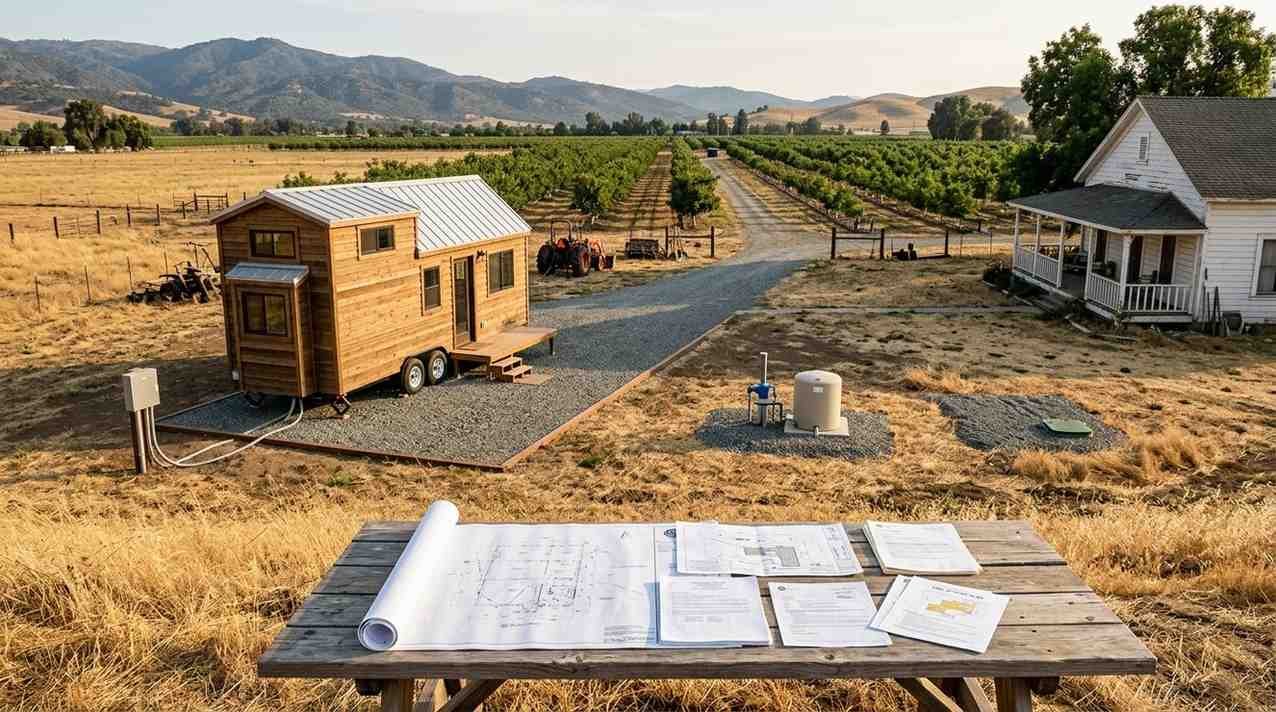
Unincorporated county land offers the widest placement flexibility in California and the highest infrastructure burden. Fewer neighbors means fewer complaints, and it also means no municipal water, sewer, or road maintenance.
I love rural parcels for tiny homes. I also respect what they demand.
Agricultural Employee and Caretaker Housing
Agricultural zones frequently permit farmworker housing, caretaker units, and secondary dwellings tied to active agricultural operations. The Employee Housing Act administered by HCD creates a distinct approval track for housing tied to agricultural employment.
These pathways carry occupancy conditions linked to the agricultural use. Losing the farm operation sometimes ends the housing entitlement.
Septic, Well, and Access Requirements
County environmental health departments govern septic and well approval. Percolation tests, setback distances from wells, and minimum parcel sizes all gate approval.
Fire access roads carry their own width and grade standards. A parcel with legal zoning and no compliant access road still cannot host a permitted dwelling.
Utility Hookups, Septic, and Off-Grid Compliance
Utilities decide whether a tiny home reads as a dwelling or a parked vehicle. This section drives more permitting outcomes than most buyers expect.
I treat the utility plan as part of the placement plan, never as an afterthought.
Permanent vs. Temporary Connections
Permanent connections involve buried conduit, a dedicated meter or subpanel, and a sewer or septic tie-in inspected by the local agency. Temporary connections use hoses, extension cords, and holding tanks.
Permanent connections trigger permits and unlock legitimacy. Temporary connections keep the unit mobile and keep it legally fragile.
Off-Grid Systems and California Health Approval
Off-grid tiny homes rely on solar arrays, battery storage, rainwater capture, and composting or incinerating toilets. County health departments approve alternative wastewater systems on a case-by-case basis.
Composting toilet acceptance varies widely across California counties. Graywater systems follow the California Plumbing Code, and I confirm local amendments before specifying any off-grid utility system .
Permits, Inspections, and Approval Timelines
Permitting is a sequence, not a single event. Understanding the order prevents the stall-outs that frustrate first-time buyers.
State law now requires cities to approve or deny ADU applications within 60 days of a complete submittal.
Permit Types You Encounter
Common permits include building, electrical, plumbing, mechanical, grading, encroachment, and septic. Some jurisdictions add a separate movable tiny home or ADU permit.
Design review applies in HOA neighborhoods and historic districts. Coastal parcels add a coastal development permit through the California Coastal Commission.
Who Signs Off and In What Order
Planning reviews land use and zoning compliance first. Building reviews construction and code compliance second. Environmental health, fire, and public works sign off on utilities, access, and defensible space.
Each department can stop the project. I sequence submittals so early rejections surface before construction dollars commit.
Fire, Safety, and Wildfire Zone Requirements
Wildfire risk reshaped California placement rules over the last decade. Fire requirements now influence siting, materials, and access on a large share of parcels statewide.
A significant portion of California land sits in elevated fire hazard classification.
Very High Fire Hazard Severity Zones
CAL FIRE maps fire hazard severity across the state, and the current fire hazard severity zone maps determine which construction standards apply to your parcel. Very High zones require ignition-resistant assemblies under California Building Code Chapter 7A.
Ember-resistant vents, Class A roofing, and dual-pane tempered windows become mandatory. These requirements affect tiny home construction specifications directly.
Egress, Defensible Space, and Anchoring
Defensible space rules require managed vegetation zones extending 100 feet from the structure. Egress standards cover window sizing and secondary exits.
Anchoring matters in seismic and wind-exposed sites. Tie-downs and pier systems keep a movable unit stable and satisfy inspectors reviewing tiny home construction quality standards.
Financing, Insurance, and Property Value Considerations
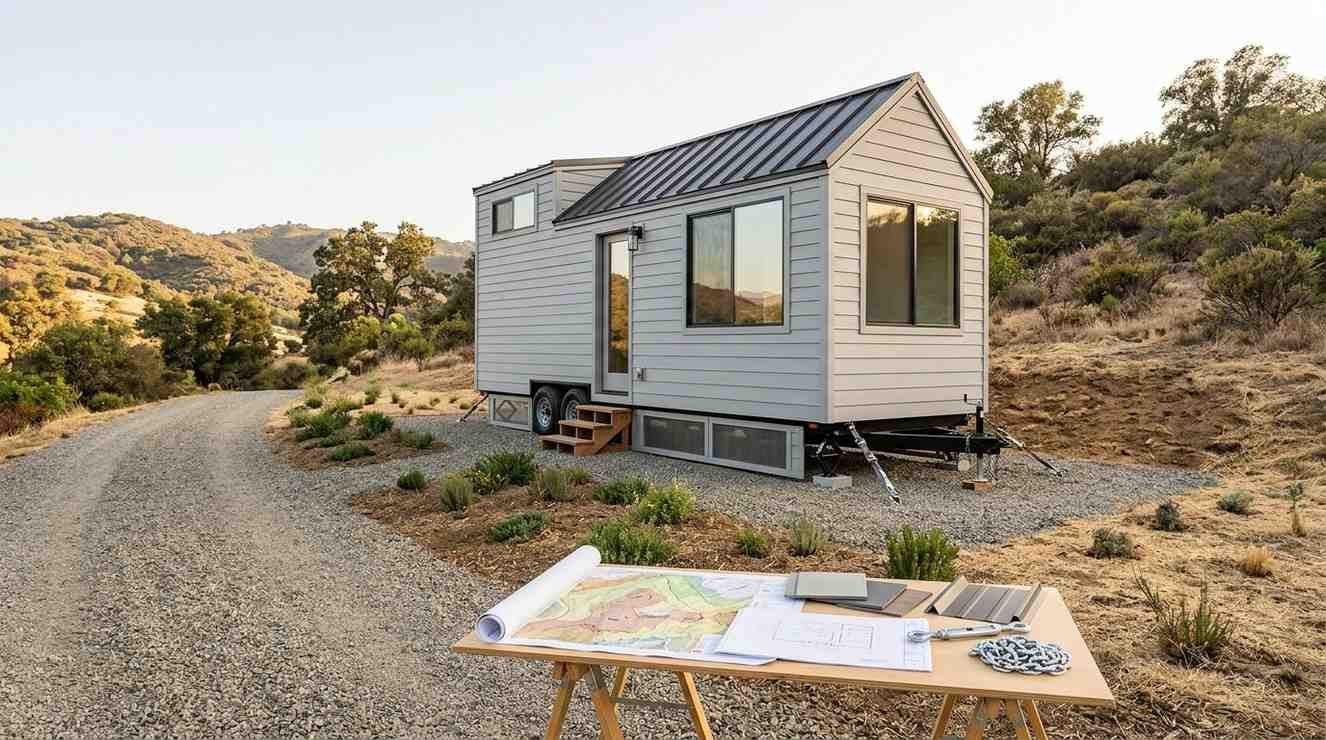
Financing and insurance follow classification, and classification follows placement. This is where zoning decisions turn into dollars.
I bring lenders into the conversation early. Their requirements often narrow the placement options faster than the zoning code does.
Chattel Loans vs. Real Property Financing
RV-classified tiny homes typically finance through chattel loans or RV loans, with shorter terms and higher rates. Units permitted as ADUs on owned land finance through home equity products, construction loans, or renovation mortgages.
Federal ADU financing guidance has expanded, and Fannie Mae’s accessory dwelling unit policies now recognize ADU value in appraisals under defined conditions.
Insurance Classification and Appraisal Impact
Insurers write RV policies, mobile home policies, or dwelling endorsements depending on classification and permanence. Permitted ADUs generally insure under a homeowner policy endorsement.
Appraisers credit permitted units and discount unpermitted ones. A legal placement protects resale value in a way that an unpermitted parking spot never does.
Enforcement, Violations, and Common Compliance Mistakes
Enforcement usually starts with a complaint. Understanding the trigger points helps owners stay ahead of them.
I have never seen enforcement ignore a documented neighbor complaint.
Code Enforcement Triggers
Visible utility runs, mail delivery to a secondary unit, parked vehicles, added structures, and neighbor complaints all trigger inspections. Aerial imagery reviews catch new structures in many counties.
Notices of violation carry correction deadlines, daily fines, and recorded liens. Recorded violations complicate refinancing and sale.
Mistakes That Cost Owners the Most
The costliest mistakes repeat constantly. Buying land before verifying zoning, assuming statewide ADU law overrides every local standard, running permanent utilities without permits, and skipping fire zone requirements.
Each mistake carries a fix, and every fix costs more than prevention did.
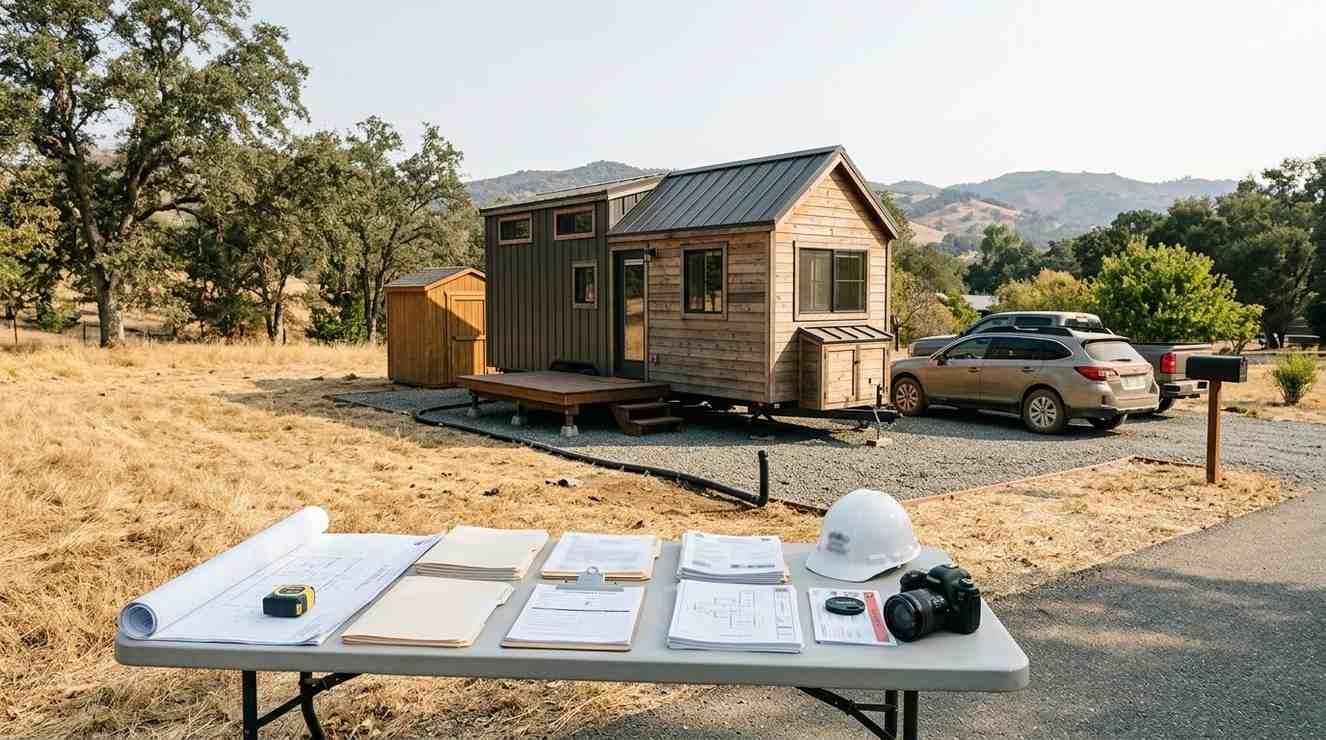
How to Verify Placement Legality Before You Commit
Verification is a process I run in a fixed order. It takes days, not months, and it prevents nearly every expensive surprise in this guide.
Start with the parcel, not the home.
The Pre-Purchase Zoning Checklist
Pull the assessor parcel number and confirm the zoning designation with the planning department. Request the general plan land use designation, all overlay districts, and the fire hazard severity classification.
Confirm water source, sewer or septic feasibility, and legal access. Verify the ADU ordinance text and any movable tiny home provisions. Check HOA covenants and recorded easements on the title report.
Document every answer in writing. Verbal confirmations from counter staff carry no weight during enforcement.
Questions to Ask Your Planning Department
I ask five questions every time. Does this parcel allow an accessory dwelling unit, does your ordinance permit a movable tiny home as an ADU, what certification do you require, what utility connections are mandatory, and what is the current review timeline?
Then I ask for the ordinance section numbers. Written citations turn a conversation into a record.
How Builder Quality Affects Zoning Approval
Construction quality shows up in permitting outcomes more than buyers expect. Inspectors approve documented, code-compliant work and stall on everything else.
This is where builder selection stops being a taste question and becomes a compliance question.
Certification, Documentation, and Inspection Readiness
A builder who delivers stamped plans, engineering calculations, certification labels, and inspection-ready assemblies shortens approval timelines. A builder who delivers a finished box with no paperwork creates a permitting dead end.
I ask builders for their certification path, their plan set, and references from permitted projects in the target jurisdiction. Those three items separate professional builders from hobby fabricators, and they anchor any serious evaluation of home builder quality .
Construction Standards That Survive Code Review
Code review scrutinizes structural framing, insulation values, egress, electrical systems, and fire-rated assemblies. Builds engineered to California Residential Code and Chapter 7A pass review with fewer corrections.
Durable framing, proper moisture management, and quality windows serve both the inspector and the owner. Good construction and easy approval come from the same set of decisions.
Conclusion
Classification, zoning, ADU pathways, utilities, permits, fire rules, financing, and enforcement all connect. Placement legality is one system, not eight separate hurdles.
California zoning keeps evolving toward small housing, and each subtopic here deserves its own deeper resource as your project takes shape.
We help buyers verify placement, secure permits, and build code-compliant homes. Talk with Tiny Home Builders California before you commit to land.
Frequently Asked Questions
Can I legally live in a tiny home on wheels in California?
Yes, when the unit is placed on a parcel that permits it. Most legal full-time placements happen through ADU ordinances or permitted mobile home parks.
Do all California cities allow movable tiny homes as ADUs?
No. State ADU law creates the pathway, but each city defines whether movable units qualify. Always confirm the local ordinance text before purchasing.
Can I put a tiny home on wheels in my backyard?
Often yes, on lots with an existing home, subject to local ADU standards. Setbacks, utilities, and certification requirements apply in every jurisdiction.
Do tiny homes on wheels need building permits in California?
Permits apply once the unit connects permanently to utilities or qualifies as a dwelling. RV-classified units in licensed parks follow different rules.
How long does tiny home permit approval take?
State law requires ADU decisions within 60 days of a complete application. Incomplete submittals restart the clock, so documentation quality drives timing.
Can I put a tiny home on raw rural land?
Sometimes, with county approval for septic, water, and fire access. Zoning permits the use, but infrastructure feasibility decides the outcome.
Does a permitted tiny home add property value?
Permitted units appear in appraisals and support resale value. Unpermitted units create disclosure problems and often reduce buyer confidence.