A luxury feature in a custom home is any element that upgrades performance, comfort, or craft beyond standard construction. I build homes across California, and I see the same thing weekly: buyers confuse price with quality. This guide separates the two.
California land costs and energy codes push high-end budgets in ways buyers rarely expect. I want you walking into builder meetings knowing exactly what drives cost and what drives value.
I cover luxury definitions, architecture, kitchens and baths, smart systems, energy performance, wellness amenities, outdoor living, materials, budgets, builder evaluation, and small-home luxury.
What Defines a Luxury Feature in a Custom Home
Luxury in custom construction comes down to three measurable things: material grade, execution tolerance, and system integration. Everything else is marketing language.
I use a simple test on every project. A feature earns the luxury label when it performs better, lasts longer, or requires a higher skill level to install than the code-minimum alternative.
Luxury vs. High-End vs. Upgraded Finishes
These three terms get used interchangeably, and that costs buyers money. An upgraded finish swaps a builder-grade item for a better catalog item. A high-end feature involves custom fabrication or specialty trades.
True luxury goes further. It means the design, the material, and the labor were all specified for your house and nowhere else.
I walk clients through this distinction before we price anything. It reframes the conversation from “what looks expensive” to “what actually is.”
Material Quality as the Baseline of Luxury
Material grade sets the ceiling on everything downstream. A 3cm quartzite slab and a 2cm engineered stone slab look similar in a rendering and behave nothing alike over twenty years.
I evaluate materials on four attributes: hardness, moisture behavior, thermal movement, and repairability. That last one gets ignored constantly. Natural stone and solid hardwood can be refinished, and most composites cannot.
Luxury materials also carry longer lead times. I plan material sourcing and lead times at the design stage, not after framing.
Why Craftsmanship Outranks Price Tags
I have seen $80,000 kitchens ruined by sloppy scribe work at the crown. And I have seen modest material budgets look extraordinary because the carpenter knew what he was doing.
Craftsmanship shows up in tolerances. Reveal consistency, miter tightness, grout line uniformity, door gap consistency, and drywall flatness are the details that read as luxury to the eye.
Ask any builder to show you a completed house at eye level and then at six inches. That second look tells you everything.
Architectural Features That Signal High-End Construction
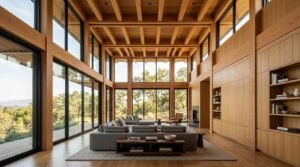
Architecture creates the luxury impression before a single finish gets installed. Volume, light, and structural clarity do most of that work.
I think of these features as permanent decisions. Finishes get replaced in fifteen years, and structure stays for the life of the home.
Ceiling Heights, Volume, and Structural Spans
Ten-foot main-floor plates read noticeably better than nine-foot plates, and the cost delta is modest during framing. Vaulted and coffered ceilings require engineered beams and careful mechanical routing.
Long clear spans eliminate columns in great rooms and kitchens. That takes steel or engineered lumber and real coordination between my framer and the structural engineer.
Custom Millwork, Trim, and Cabinetry
Millwork is where I judge a builder’s shop relationships fastest. Custom cabinetry means dimensions built to your walls, inset doors, dovetailed drawer boxes, and finish sprayed under controlled conditions.
Paneled walls, beamed ceilings, and integrated built-ins all fall in this category. Details around custom millwork and cabinetry standards deserve their own deep review before you sign a cabinet allowance.
Window Walls, Glazing, and Natural Light Design
Large glazing packages transform a house and stress the building envelope simultaneously. Multi-slide and lift-and-slide door systems need precise rough openings, structural headers, and waterproofed sills.
California’s climate zones push glazing performance requirements hard. I specify U-factor and SHGC values per elevation rather than ordering one window spec for the whole house.
Luxury Kitchens and Bathrooms
Kitchens and primary baths absorb the largest share of most high-end feature budgets. They also carry the most resale weight.
Remodeling Magazine’s 2024 Cost vs. Value Report places major kitchen work among the highest-investment interior projects, which is exactly why specification discipline matters here.
Countertop and Slab Selection
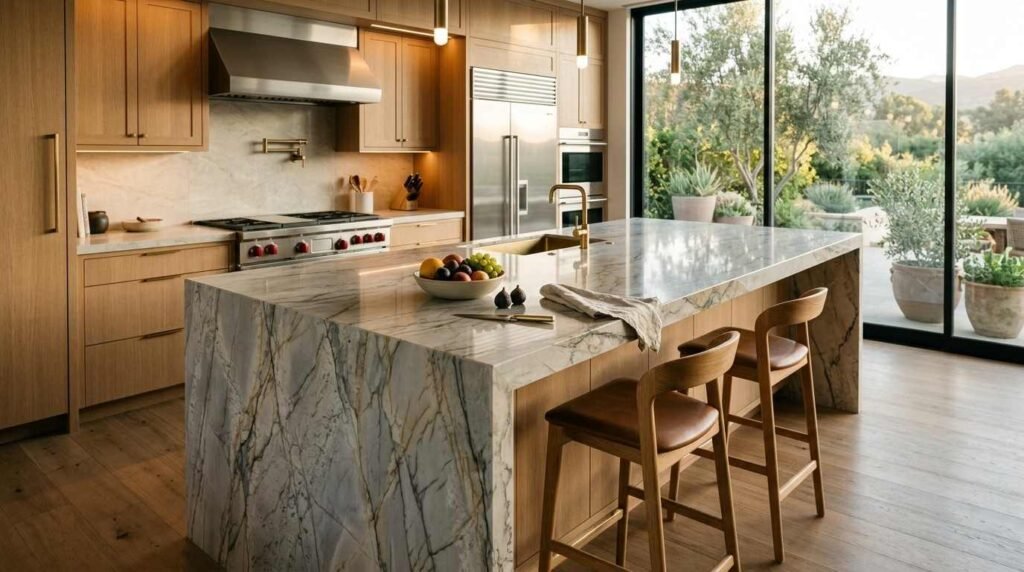
Slab work separates good kitchens from great ones. Book-matched veining, mitered waterfall edges, and full-height backsplashes require extra slabs and skilled fabrication.
I walk clients through the stone yard personally. Photographs never capture movement, and slab selection is a decision you make once.
Professional-Grade Appliance Packages
Professional appliances change the plumbing, electrical, ventilation, and framing plan. A 48-inch range needs makeup air, a dedicated circuit, and a hood with real CFM capacity.
I lock appliance specs before rough-in. Late appliance changes cause the most expensive change orders I write.
Spa Bathrooms and Wet Room Detailing
Wet rooms, curbless entries, linear drains, and steam showers all depend on waterproofing execution. This is the single highest-risk luxury detail in a house.
I use sheet or liquid membrane systems with documented flood testing. A spa bathroom design guide covers the fixture and layout side in far more depth than a hub page allows.
Smart Home Technology and Integrated Systems
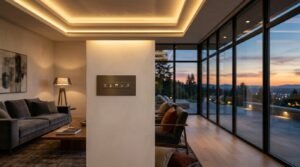
Smart technology earns its place when it disappears into the architecture. Visible clutter and app-per-device chaos are the opposite of luxury.
I plan low-voltage infrastructure during framing. Conduit and pathways cost almost nothing pre-drywall and become demolition projects afterward.
Whole-Home Automation and Control Platforms
A single control platform ties lighting, shades, climate, audio, and security together. Central processors handle this better than cloud-dependent consumer hubs.
I prewire for platform flexibility. Technology cycles faster than houses, so pathways matter more than the specific brand on day one.
Lighting Design and Circadian Controls
Layered lighting is the most underrated luxury feature in residential construction. Ambient, task, accent, and decorative layers each need separate circuits and separate controls.
Tunable-white fixtures shift color temperature through the day. Detailed smart home wiring and infrastructure planning determine whether any of this works cleanly.
Security, Access, and Network Infrastructure
Hardwired network backbones outperform mesh systems in large or multi-level homes. I run Cat6A to every access point, camera, and control keypad.
Access control covers keyless entry, gate integration, and camera coverage at every approach. These systems belong in the design set, not in a post-occupancy retrofit.
High-Performance Building Envelope and Energy Systems
This is the luxury category buyers underestimate most, and it delivers the best long-term return. A high-performance envelope makes a house quiet, comfortable, and cheap to run.
The California Energy Commission’s 2022 Building Energy Efficiency Standards already require heat pump readiness and expanded solar provisions on new residential construction. The 2025 code cycle tightens performance further.
Comfort correlates directly with envelope quality. Even temperatures, no drafts, and low noise transfer come from air sealing and insulation, not from oversized equipment.
Insulation, Air Sealing, and HERS Performance
Air sealing outperforms added insulation dollar for dollar in most California builds. Blower door testing verifies the work instead of assuming it.
I target measurable HERS results and share the report with clients. Continuous exterior insulation, high-density cavity insulation, and detailed penetration sealing carry that number.
HVAC Zoning and Indoor Air Quality
Zoned systems let a two-story home hold different temperatures upstairs and down. Variable-capacity heat pumps modulate instead of cycling, which improves comfort and humidity control.
Indoor air quality needs mechanical ventilation, MERV 13 or better filtration, and sealed combustion appliances. Guidance on indoor air quality in new construction goes deeper than this overview does.
Solar, Battery Storage, and California Code Compliance
Solar plus storage has moved from luxury upgrade to standard planning item in California. Battery capacity determines whether the house rides through outages or shuts down with the grid.
I size arrays against modeled load, not roof area. That includes EV charging, pool equipment, and any conditioned accessory structure.
Wellness, Comfort, and Lifestyle Amenities
Wellness amenities changed permanently after 2020. Clients now ask for dedicated recovery and fitness space in nearly every high-end program I price.
These rooms carry real structural and mechanical requirements. Treating them as leftover square footage produces disappointing results.
Home Gyms, Saunas, and Recovery Rooms
Gyms need reinforced floor assemblies, rubber or cork underlayment, dedicated ventilation, and mirror-grade wall flatness. Ceiling height matters for anything overhead.
Saunas and cold plunges bring moisture, drainage, and electrical loads into the equation. I coordinate these with plumbing and framing before slab or subfloor.
Acoustic Design and Sound Isolation
Sound isolation is one of the clearest luxury markers in a finished home. Staggered studs, resilient channel, double drywall, and acoustic sealant all contribute.
I isolate mechanical rooms, laundry, media rooms, and shared bedroom walls. Plumbing lines get wrapped, and ducts get lined where noise transfer matters.
Wine Rooms, Theaters, and Flex Spaces
Wine rooms require vapor barriers, insulation, and dedicated cooling to hold temperature and humidity. Theaters need room geometry, acoustic treatment, and light control planned together.
Flex spaces earn their cost through infrastructure. I run extra circuits, data, and plumbing stubs so a room converts later without demolition.
Outdoor Living and Site-Driven Luxury
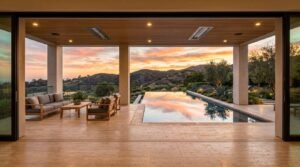
California’s climate makes outdoor space a primary living area rather than an add-on. I treat exterior rooms with the same detail as interior ones.
Site conditions drive most of these decisions. Slope, exposure, views, and setbacks set the boundaries before any design work begins.
Indoor-Outdoor Transitions and Covered Terraces
Flush thresholds between interior floors and exterior decks are the detail that makes indoor-outdoor living feel effortless. They demand precise waterproofing and drainage design.
Covered terraces extend usable months and protect openings from sun and rain. I plan heaters, fans, lighting, and speakers into the structure rather than surface-mounting them later.
Pools, Spas, and Water Features
Pools involve their own permitting, engineering, and equipment coordination. Automation ties pool controls into the whole-home platform.
Water features need careful acoustic and maintenance planning. Details on outdoor living design for California sites deserve dedicated treatment.
Landscape Lighting and Hardscape Materials
Landscape lighting shapes how the house reads at night. Path, wash, uplight, and step-light layers each serve a distinct purpose.
Hardscape material selection has to account for thermal expansion, slip resistance, and freeze exposure in higher elevations. I match exterior stone and paving to the architecture rather than choosing from a catalog in isolation.
Luxury Materials, Finishes, and Fixture Selection
Finish selection is where budgets expand quietly. Hundreds of small decisions compound into large numbers.
I build selection schedules with allowances tied to real product pricing. Vague allowances create disputes, and specific schedules prevent them.
Flooring: Stone, Hardwood, and Large-Format Tile
Wide-plank engineered hardwood dominates high-end California interiors right now. Solid hardwood still performs well in stable interior climates with proper acclimation.
Large-format tile and stone slabs require flat substrates and specialized setting materials. Floor flatness tolerance becomes a spec line item, not an assumption.
Metals, Plumbing Fixtures, and Hardware
Unlacquered brass, satin nickel, and matte black all age differently. I set client expectations on patina before ordering, because living finishes change and that surprises people.
Solid brass valve bodies and cartridges outlast plated zinc by a wide margin. Hardware weight and action tell you more about quality than the finish name does.
Sourcing, Lead Times, and Allowance Planning
Imported stone, custom windows, and specialty appliances carry the longest lead times on my schedules. I order these first and build the construction sequence around them.
Allowance planning prevents the mid-project squeeze. I document every selection deadline in the schedule so decisions land before they delay trades.
Budgeting and Cost Tiers for High-End Features
Luxury features scale across a wide range, and understanding tiers keeps expectations grounded. California construction costs sit well above national averages before a single upgrade gets specified.
I price features in three tiers with clients. That framework lets us reallocate without redesigning the whole house.
Cost Tiers by Feature Category
| Feature Category | Entry High-End | Mid Luxury | Ultra Luxury |
| Kitchen (full) | $80k–$150k | $150k–$300k | $300k+ |
| Primary bath | $50k–$90k | $90k–$180k | $180k+ |
| Millwork package | $60k–$120k | $120k–$250k | $250k+ |
| Smart home systems | $25k–$60k | $60k–$150k | $150k+ |
| Envelope and HVAC upgrade | $30k–$70k | $70k–$140k | $140k+ |
| Outdoor living | $75k–$200k | $200k–$500k | $500k+ |
Ranges reflect California labor and material conditions and shift by county and site access.
Where Luxury Spending Returns Value
Envelope performance, kitchen quality, primary bath work, and structural volume hold value most reliably. These are also the hardest items to change later.
Highly personal amenities return less on resale. I still build them when they serve how a family actually lives, and I say so plainly during budgeting.
How to Evaluate a Builder for Luxury Feature Work
Marketing language looks identical across builder websites. Evidence looks completely different.
I tell prospective clients to evaluate three things: completed work, trade partner depth, and documentation quality. Those three reveal capability faster than any brochure.
Portfolio, Trade Partners, and Shop Capability
Ask to see three finished homes with features similar to yours. Then ask which subcontractors executed the millwork, the tile, and the waterproofing.
Long-standing trade relationships signal consistent quality. Builders who rotate subs constantly on price produce inconsistent results, and it shows in the details.
Questions That Reveal Real High-End Experience
Ask how they verify waterproofing. Ask for a blower door result from a recent project. Ask who manages the selection schedule and what happens when a selection runs late.
Specific answers indicate real experience. A useful list of questions to ask a home builder helps structure those conversations before you commit.
Luxury Features in Small-Footprint and ADU Homes
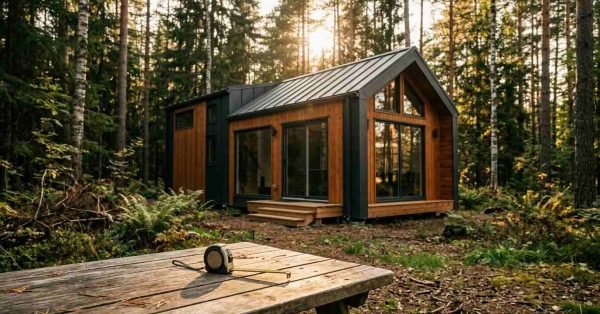
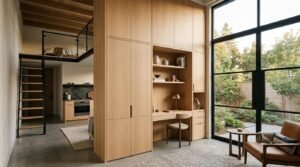
Small homes hold luxury exceptionally well because every surface is visible and every detail matters. I have delivered high-end finishes in structures under 600 square feet.
Space efficiency becomes the luxury feature itself. Custom built-ins, integrated storage, and precise millwork do work that square footage does in larger houses.
Vertical volume, quality glazing, and a single premium material story make a small home feel generous. I also concentrate the budget rather than spreading it thin, which is exactly the right strategy in a compact footprint.
Conclusion
You now understand what defines luxury in custom construction: material grade, craftsmanship, system integration, envelope performance, and honest budgeting across every feature category.
These features connect to a broader building quality framework, and each category above deserves deeper study through dedicated guides as your plans firm up.
We build homes at this standard every day. Talk to Tiny Home Builders California about the features that matter most for your project.
Frequently Asked Questions
What counts as a luxury feature in a custom home?
A luxury feature performs better, lasts longer, or requires higher installation skill than the code-minimum option. Material grade and execution quality define it, not price alone.
How much do high-end features add to a build budget?
High-end features commonly add 25% to 60% over base construction cost in California. Kitchens, baths, millwork, and outdoor living absorb the largest share.
Which luxury features hold their value best?
Envelope performance, kitchen quality, primary bathroom work, and ceiling volume hold value most reliably. These items also cost the most to change after completion.
Do smart home systems become outdated quickly?
Devices age faster than infrastructure. I prewire pathways and network backbones so hardware upgrades happen without opening walls a decade later.
What luxury features are hardest to add later?
Ceiling height, structural spans, window openings, waterproofing details, and low-voltage pathways. All of these require demolition to change after drywall.
How do California energy codes affect luxury design?
Title 24 sets glazing performance, insulation, ventilation, and solar requirements. I design luxury glazing packages and mechanical systems to meet those standards from the start.
Can a small home still feel high-end?
Absolutely. Concentrated budgets, custom built-ins, vertical volume, and one premium material story make compact homes feel more luxurious than larger builds.