
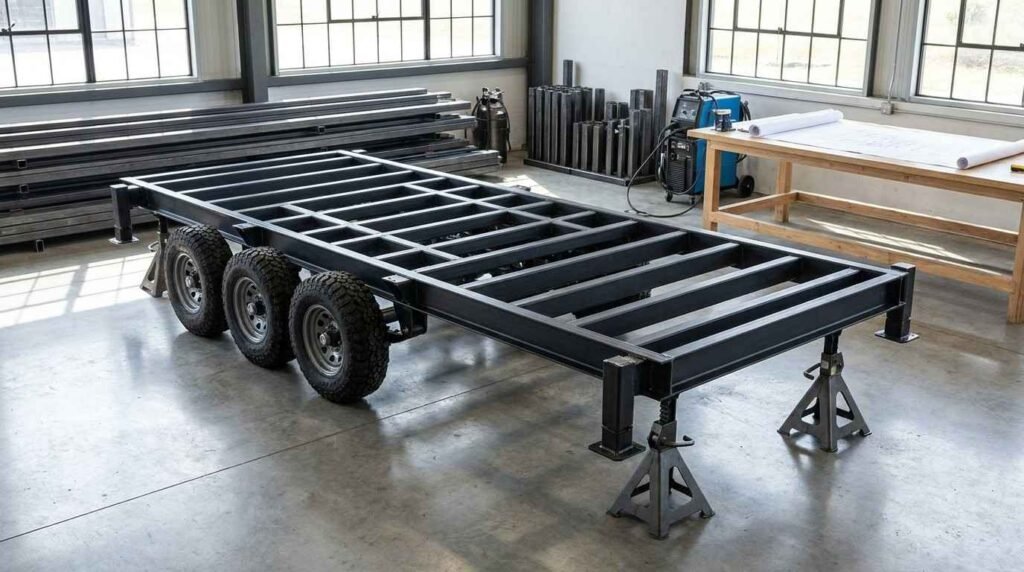
A tiny home chassis is the structural steel frame that a tiny house sits on, and the trailer is the towable base that carries that frame down the road. The chassis is the single most important structural component of any tiny home on wheels it determines weight capacity, road safety, and how long the entire structure lasts. I have walked through builds where a beautiful interior sat on a chassis that was undersized for the load, and within two years the floor started sagging.
This matters because California’s roads, DOT requirements, and NOAH certification rules make chassis engineering a legal issue, not just a structural one. Get the frame wrong and the whole home is at risk, from cracked drywall to a failed roadside inspection. Getting it right protects the investment for decades.
I cover the foundational structure of chassis and trailers, the engineering and load mechanics that decide how much weight a build can safely carry, the towing hardware and compliance standards that keep a home road-legal, and the long-term decisions around customization, common mistakes, and maintenance that determine how well the frame holds up over time.
What a Tiny Home Chassis and Trailer Actually Do
A chassis is the steel frame that supports the entire weight of a tiny home, and a trailer is the wheeled undercarriage that chassis is built onto or integrated with. Most tiny home builders in California treat these as one welded unit rather than two separate parts.
I think of the chassis as the foundation of a traditional house, except this one has to survive highway vibration, potholes, and years of thermal expansion. It carries the floor joists, the walls, the roof, and everything inside appliances, furniture, water tanks, people.
Chassis vs. Trailer Defining the Difference
A trailer chassis is a specialized steel frame that combines a towable trailer base with structural reinforcements designed to support a residential structure. A standard flatbed trailer is not built for this. It lacks the crossmember density and outrigger reinforcement a home needs.
The distinction matters when shopping for a build. A generic trailer gets you wheels and axles. A purpose-built tiny home chassis gets you wheels, axles, and a frame engineered specifically to hold up a house.
Core Structural Role in a Tiny Home
The chassis carries every pound of the structure above it and transfers that load safely to the axles and tires. Floor framing attaches directly to the chassis, so any flex or weakness in the steel translates directly into cracked tile, sticking doors, and uneven floors upstairs.
I always tell people the chassis is invisible once the home is built, but it is doing more work than any other single component. It is worth spending real time understanding before signing off on a build.
Trailer Types Used for Tiny Home Construction
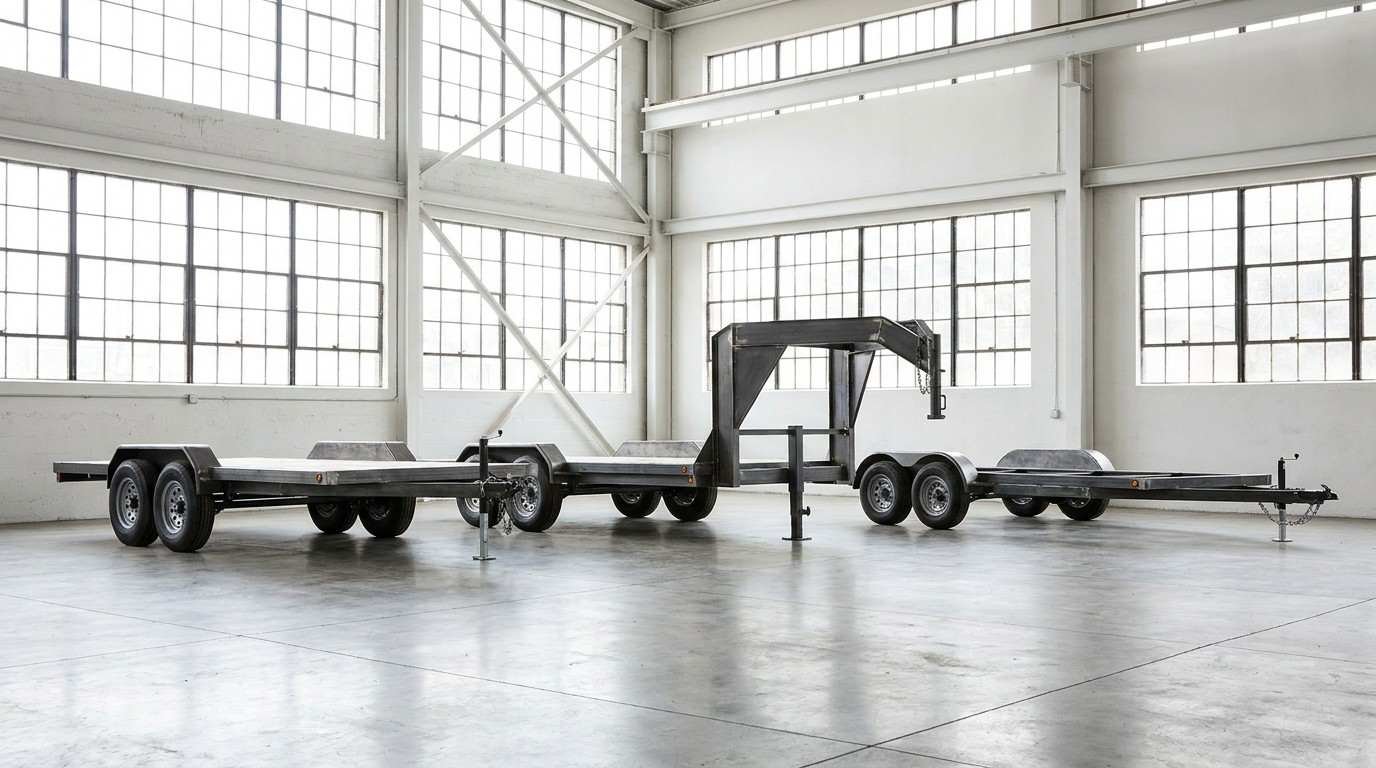
Builders in California generally choose between deckover trailers, gooseneck trailers, and bumper pull configurations depending on the size and weight of the finished home. Each type changes the layout options and towing behavior of the finished structure.
The trailer type gets locked in early because it dictates the height, length, and floor plan possibilities for the whole build. Changing your mind halfway through is not really an option.
Deckover vs. Gooseneck Trailers
A deckover trailer places the deck surface above the wheel wells, which gives full-width floor space but adds overall height to the finished home. A gooseneck trailer extends forward over a truck bed connection point, creating a raised loft area at the front and better weight distribution over the tow vehicle’s rear axle.
I generally see gooseneck setups on larger builds because that forward extension buys extra square footage without adding length behind the axles. Deckover trailers work well for simpler, single-level layouts.
Bumper Pull Configurations
Bumper pull trailers connect at the rear bumper of the tow vehicle rather than over the bed, making them easier to tow with a wider range of vehicles. They tend to suit smaller, lighter tiny homes better than heavier gooseneck builds.
The tradeoff is stability. Bumper pull configurations sway more at highway speeds on a top-heavy structure, so weight distribution becomes even more critical during the engineering phase.
Chassis Frame Materials and Construction
Most tiny home chassis frames use structural steel, though the specific grade and gauge vary significantly between builders. The material choice directly affects weight capacity, longevity, and resistance to the flexing that happens every time the trailer hits a bump.
Cheaper builds sometimes cut corners here because steel grade is invisible once the home is finished. It shows up years later as frame fatigue or premature rust.
Steel Grades Used in Tiny Home Frames
A50 and A36 structural steel are the two most common grades used in tiny home trailer frames, chosen for their strength-to-weight ratio and weldability. Wall thickness matters just as much as grade a thin-walled A50 tube can still underperform a properly sized A36 tube.
I look for documented wall thickness on any chassis spec sheet, not just a grade name. The grade tells you the steel’s strength potential; the gauge tells you whether that potential is actually being used.
Corrosion Resistance and Coatings
Untreated steel rusts, and rust weakens structural steel over time in ways that are not always visible from outside. Powder coating and hot-dip galvanizing are the two primary corrosion protection methods used on tiny home chassis frames.
Hot-dip galvanizing generally holds up better long-term because the coating penetrates every surface, including the inside of tubes where moisture collects. Powder coating looks great initially but chips more easily during transport and installation.
Weight Ratings, GVWR, and Load Capacity
Every tiny home chassis carries a Gross Vehicle Weight Rating that sets the legal and structural ceiling for how much the finished home can weigh, including cargo, water, and passengers. Exceeding GVWR is both a safety hazard and a legal violation on California roads.
Builders calculate this early, because the finished materials list siding, roofing, appliances, flooring all has to fit inside that number with margin left over.
Understanding GVWR and Payload
GVWR is the maximum total weight a trailer and its cargo can safely reach, while payload is the difference between GVWR and the trailer’s own empty weight. A tiny home with a 10,000-pound GVWR and a 3,000-pound empty trailer weight has 7,000 pounds of payload to work with for the entire structure.
I always ask builders for this breakdown in writing before construction starts. It tells you exactly how much room there is for upgrades like tile flooring or a larger water heater.
Axle Count and Weight Distribution
Single-axle trailers handle lighter builds, while dual and triple-axle configurations distribute weight across more tire contact points for heavier homes. The axle rating has to match or exceed the finished home’s total weight, with margin for passengers and belongings.
Weight distribution across those axles matters just as much as the total rating. An unevenly loaded trailer stresses one axle more than the others, shortening its service life significantly.
Axle Systems and Suspension Engineering
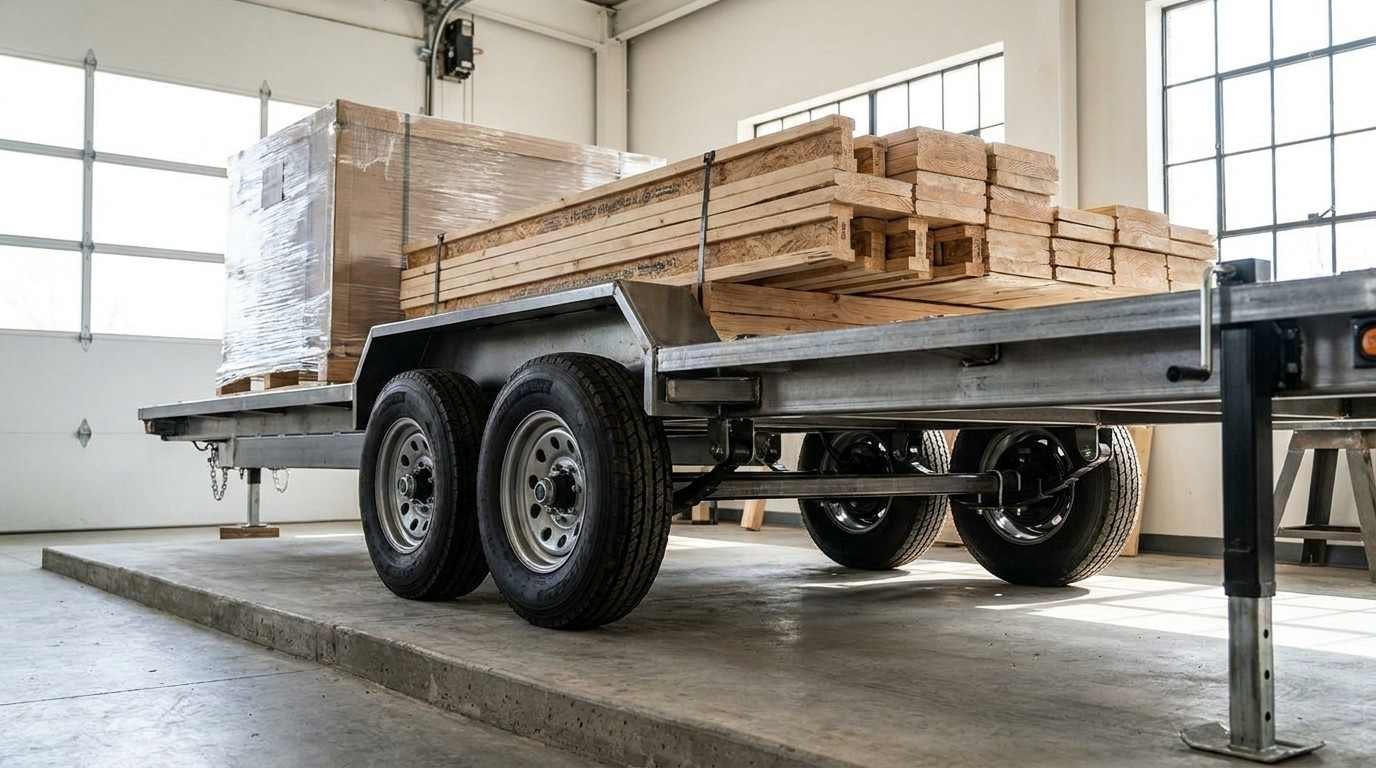
The suspension system connects the axles to the trailer frame and absorbs the shock of road travel before it reaches the home’s structure above. A poorly matched suspension transmits every bump directly into drywall, cabinetry, and window seals.
I have seen otherwise well-built homes develop hairline cracks in finish work purely because the suspension was undersized for the load it carried daily.
Torsion vs. Leaf Spring Suspension
Torsion axle suspension uses rubber cords inside the axle tube to absorb shock, while leaf spring suspension relies on stacked steel plates that flex under load. Torsion axles ride smoother and require less maintenance, but leaf springs are easier and cheaper to repair on the road.
Most modern tiny home builds favor torsion axles for the smoother ride quality, since a smoother ride directly protects interior finishes from repeated vibration damage.
Axle Placement for Balance
Axle placement relative to the trailer’s center of gravity determines how the load balances between the axles and the tow vehicle’s hitch. Placing axles too far forward or back creates uneven tire wear and unstable towing behavior.
Engineers calculate this using the finished home’s estimated weight distribution, not just the empty trailer weight, because a home is rarely weighted evenly front to back.
Outriggers, Crossmembers, and Floor Framing Integration
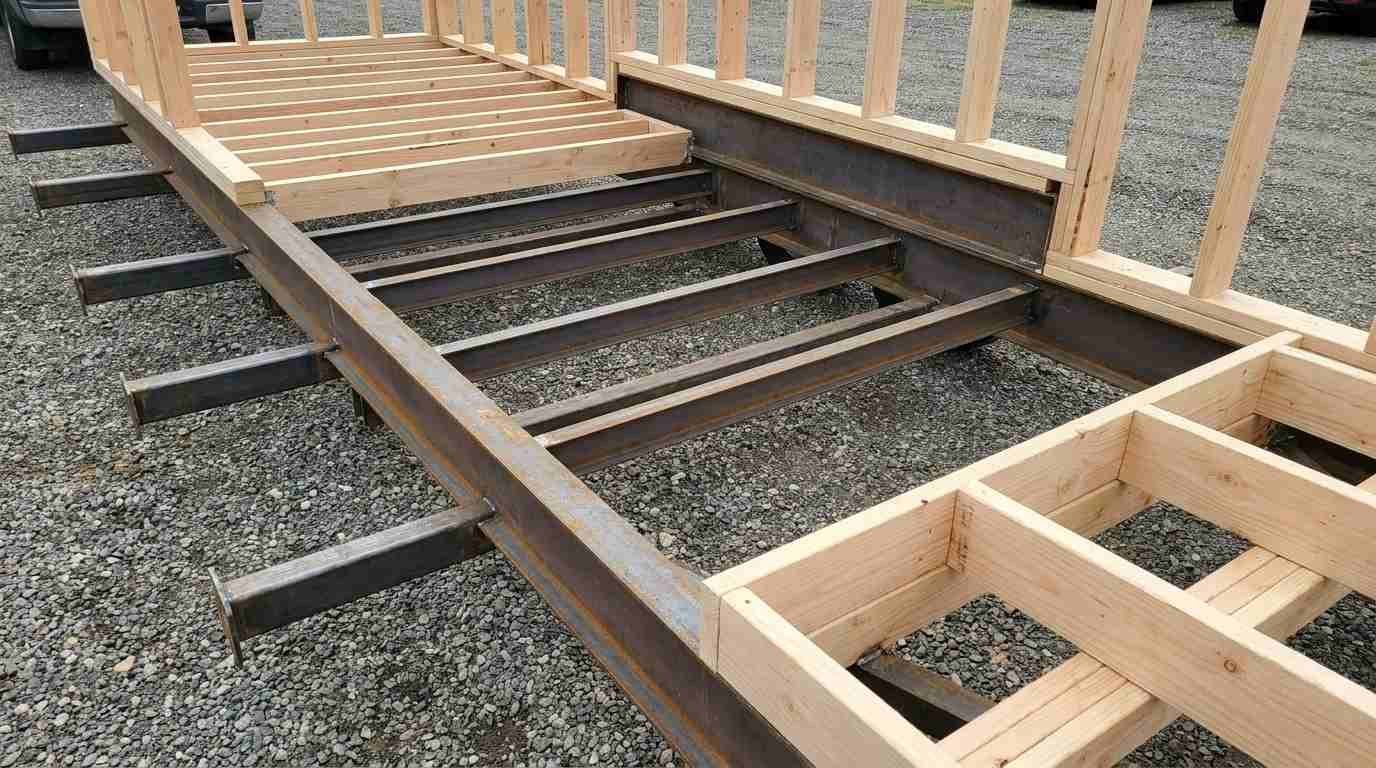
Outriggers extend the chassis width beyond the main frame rails to support wall framing that sits outside the trailer’s structural centerline. Crossmembers run perpendicular to the main frame rails and carry the floor load evenly across the width of the home.
These components rarely get discussed in builder marketing, yet they are what actually keeps the floor from bouncing or sagging under foot traffic.
Outrigger Spacing Standards
Outrigger spacing of 16 to 24 inches on center is standard practice for tiny home chassis, matching typical floor joist spacing above. Wider spacing saves steel and cost but risks floor flex between support points, especially under heavier appliances.
I check outrigger spacing against the floor plan before construction, because a kitchen island or bathtub placed between widely spaced outriggers needs additional reinforcement.
Crossmember Load Distribution
Crossmembers transfer point loads like a refrigerator or a person standing in one spot outward to the main frame rails rather than letting that weight concentrate in one place. More crossmembers generally mean better load distribution, but also more weight and cost.
The right crossmember count depends on the home’s total weight and layout, which is why generic trailer chassis rarely work as-is for custom tiny home builds.
Hitch Systems and Towing Hardware
The hitch connects the trailer to the tow vehicle and carries the tongue weight of the entire home during transport. Hitch failure during towing is one of the most dangerous outcomes possible in the entire build process.
California DOT inspections pay close attention to hitch and coupler condition, so this is not an area where cutting corners makes sense.
Hitch Types and Coupler Ratings
A coupler rating must meet or exceed the trailer’s GVWR, and the hitch ball size must match the coupler exactly to prevent separation during towing. Bumper pull setups typically use a ball hitch, while gooseneck trailers use a specialized ball mounted in the truck bed itself.
I verify coupler ratings against the finished home’s actual loaded weight, not the empty trailer weight, since that empty number understates what the hitch really has to handle.
Safety Chains and Breakaway Systems
Safety chains provide a backup connection if the primary hitch fails, and breakaway systems automatically apply the trailer brakes if it separates from the tow vehicle unexpectedly. Both are legally required on trailers above certain weight thresholds in California.
These systems sit quietly unused for the life of most builds, but they exist for the one moment they matter most.
Insulation and Subfloor Integration on the Chassis
The chassis frame directly affects how insulation and subfloor systems get installed underneath a tiny home, since the steel structure creates thermal bridging points that need addressing. Skipping this step leads to cold floors and moisture problems later.
Builders who understand chassis engineering plan the insulation approach before the frame is even finished, not as an afterthought once the house is sitting on top.
Underbelly Insulation Methods
Spray foam and rigid foam board are the two most common underbelly insulation methods used between chassis crossmembers on tiny homes. Spray foam fills irregular gaps around wiring and plumbing more completely, while rigid foam board is easier to inspect and replace later.
I favor whichever method the builder has installed correctly and consistently, since a partial job with either material leaves cold spots that undermine the whole system.
Building Codes, RVIA, and NOAH Certification Standards
Tiny homes on wheels fall under a patchwork of regulations depending on whether they are classified as RVs, park model homes, or something else entirely. Certification through RVIA or NOAH gives a chassis and the home built on it a recognized compliance stamp.
California treats certified builds differently than uncertified ones for insurance, financing, and where they can legally be parked long-term.
DOT Compliance for Road-Legal Trailers
A DOT-compliant trailer chassis meets federal standards for lighting, brakes, tire ratings, and structural safety required for legal highway travel. Every tiny home chassis intended for regular road transport needs this compliance documented.
I ask to see the actual DOT sticker and VIN documentation on any chassis before considering a builder further. Verbal assurance is not the same as a compliance record.
Certification Bodies Explained
RVIA certification applies primarily to homes built to recreational vehicle standards, while NOAH certification applies to homes built closer to residential building code standards. The two serve different purposes and neither is universally “better” it depends on how the finished home will be used and parked.
I explain this distinction to buyers early, because the certification path affects financing options and where the home can legally sit long-term in different California jurisdictions.
Custom vs. Off-the-Shelf Trailer Chassis
Off-the-shelf chassis come pre-engineered for general use and cost less upfront, while custom chassis get engineered specifically around a home’s floor plan and weight distribution. The right choice depends heavily on the complexity of the build.
Simple, smaller tiny homes often do fine on a quality off-the-shelf frame. Larger or unusually shaped builds usually need custom engineering to avoid weight distribution problems.
When Custom Engineering Is Worth It
Custom chassis engineering pays off when a floor plan includes heavy features like a full bathtub, stone countertops, or a second-floor loft positioned off-center. These loads need specific outrigger and crossmember placement that generic frames rarely provide.
I recommend custom engineering any time a build strays from a simple rectangular, evenly weighted layout. The cost difference is smaller than most people expect relative to the structural benefit.
Common Chassis and Trailer Engineering Mistakes
Undersized axles, insufficient outrigger spacing, and skipped corrosion protection are the three mistakes I see most often in poorly built tiny homes. Each one is invisible at move-in and expensive to fix later.
These mistakes usually trace back to cost-cutting during the chassis phase, since steel and engineering time are among the least visible line items in a build budget.
Undersized Axles and Overloading
An undersized axle rating relative to the finished home’s actual weight causes premature tire wear, bearing failure, and dangerous towing instability. This mistake often happens when builders estimate weight early and never revisit the number as finishes get added.
I recommend weighing the completed home on a certified scale before its first long-distance tow, since paper estimates and real-world weight frequently diverge.
Maintaining Chassis and Trailer Integrity Long-Term
Regular inspection of welds, rust spots, and suspension components keeps a tiny home chassis structurally sound for decades. Most chassis failures develop slowly and give visible warning signs long before anything critical breaks.
A maintenance routine costs a fraction of what frame repair or replacement costs, making it one of the highest-value habits a tiny home owner can build.
Inspection Schedule and Rust Prevention
An annual chassis inspection checking welds, coating integrity, and axle components catches most problems while they are still minor and inexpensive to fix. Coastal California climates accelerate corrosion, so homes near the ocean benefit from more frequent coating touch-ups.
I tell owners to keep a simple log of inspection dates and findings. It becomes valuable documentation if the home is ever sold or insured down the road.
Conclusion
A tiny home’s chassis and trailer determine its structural integrity, road safety, and long-term durability far more than any interior finish ever will. Steel grade, weight ratings, suspension, and certification all connect into one system that has to work together.
Understanding these engineering fundamentals turns builder selection from a guessing game into an informed decision backed by measurable standards.
We build every tiny home on properly engineered, certified chassis systems designed for California roads and decades of real-world use. Reach out to Tiny Home Builders California to talk through the engineering behind your next build.
Frequently Asked Questions
What is the difference between a tiny home chassis and a regular trailer?
A tiny home chassis includes reinforced crossmembers and outriggers specifically engineered to carry residential structural loads. A regular trailer lacks this reinforcement and is not built to support a house.
How much weight can a tiny home trailer chassis hold?
Weight capacity depends entirely on the GVWR and axle configuration, ranging from around 7,000 pounds on single-axle setups to over 20,000 pounds on triple-axle custom frames. I always verify this number against the home’s actual finished weight, not estimates.
Is a torsion axle better than a leaf spring axle for a tiny home?
Torsion axles generally ride smoother and protect interior finishes better from road vibration. Leaf spring axles cost less to repair but transmit more shock into the structure above.
Do tiny homes on wheels need DOT certification in California?
Yes, any tiny home trailer intended for regular road travel needs DOT-compliant lighting, brakes, and structural documentation. This certification is required for legal highway use.
What steel grade is best for a tiny home chassis frame?
A50 and A36 structural steel are the two most common grades, chosen for their strength-to-weight ratio and weldability. Wall thickness matters as much as the grade itself.
How often should a tiny home chassis be inspected?
An annual inspection of welds, coatings, and axle components catches most problems early. Coastal climates in California benefit from more frequent rust checks.
What is the difference between RVIA and NOAH certification?
RVIA certification follows recreational vehicle standards, while NOAH certification follows standards closer to residential building code. The right choice depends on how and where the home will be used.
Should I choose a custom chassis or an off-the-shelf trailer?
Off-the-shelf chassis work fine for simple, evenly weighted layouts. Custom chassis engineering is worth the extra cost for homes with heavy features like lofts or stone countertops positioned off-center.
What causes premature chassis failure in tiny homes?
Undersized axles, insufficient outrigger spacing, and skipped corrosion protection are the leading causes. Each develops slowly and is expensive to repair once it becomes visible.


