
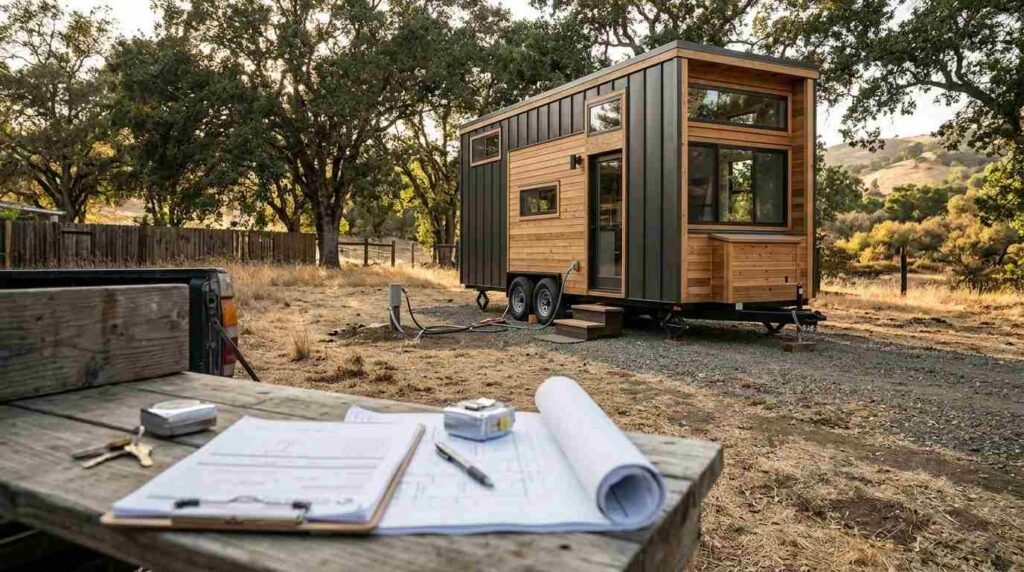
Yes, in most cases you need a permit for a tiny house on wheels in California, and the type depends on whether your local jurisdiction classifies it as an RV, an ADU, or a permanent structure. I’ve seen homeowners assume a wheeled tiny home skips all the red tape simply because it can move. That assumption gets expensive fast.
Permit confusion costs real money. Skipping the right approval can mean fines, forced relocation, or an insurance company that refuses to pay out after a fire or storm.
I’ll walk you through how California classifies these homes, when a permit applies, and what to check before you park one on your land. We’ll cover zoning placement, DMV registration, utility hookups, and the real consequences of skipping the process.
What Counts as a Tiny House on Wheels Under California Law
A tiny house on wheels is a dwelling built on a trailer chassis that can be towed like an RV but is designed for full-time residential use. That single fact built for living, not just camping is what triggers most of the permit confusion homeowners run into.
California doesn’t have one uniform tiny house law. Instead, your county or city decides how to classify your unit, and that classification drives everything else.
RVIA Certification vs. Owner-Built THOWs
An RVIA-certified tiny house is treated much like a factory RV. It rolls through registration and placement rules more easily because it already meets a recognized safety standard.
An owner-built or non-certified THOW gets more scrutiny. Local building departments often want to inspect it before allowing occupancy, especially for electrical and plumbing systems.
Why Classification Determines Permit Requirements
I tell every client the same thing: find out how your county labels your unit before you buy land or a trailer. A THOW classified as an RV follows vehicle code. One classified as a dwelling follows building code.
That distinction changes which permits apply, which department you deal with, and how long approval takes.
Do You Need a Permit for a Tiny House on Wheels in California
You need some form of permit almost every time, whether that’s a building permit, a zoning permit, or a placement permit from a mobile home park. The only real exception is short-term recreational use on land zoned for camping.
When a Building Permit Applies
Placing a THOW as an ADU on a residential lot in California now qualifies under statewide ADU law, and most cities require a building permit for the foundation tie-down, electrical connection, and plumbing hookup even though the unit itself is mobile.
I’ve watched homeowners get blindsided by this. They think “it’s on wheels, not a foundation” exempts them. It doesn’t once the unit is intended as a permanent residence.
When No Permit Is Required
Parking a THOW temporarily on land zoned for recreational vehicles, or staying in a licensed RV park, typically doesn’t require a separate building permit. The park itself holds the necessary permits for utility connections.
Short visits on private land, without hookups or permanent placement, generally fall outside permit requirements too.
Zoning Rules and Where You Can Legally Park a THOW
Zoning decides whether you can even legally live in a tiny house on wheels at a specific address, separate from whether the unit itself is built correctly.
ADU Zoning Pathways for Tiny Homes
California’s ADU legislation opened a real pathway for THOWs on residential lots. A property owner can place one as a secondary unit, subject to size limits, setback requirements, and a permit application through the local planning department.
This pathway works best for a permanent, long-term living arrangement, not something you plan to move every few months.
RV Park and Campground Placement Rules
RV parks and campgrounds operate under their own use permits, and most allow THOWs that meet RVIA certification or the park’s internal safety standard. Duration limits often apply, sometimes capping stays at 30 or 180 days depending on the county.
I always recommend calling the park directly. Posted rules online are frequently outdated.
DMV Registration and Road Legal Requirements
Before your tiny house ever gets parked, it has to get there, and that means DMV rules apply the moment it touches a public road.
Vehicle Identification Number and Title Process
A tiny house on wheels is a trailer that carries a VIN and requires California DMV registration for legal road use, similar to a travel trailer. Skipping this step makes the unit illegal to tow on public streets, permit or no permit at the destination.
Owner-built units sometimes need a weight certification or inspection before the DMV issues a title.
Weight, Width, and Towing Compliance
California caps trailer width at 8.5 feet and enforces weight limits tied to your towing vehicle’s rating. A unit built too heavy for a standard truck creates a compliance problem long before zoning ever enters the picture.
I’ve seen builds get stuck at this stage simply because nobody checked towing capacity early enough.
Utility Hookup Permits and Inspection Requirements
Getting water, power, and waste disposal connected safely is where most permit friction actually happens.
Water, Septic, and Electrical Connection Permits
Connecting to a septic system, well, or municipal water line almost always requires a separate permit from the county health department, distinct from any building or zoning permit already obtained. Electrical hookups follow a similar path through the building department.
Doing this work without inspection creates a liability that follows the property, not just the current owner.
Health and Safety Inspections Before Occupancy
Most jurisdictions require a final inspection before signing off on occupancy, checking smoke detectors, egress windows, and safe electrical load. This step exists to protect the people actually living inside, not to create paperwork for its own sake.
Passing inspection also becomes documentation you’ll want later, especially at resale.
What Happens if You Skip the Permit Process
Skipping permits doesn’t make the requirements disappear. It just delays the consequence and usually makes it worse.
Fines, Removal Orders, and Insurance Risks
Counties issue fines for unpermitted dwellings, and some require the unit to be removed from the property entirely until it’s brought into compliance. Insurance carriers frequently deny claims tied to unpermitted electrical or plumbing work after a fire or flood.
That last part matters more than most homeowners realize until they need to file a claim.
Resale and Financing Complications
An unpermitted THOW complicates resale because buyers and their lenders both want proof of legal placement. Financing a tiny house purchase already carries more friction than a traditional mortgage, and missing permits add another layer a lender has to work around.
We walk clients through this exact scenario regularly at Tiny Home Builders California, and getting the paperwork right from day one saves real money down the line.
Conclusion
A tiny house on wheels almost always needs some form of permit in California, whether that’s zoning approval, a building permit, or utility connection sign-off.
Skipping that process trades a short-term shortcut for long-term risk: fines, insurance denial, or resale trouble down the road.
We help homeowners across California navigate permits, placement, and construction from the ground up. Reach out to Tiny Home Builders California before you buy land or a trailer, and we’ll help you build it right the first time.
Frequently Asked Questions
Do all tiny houses on wheels need a building permit in California?
Not all of them. A THOW used strictly as a recreational vehicle in an RV park typically skips a building permit, but one placed permanently as an ADU almost always needs one.
Can I live in a tiny house on wheels on my own property?
Yes, through California’s ADU pathway, provided you get zoning approval and meet setback and size requirements. Living there without that approval creates code enforcement risk.
How long does the permit process take for a tiny house on wheels?
It typically takes several weeks to a few months, depending on your county’s backlog and whether utility connections need separate approval. Rural counties often move faster than dense urban ones.
Does a tiny house on wheels need DMV registration?
Yes, a tiny house on wheels is legally a trailer and needs a VIN and DMV registration to travel on public roads. This applies regardless of any local building permit status.
What happens if I get caught without a permit?
Counties can issue fines, demand removal of the unit, or require retroactive permitting with inspections. Insurance claims tied to unpermitted work also frequently get denied.
Is a tiny house on wheels considered real property or personal property?
It’s typically classified as personal property, similar to an RV, unless it’s permanently affixed to a foundation with utilities connected. That classification affects financing, taxation, and permit type.
Do I need a permit to park a tiny house on wheels temporarily?
Short-term parking on land zoned for recreational use, or in a licensed RV park, generally doesn’t require a separate permit. Longer or permanent placement almost always does.


