
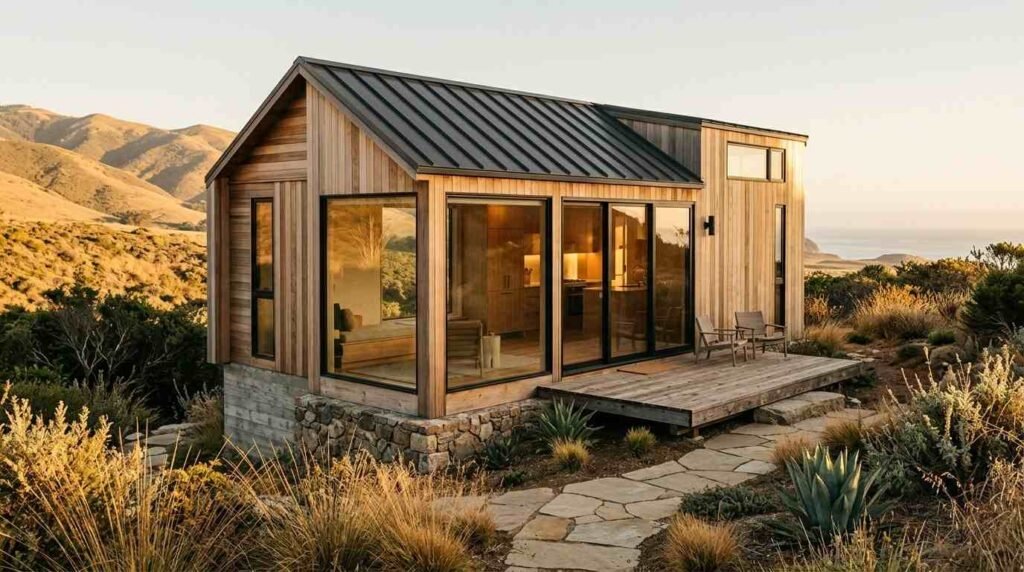
Most tiny homes depreciate faster than traditional site-built houses, but the rate depends heavily on construction quality, foundation type, and location. I’ve seen tiny homes on permanent foundations hold value close to conventional homes, while ones built on trailers depreciate more like RVs. The difference usually comes down to how the home was built and where it sits.
Buyers considering a tiny home want a straight answer before they commit real money. This question matters because a poorly built tiny home can lose a huge chunk of its value within a few years, while a well-constructed one can actually appreciate alongside the land beneath it.
I’m covering how appreciation and depreciation work differently for tiny homes, the specific factors that drive resale value, how tiny homes compare to RVs and mobile homes on depreciation curves, practical ways to protect your investment, and what financing and insurance mean for long-term value in California.
Do Tiny Homes Appreciate or Depreciate in Value?
A tiny home is a small-footprint dwelling, typically under 400 square feet, that functions as a legal or semi-legal residence. Whether it appreciates or depreciates depends almost entirely on one factor: whether it is classified as real property or personal property.
Homes built on a permanent foundation and attached to owned land generally follow real estate market trends. I’ve watched these appreciate right alongside the surrounding property values in strong California markets.
Tiny homes on wheels get treated differently. Lenders and appraisers often classify them closer to recreational vehicles, and that classification drags the depreciation pattern down with it.
How Tiny Homes Differ From Traditional Home Appreciation
Traditional homes appreciate because land value rises over time and the structure itself is expected to last 50+ years with proper maintenance. Tiny homes on foundations benefit from that same land appreciation.
But a tiny home on a trailer chassis doesn’t own land in most cases. Without land ownership tied to the structure, there’s no appreciating asset underneath it just a depreciating built structure, similar to a vehicle.
Key Factors That Affect Tiny Home Resale Value
Resale value isn’t random. Buyers evaluate specific, measurable factors when deciding what a tiny home is worth on the secondary market.
I walk clients through these same factors before they even break ground, because decisions made during construction directly shape resale value five or ten years down the line.
Construction Quality and Materials
Framing quality, insulation, roofing materials, and finish work all get inspected by future buyers or their contractors. A tiny home built with code-compliant materials and proper waterproofing holds up structurally and visually far longer than one built to minimum standards.
Buyers pay a premium for homes that clearly won’t need major repairs in year three. Cheap materials show wear fast, and that wear tanks resale offers.
Foundation Type (Foundation vs. Wheels/Trailer)
A tiny home permanently affixed to a foundation typically qualifies as real property, which opens it up to conventional mortgage financing and broader buyer pools. That wider buyer pool alone supports stronger resale pricing.
Trailer-mounted units stay classified closer to RVs. Financing options shrink, the buyer pool shrinks with them, and resale value follows the same downward path as most vehicles.
Location and Land Ownership
A tiny home that includes owned land in California carries real estate value beyond the structure itself. Land in desirable counties appreciates even when the building on it ages.
A tiny home sitting on leased land or in a rented lot community doesn’t get that benefit. The structure ages and depreciates with nothing underneath it gaining value.
How Fast Do Tiny Homes Depreciate Compared to RVs and Mobile Homes?

Tiny homes on wheels depreciate at rates similar to RVs, often losing 20% or more of their value within the first year according to patterns tracked by the Recreation Vehicle Industry Association. That steep early drop matches what I see reported across mobile and manufactured housing too.
Foundation-built tiny homes behave differently. Because they’re treated as real property, their depreciation curve looks more like a conventional home’s slow, and often offset entirely by land appreciation in growing markets.
Depreciation Curve in the First 5–10 Years
The steepest depreciation on wheel-based units happens in years one through three, mirroring vehicle depreciation patterns. After that initial drop, the value tends to flatten out and decline more gradually.
Foundation-based tiny homes rarely show that early cliff. Their value tracks closer to the local housing market than to any vehicle-style curve.
How to Protect and Increase Your Tiny Home’s Resale Value
Depreciation isn’t inevitable for every tiny home. The right decisions at the planning and construction stage can meaningfully change the resale outcome years later.
I tell every client the same thing: resale value gets decided during construction, not at the moment you list the home for sale.
Choosing a Reputable Builder
A builder with a documented track record of code-compliant construction, quality materials, and proper permitting protects the home’s long-term value. Buyers and appraisers both scrutinize builder reputation during resale.
Cutting corners during the build might save money upfront, but it shows up later as reduced offers, failed inspections, or buyers walking away entirely.
Upgrades and Features Buyers Look For
Energy-efficient windows, solar readiness, durable siding, and quality kitchen and bathroom finishes consistently rank high with tiny home buyers. These upgrades pay back at resale far more reliably than purely cosmetic touches.
Storage solutions and multi-functional layouts also matter. Buyers pay attention to how well a small footprint uses every square foot.
Financing, Insurance, and Their Impact on Tiny Home Value
Financing availability directly shapes resale value because it controls how many buyers can actually afford the home. A tiny home eligible for a standard mortgage attracts a much larger buyer pool than one requiring cash or specialty RV-style loans.
Insurance follows the same logic. Homes classified as real property qualify for standard homeowner’s insurance, while wheel-based units often need RV or specialty policies that some buyers find less appealing.
Tiny Homes as an Investment: What California Buyers Should Know

California’s high land values create a unique dynamic for tiny home investment. A well-built tiny home on owned land in a desirable county can genuinely appreciate over time, even while the structure itself ages.
That’s the opportunity I point out to investors and families weighing tiny homes against traditional builds. Land in this state carries real weight, and the structure sitting on it matters just as much as the address itself.
At Tiny Home Builders California, we build with permanent foundations, code-compliant materials, and long-term value in mind. We help clients think through resale from day one, not as an afterthought once the home is already built.
Conclusion
Tiny home value ultimately comes down to construction quality, foundation type, and land ownership working together. Homes built to last and tied to owned land hold value far better than wheel-based units.
California’s land market adds real upside for buyers who choose foundation-built tiny homes in the right locations. That upside disappears fast with poor construction choices or leased land.
We build tiny homes designed to hold their value for the long term. Reach out to Tiny Home Builders California to start planning a home that protects your investment.
Frequently Asked Questions
Do tiny homes lose value faster than regular houses?
Tiny homes on wheels lose value faster than regular houses because they’re classified more like vehicles. Foundation-built tiny homes on owned land depreciate much closer to traditional houses.
Is a tiny home a good investment in California?
A tiny home is a good investment in California when it’s built on a permanent foundation and owned land in a desirable area. The land appreciation often outweighs the structure’s depreciation over time.
What increases the resale value of a tiny home?
Quality construction materials, a permanent foundation, energy-efficient upgrades, and owned land all increase a tiny home’s resale value. Builder reputation also plays a major role in buyer confidence.
How much do tiny homes depreciate per year?
Wheel-based tiny homes can depreciate 20% or more in the first year, then level off in later years. Foundation-built tiny homes depreciate much more slowly, closer to conventional home rates.
Can you get a mortgage on a tiny home?
You can get a mortgage on a tiny home when it’s permanently affixed to a foundation and classified as real property. Wheel-based tiny homes typically require RV loans or personal financing instead.
Do tiny homes on wheels appreciate in value?
Tiny homes on wheels rarely appreciate in value because they depreciate similarly to RVs and other vehicles. Without land ownership attached to the structure, there’s no appreciating asset offsetting that decline.
Does land ownership affect tiny home resale value?
Land ownership significantly affects tiny home resale value because the land itself can appreciate even as the structure ages. A tiny home without owned land depends entirely on the structure holding its worth.


