
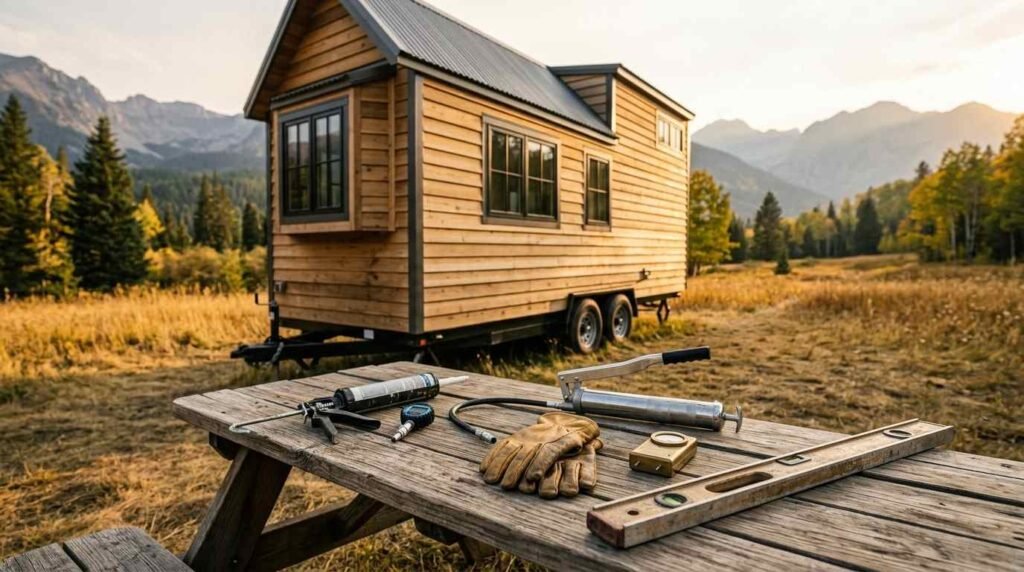
A tiny house on wheels needs maintenance on a different clock than a stationary home. The trailer chassis, road vibration, and constant exposure to weather mean small problems turn into expensive ones fast if you skip seasonal checks. I’ve seen roof seals fail quietly for months before anyone notices a water stain on the ceiling.
The mobility that makes a tiny home appealing also works against it. Tires lose pressure, axles need grease, and exterior seals take a beating every time the house moves or the seasons shift.
This checklist walks through why seasonal upkeep matters, what to check each spring, summer, fall, and winter, and how to build a maintenance routine and toolkit that keeps the whole system running for years.
Why Seasonal Maintenance Matters for a Tiny House on Wheels
A tiny house on wheels carries two sets of maintenance demands that a traditional home never faces: the structure itself and the trailer it rides on. Both react to weather differently than a foundation-built house does.
How Mobility and Trailer Chassis Change Maintenance Needs
A trailer chassis is a mobile home is a residential structure built on a steel trailer frame designed to withstand road vibration, weight shifts, and repeated towing stress. That frame flexes every time the house moves, and flexing loosens seals, fasteners, and connections that a stationary foundation never has to deal with.
I check axle bolts and hitch connections every season, not just before a move. Vibration works fasteners loose slowly, and nobody notices until something rattles or a seal starts leaking.
Skirting, tire condition, and undercarriage rust all shift with the season too. Salt from winter roads corrodes metal faster than most owners expect.
Consequences of Skipping Seasonal Upkeep
Water intrusion is the most expensive mistake a tiny house owner makes, and it almost always starts small. A hairline gap in roof sealant lets moisture into the wall cavity, and by the time anyone sees a stain, the insulation and framing underneath are already compromised.
Consumer Reports found that routine roof inspections catch over 60% of leaks before they cause structural damage. That gap between catching a problem early and finding it late is usually one missed season.
Frozen pipes, seized axles, and mold from trapped humidity all trace back to the same root cause. Someone skipped a seasonal check that would have caught the issue in ten minutes.
Spring Maintenance Checklist for Tiny House on Wheels

Spring is when winter damage finally shows itself. Snowmelt, freeze-thaw cycles, and months of moisture exposure leave marks that are easiest to catch and fix before summer heat sets in.
Roof, Seals, and Water Damage Inspection
I start every spring on the roof, because that’s where winter does the most damage. Check every seam, vent boot, and skylight seal for cracking, and look at the ceiling from inside for any new discoloration.
Caulking and sealant break down from UV exposure and cold contraction over a single winter. Reapply sealant anywhere it looks chalky, cracked, or pulled away from the surface.
Gutters and downspouts need clearing too, since spring runoff and debris from fall clog them fast. A blocked gutter sends water straight down the siding instead of away from the structure.
Trailer, Axles, and Tire Pressure Checks
Tire pressure drops through cold winter months even without a leak, so check it before any spring travel. Underinflated tires wear unevenly and stress the axle in ways that shorten its lifespan.
Axle bearings need grease at least once a year, and spring is the natural checkpoint after a winter of sitting still. I look for rust pitting, loose U-bolts, and any play in the suspension while I’m under there.
The hitch and safety chains deserve the same attention. Corrosion from road salt during winter towing weakens metal quietly, and this is the season to catch it.
Summer Maintenance Checklist for Tiny House on Wheels
Summer heat stresses a tiny house in ways cold weather doesn’t. UV exposure, interior heat buildup, and humidity swings all test different systems than winter does.
Ventilation and Cooling System Upkeep
Roof vents and mini-split systems work overtime during summer, so clean filters and check airflow before peak heat arrives. A clogged filter forces the system to work harder and shortens its lifespan.
Condensation from cooling systems needs a clear drainage path. I check that the condensate line isn’t blocked, because a backup here means water dripping inside the walls.
Ridge vents and roof fans should spin freely and seal tightly when closed. A stuck vent either traps heat inside or lets rain in during a summer storm.
Exterior Siding and UV Exposure Protection
Wood siding and trim dry out and crack under constant sun exposure, especially on south-facing walls. A fresh coat of exterior sealant or stain every one to two summers keeps that wood from splitting.
Metal roofing and siding expand and contract with heat, which stresses fasteners over time. Check for any popped screws or lifted panel edges after the hottest stretch of the season.
Caulking around windows dries and shrinks faster in direct sun than anywhere else on the structure. That’s usually the first place a summer inspection turns up trouble.
Fall Maintenance Checklist for Tiny House on Wheels
Fall is preparation season. Everything checked and sealed now determines how well the house handles the first hard freeze.
Gutter, Drainage, and Insulation Preparation
Falling leaves clog gutters fast, and a clogged gutter in freezing weather turns into an ice dam that damages roofing. Clear gutters at least twice during peak leaf drop.
Insulation gaps around plumbing lines and in the skirting need sealing before temperatures drop. A drafty gap that felt harmless in October becomes a frozen pipe by December.
I also check the underbelly insulation and vapor barrier for tears from summer road trips. Any exposed insulation loses effectiveness fast once it gets wet.
Propane, Heating System, and Chimney Inspection
Propane lines and connections need a leak check before the heating system runs daily. A simple soap-and-water test on every fitting catches slow leaks that a nose might miss.
Heating systems, whether a propane furnace, wood stove, or electric heat pump, need a full inspection and any filter or chimney cleaning done now. A neglected chimney or flue is a fire risk once daily use starts.
Carbon monoxide detectors deserve fresh batteries at this point too. Closed-up winter living raises the stakes on ventilation and gas safety.
Winter Maintenance Checklist for Tiny House on Wheels
Winter is the season a tiny house on wheels is least forgiving. Freeze damage and towing stress in cold weather cause the most expensive repairs of the whole year.
Freeze Protection for Plumbing and Water Lines
Frozen pipes are the single most common and most preventable winter failure in a tiny house. Heat tape on exposed lines and a well-insulated skirting setup keep water moving even in hard freezes.
I let a faucet drip during extreme cold snaps, since moving water resists freezing far better than still water. Any exposed section of pipe under the trailer gets extra insulation wrap before the first freeze.
Water tanks and pumps need draining or heating if the house sits unused during winter. A cracked tank from ice expansion is a repair that could have been a five-minute fix in November.
Snow Load, Skirting, and Cold-Weather Towing Prep
Roof snow load matters more on a tiny house than most people expect, since the structure is lighter than a standard home. Clear heavy snow buildup before it stresses the roof trusses.
Skirting keeps cold air from freezing the underbelly, but check it for gaps from wind or settling before deep winter sets in. Even a small gap lets freezing air straight into the plumbing bay.
Any winter towing needs a full check first, since cold rubber and stiff brake lines behave differently than in warm weather. Tire pressure, brake function, and hitch security all need confirming before a cold-weather move.
Building a Year-Round Maintenance Routine and Toolkit
A checklist only works if it turns into a habit. The owners who avoid expensive repairs are the ones who built a simple, repeatable routine instead of reacting to problems as they show up.
Essential Tools and Supplies to Keep On Hand
A basic toolkit for a tiny house on wheels includes a torque wrench for lug nuts, a tire pressure gauge, exterior-grade sealant, and a soap solution for propane leak checks. Keeping these on hand means a five-minute fix doesn’t turn into a weekend project.
I also keep spare fuses, a multimeter, and extra caulk in every common color the exterior uses. Small supplies like these solve most seasonal issues before they need a professional.
A basic roof inspection kit, gloves, a flashlight, and a soft-bristle brush round out what covers 90% of routine checks. None of this requires specialized skill, just consistency.
Creating a Maintenance Log and Schedule
A written maintenance log tracks what got checked, when, and what needs attention next season. I’ve found that owners who log this catch small issues years before owners who rely on memory.
Setting calendar reminders tied to the change of each season keeps the checklist from becoming an afterthought. Ten minutes four times a year prevents the kind of damage that costs thousands to repair.
We walk new homeowners through building this exact system when we hand over a completed build, because a well-built tiny house still needs consistent care to perform for decades. That partnership between solid construction and disciplined maintenance is what makes a tiny home last.
Conclusion
A tiny house on wheels rewards owners who treat maintenance as a season-by-season habit rather than a once-a-year scramble. Roofing, plumbing, trailer components, and heating systems all shift in what they need as weather changes.
The checklist above covers what matters most in spring, summer, fall, and winter, along with the toolkit and routine that ties it together. Consistency beats intensity here every time.
We build tiny homes designed to make this upkeep straightforward, and we’re glad to walk you through a maintenance plan tailored to your build. Reach out to Tiny Home Builders California to talk through what your home needs season by season.
Frequently Asked Questions
How often should I inspect the roof of a tiny house on wheels?
I recommend a full roof inspection at the start of every season, four times a year. Winter and summer cause the most damage, so those two checks matter most.
What temperature causes pipes to freeze in a tiny house?
Pipes typically freeze once temperatures drop below 20°F for several consecutive hours without heat tape or insulation. Exposed lines under the trailer freeze fastest since they lack the protection a foundation home has.
How often do trailer axles need grease?
Axle bearings need grease at least once a year, and I check them every spring after a winter of sitting still. Frequent towing calls for a check every six months instead.
Can I skip winterizing if my tiny house stays in a mild climate?
Even mild climates get occasional hard freezes that catch owners off guard. A basic freeze-protection routine takes an hour and prevents a repair that costs far more.
What’s the biggest maintenance mistake tiny house owners make?
Skipping the seasonal roof and seal inspection is the most common and costly mistake I see. Water intrusion causes more structural damage than any other single issue in a tiny house on wheels.
Do I need a professional for seasonal maintenance checks?
Most seasonal checks are simple enough for an owner to handle with a basic toolkit and an hour of time. Propane line inspections and any structural damage are the two situations where I’d bring in a professional.


