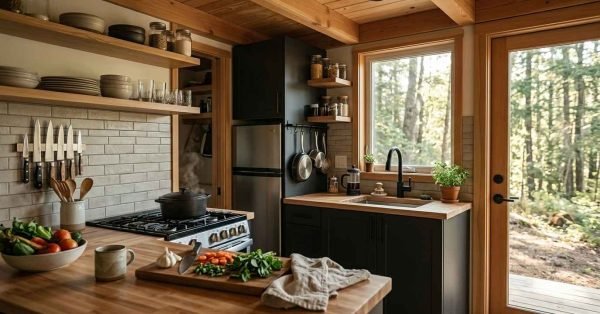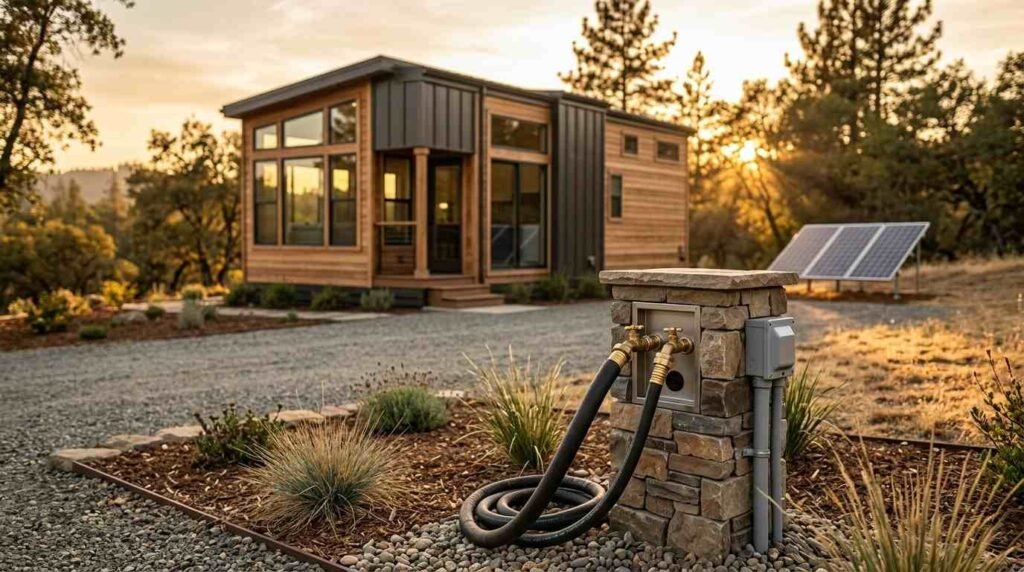
A park model home is a factory-built dwelling under 400 square feet designed for semi-permanent placement, and its utility setup determines whether it runs on standard hookups, full off-grid systems, or a mix of both. Choosing between hookup and off-grid utilities shapes your site options, your upfront costs, and how much ongoing maintenance you’ll take on as a California park model owner.
Getting this decision wrong early costs thousands in rework. I’ve watched buyers commit to a site before confirming what utilities it actually supports.
This guide covers the core hookup systems for electrical, water, sewer, and gas, the off-grid alternatives for power, water, and waste management, California’s permitting landscape, and how to compare costs and maintenance across each approach.
What Counts as a Park Model Home Utility System
A park model utility system is the combination of electrical, water, sewer, and gas infrastructure that supplies a home with power, clean water, and waste removal. These four categories define every setup decision that follows, whether you’re connecting to a grid or building independence from one.
I think of utility planning as the first real decision in the entire park model process, not an afterthought. It determines where you can legally place the home, what the site development costs look like, and how much you’ll manage day-to-day once you move in.
Standard Hookups vs. Off-Grid Systems
Standard hookups connect a park model directly to municipal or community-provided electrical, water, and sewer services, while off-grid systems generate, store, and treat these resources independently on-site. Most California RV resorts and manufactured home communities are built around standard hookups because they simplify inspections and billing.
Off-grid systems appeal to buyers on rural land without nearby utility infrastructure, or those who want lower long-term operating costs and more placement flexibility.
Why Utility Planning Happens Before Site Selection
Utility planning happens before site selection because the land or park you choose must physically support the system you want, and retrofitting an incompatible lot gets expensive fast. A rural parcel with no utility access forces an off-grid approach regardless of preference.
I always tell buyers to confirm utility access, or the feasibility of installing off-grid systems, before signing anything on a lot.
Electrical Hookups for Park Model Homes
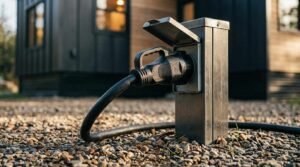
An electrical hookup for a park model home is a dedicated power connection, typically rated at 30 or 50 amps, that supplies the unit from a grid source or community pedestal. This connection type determines how many appliances you can run simultaneously without tripping breakers.
Most park models built for full-time living draw more power than a typical travel trailer because they include residential-grade appliances, HVAC systems, and sometimes electric water heaters.
Shore Power and Amperage Requirements
Shore power is the external electrical supply a park model draws from when connected to a campground pedestal, RV park outlet, or dedicated residential line. Amperage requirements depend on the home’s total appliance load, with most California park models needing between 30 and 50 amps for comfortable full-time use.
I size electrical needs around peak simultaneous use, not average daily draw, since that’s when breakers actually trip.
30-Amp vs. 50-Amp Service
A 30-amp service supplies roughly 3,600 watts, while a 50-amp service supplies roughly 12,000 watts across two 120-volt legs, giving significantly more headroom for air conditioning, electric cooking, and multiple appliances running at once. Larger park models with full kitchens and central air almost always require 50-amp service to avoid overloading the system.
30-amp service works fine for smaller units with gas appliances and limited electrical draw.
Water Supply and Hookup Options
Water supply for a park model home comes either from a direct municipal or community connection or from an independent source such as a private well or hauled water storage. The option available to you depends entirely on what infrastructure already exists at your chosen site.
California’s water regulations vary significantly by county, which makes early verification essential before committing to a location.
Municipal and Community Water Connections
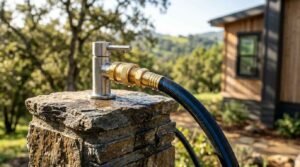
A municipal or community water connection supplies potable water through a metered line tied into a city system or a park’s shared water infrastructure. This is the simplest setup because it requires no on-site treatment, storage, or testing once connected.
Most California manufactured home communities and RV resorts include water hookups as part of the lot lease or purchase.
Private Well Considerations
A private well is a self-supplied water source drilled on the property, requiring permitting, water quality testing, and a pump system to deliver water to the home. California counties regulate well drilling individually, and some areas restrict new wells due to groundwater scarcity.
I always recommend a water quality test before finalizing any land purchase that depends on a private well.
Sewer and Wastewater Hookup Systems
A sewer hookup connects a park model’s wastewater line directly to a municipal sewer system or a community septic main, removing waste without on-site storage or treatment. This is the standard setup in most developed RV parks and manufactured home communities across California.
Direct connections eliminate the maintenance burden that comes with holding tanks or septic systems entirely.
Direct Sewer Connections
A direct sewer connection runs a solid waste line from the park model to a municipal sewer main or a community-maintained septic system, typically through a standard RV-style sewer hookup. This setup requires no pumping, no tank monitoring, and minimal maintenance beyond occasional line checks.
Most developed California parks require direct sewer connections as a condition of occupancy.
Holding Tank Systems
A holding tank system stores wastewater on-site in a sealed tank that requires periodic pumping by a licensed service, used in locations without direct sewer access. Tank sizing depends on household size and usage patterns, with most park models supporting black and gray water tanks in the 40 to 100 gallon range.
I see holding tanks used most often as a temporary solution while a permanent septic system gets installed.
Propane and Gas Line Setup
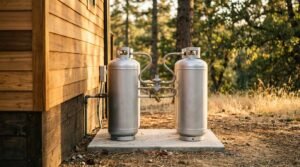
Propane is the primary gas fuel source for most park model homes, supplying stoves, water heaters, and sometimes central heating through either refillable tanks or a connection to a community propane distribution system. California parks rarely offer natural gas lines to individual park model lots, making propane the default choice.
Tank sizing depends on appliance load, with most single-occupant setups running comfortably on a 100-pound tank refilled every few weeks in colder months.
I recommend installing a two-tank switchover system so you never run out mid-use. It keeps one tank in reserve automatically.
Solar Power Systems for Off-Grid Park Model Living
A solar power system for off-grid park model living combines photovoltaic panels, a charge controller, battery storage, and an inverter to generate and store electricity independent of any utility grid. California’s high solar exposure makes this one of the most practical off-grid options in the state, particularly in desert and inland regions.
A properly sized solar system for a full-time park model resident typically requires 2,000 to 4,000 watts of panel capacity paired with 10 to 20 kWh of battery storage, according to the National Renewable Energy Laboratory’s residential solar sizing guidance.
I always start sizing conversations with actual appliance load, not rough estimates, because undersized systems are the most common off-grid complaint I hear.
Sizing a Solar Array for Daily Load
Sizing a solar array starts with calculating total daily watt-hour consumption across every appliance, then dividing by average peak sun hours for the installation location to determine required panel wattage. California’s Central Valley and desert regions average 6 to 7 peak sun hours daily, while coastal and northern areas average closer to 4 to 5.
This difference changes panel sizing significantly between regions of the same state.
Battery Storage and Backup Capacity
Battery storage capacity determines how many days a solar system can supply power without sunlight, measured in kilowatt-hours and sized around the home’s nightly and cloudy-day consumption needs. Lithium iron phosphate batteries have become the standard choice for park model installations due to their longer cycle life compared to older lead-acid designs.
I recommend sizing battery backup for at least two full cloudy days, since California winters bring extended overcast stretches in some regions.
Off-Grid Water Systems
An off-grid water system supplies a park model independent of municipal infrastructure, typically through rainwater catchment, a private well, or hauled and stored water, paired with filtration to ensure potability. California’s seasonal rainfall patterns make catchment viable in some regions and impractical in others without substantial storage capacity.
I treat water independence as the hardest off-grid challenge to solve reliably, harder than power in most cases.
Rainwater Catchment and Storage
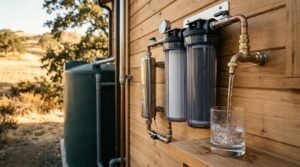
Rainwater catchment collects runoff from a roof surface into a storage tank system, filtered and treated before use as potable or non-potable water depending on local regulations. California’s dry summer months require storage tanks large enough to bridge months without meaningful rainfall, often 1,000 gallons or more for full-time use.
Catchment works best as a supplement to another water source rather than a sole supply in most California climates.
Water Filtration and Purification
Water filtration and purification remove sediment, pathogens, and contaminants from stored or sourced water before it reaches household taps, typically through a multi-stage system combining sediment filters, carbon filtration, and UV treatment. Off-grid systems need redundant purification steps since there’s no municipal treatment backing up the supply.
I never recommend skipping UV treatment on catchment systems, since bacterial contamination is the most common failure point.
Off-Grid Wastewater Solutions
Off-grid wastewater solutions manage waste without a sewer or septic connection, most commonly through composting toilets or greywater recycling systems that reduce or eliminate the need for black water storage. These systems appeal to buyers on remote land where septic installation is cost-prohibitive or restricted.
California counties regulate greywater systems and composting toilets differently, so local permitting always comes before installation.
Composting Toilets
A composting toilet breaks down solid waste through aerobic decomposition, separating liquids from solids and eliminating the need for a black water tank or sewer connection entirely. Quality units require minimal maintenance beyond periodic emptying of the compost chamber, typically every few weeks depending on usage.
I see composting toilets used most often in remote off-grid setups where septic installation isn’t financially practical.
Greywater Recycling Systems
A greywater recycling system captures water from sinks, showers, and laundry, filters it, and redirects it for irrigation or non-potable reuse rather than sending it to a holding tank or sewer line. California’s Plumbing Code permits simple greywater systems under specific conditions, reducing overall water consumption significantly.
This approach cuts total water hauling needs substantially for off-grid properties.
Backup and Alternative Power Sources
Backup power sources supplement a primary electrical system during outages, equipment failure, or periods of insufficient solar generation, most commonly through portable or standby generators. Even hookup-dependent park models benefit from backup power given California’s increasing frequency of planned utility shutoffs.
I treat generator backup as essential insurance, not a luxury, for anyone in a wildfire-prone utility shutoff zone.
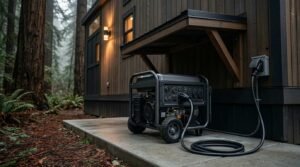
Generators as Supplemental Power
A generator supplies temporary electrical power through fuel combustion, sized by running watts and surge watts to match the home’s peak electrical demand during an outage. Propane and dual-fuel generators have become popular backup choices for park models since they integrate with existing gas infrastructure.
I recommend sizing generators to cover essential loads only, like refrigeration and well pumps, rather than full home capacity.
California Regulations Affecting Utility Hookups and Off-Grid Systems
California regulations governing park model utilities vary by county and fall under a combination of state building code, local health department rules, and individual park or community standards. The California Department of Housing and Community Development oversees park model classification and installation standards statewide, while counties retain authority over well permits, septic approval, and off-grid system compliance.
This layered structure means two counties can treat the same off-grid setup completely differently.
County Permitting for Off-Grid Installations
County permitting for off-grid installations covers septic systems, well drilling, solar electrical work, and sometimes composting toilets, with requirements differing significantly between California’s 58 counties. Rural counties in Northern California and the high desert tend to have more established off-grid permitting processes than coastal counties.
I always verify county-specific rules before a buyer commits to any off-grid land purchase.
Park and Community Utility Requirements
Park and community utility requirements set minimum hookup standards for residents, often mandating connection to provided electrical, water, and sewer services rather than permitting independent off-grid systems. Most developed California RV resorts and manufactured home communities prohibit full off-grid setups as a condition of residency.
This makes off-grid viability almost entirely dependent on choosing private land over a managed community.
Cost Comparison: Full Hookup vs. Off-Grid Setup
Full hookup setups typically cost less upfront since they rely on existing infrastructure, while off-grid systems carry higher initial investment but lower ongoing utility costs over time. Installing a complete off-grid solar, water, and septic system commonly runs between $25,000 and $50,000, compared to a few thousand dollars for connecting to existing hookups at a developed site, based on industry cost data compiled by HomeAdvisor.
The breakeven point depends heavily on how long you plan to stay and what utility rates look like in your area.
Hookup setups carry predictable monthly costs for water, power, and sewer, while off-grid systems shift spending toward periodic maintenance, battery replacement, and occasional water hauling. I generally see off-grid costs even out against ten or more years of grid utility bills, though this varies by region and household consumption.
Climate Considerations for California Utility Planning
California’s climate diversity, from coastal fog to desert heat to mountain snow, directly affects utility system performance and sizing across the state. A solar and water system designed for the Mojave Desert looks nothing like one suited for the Sierra foothills.
I always factor regional climate data into system sizing before finalizing any off-grid recommendation.
Insulation, Temperature Swings, and System Performance
Insulation quality directly affects how hard HVAC systems work and how much electrical load a park model draws, with poorly insulated units requiring significantly more power for heating and cooling in extreme climates. Desert regions push air conditioning loads up dramatically in summer, while mountain areas increase heating demand through winter.
This connection between insulation and utility sizing gets overlooked constantly by first-time buyers.
Hybrid Utility Setups (Partial Hookup, Partial Off-Grid)
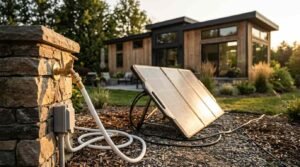
A hybrid utility setup combines standard hookups for some systems with off-grid independence for others, such as connecting to municipal water while running solar power, or using a sewer hookup alongside a backup generator. This approach lets buyers reduce off-grid investment while still gaining independence where it matters most.
I see hybrid setups most often on properties with partial utility access, like a water line but no electrical service.
Solar paired with a sewer hookup is one of the most common hybrid combinations I encounter, since it balances cost against convenience effectively.
Maintenance Requirements by System Type
Maintenance requirements differ substantially between hookup and off-grid systems, with hookup setups needing only periodic inspection while off-grid systems demand active monitoring of batteries, filtration, and waste processing. Solar battery banks typically need capacity checks every few months, while composting toilets require emptying on a regular cycle.
I tell every off-grid buyer to budget time, not just money, for ongoing system upkeep.
Hookup-dependent systems still need attention, including periodic sewer line inspection and annual propane tank certification, even though the maintenance burden is lighter overall.
Choosing the Right Utility Setup for Your Park Model Lifestyle
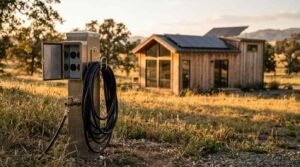
Choosing the right utility setup depends on how often you’ll occupy the home, how remote your land is, your tolerance for hands-on system maintenance, and your upfront budget versus long-term cost priorities. Full-time residents on developed lots usually do best with standard hookups, while remote landowners benefit more from off-grid independence.
The right answer balances your site’s actual infrastructure access against your willingness to manage solar batteries, water filtration, or waste systems yourself.
I walk every buyer through this exact tradeoff before they finalize a site, since the wrong setup creates frustration long after move-in.
Conclusion
Park model utilities come down to four core systems: electrical, water, sewer, and gas, each available as a standard hookup or an off-grid alternative. California’s regulations, climate, and site access all shape which combination makes sense.
We’ve walked through hookup basics, off-grid solar and water systems, cost comparisons, and the hybrid setups many owners choose. Your land and lifestyle ultimately decide the right configuration.
We help California buyers at Tiny Home Builders California map out the utility setup that fits their site and budget from day one.
Frequently Asked Questions
What’s the difference between a park model hookup and an off-grid system?
A hookup connects your park model to existing municipal or community electrical, water, and sewer infrastructure. An off-grid system generates and manages those resources independently on-site, typically through solar power, water storage, and composting or septic waste handling.
How much does it cost to go off-grid with a park model home?
A complete off-grid setup with solar, water storage, and septic typically costs between $25,000 and $50,000. Costs vary based on system size, location, and whether you need well drilling or extensive battery storage.
Can I install a septic system for a park model home in California?
Yes, but septic installation requires county health department approval and percolation testing before permitting. Requirements vary significantly between California counties, so local verification is essential.
Do park model homes need 30-amp or 50-amp electrical service?
Most full-time park models with central air, electric appliances, and multiple circuits need 50-amp service. Smaller units with gas appliances and limited electrical draw can often run on 30-amp service.
Is rainwater catchment legal for park model homes in California?
Rainwater catchment is legal in California, though some counties regulate tank sizing, filtration standards, and potable use differently. Local county health departments confirm specific requirements before installation.
How long do solar batteries last in an off-grid park model system?
Lithium iron phosphate batteries typically last 10 to 15 years with proper maintenance and monitoring. Lifespan depends on usage patterns, depth of discharge, and climate conditions at the installation site.
Can RV parks require full hookups instead of allowing off-grid setups?
Yes, most developed California RV resorts and manufactured home communities require full hookup connections as a condition of residency. Off-grid setups are generally only viable on private land outside managed communities.