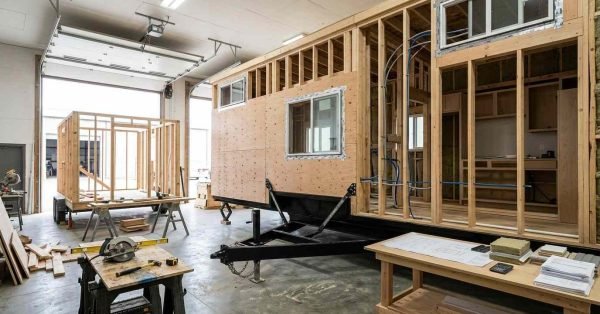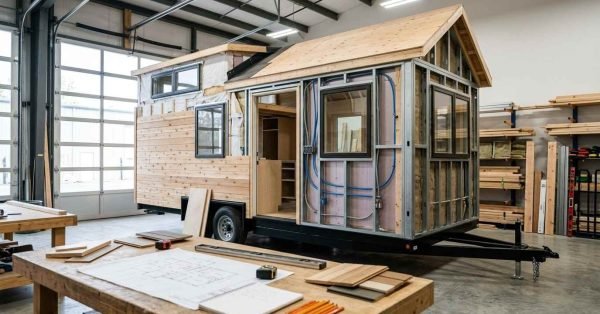
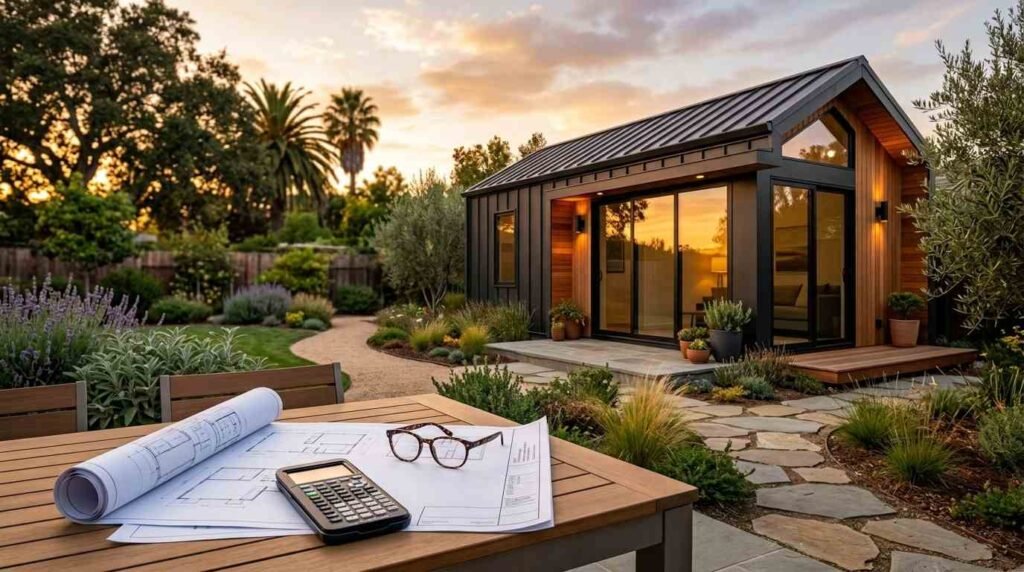
Financing and insurance for an accessory dwelling unit are the two systems that decide whether your ADU project actually gets built. Financing covers how you pay for construction. Insurance covers what happens when something goes wrong, during the build and for decades after.
I have watched more ADU projects stall over money and coverage gaps than over design or permits. California homeowners now build these units at record volume, and the ones who plan financing first finish on schedule.
This guide walks through cost structures, home equity options, construction loans, California programs, alternative funding, lender evaluation, builder’s risk, completed-unit coverage, quality impacts, budgeting, mistakes, and builder selection.
What ADU Financing and Insurance Actually Cover
An accessory dwelling unit is a self-contained secondary home on a lot that already holds a primary residence. It has its own kitchen, bathroom, sleeping area, and entrance. That independence is exactly why lenders and insurers handle it differently from a bedroom addition or a garage remodel.
Financing an ADU means funding a full residential structure. Foundation, framing, plumbing, electrical, HVAC, finishes, and utility connections all have to be paid for before the unit produces a dollar of value.
Insurance runs on a parallel track. During construction, you need coverage for the work in progress. After completion, you need coverage for the finished dwelling and anyone living in it.
How ADU Costs Break Down Before Financing Begins
Hard costs cover physical construction. Soft costs cover design, engineering, permits, utility fees, and inspections. In California, soft costs regularly reach 15% to 25% of a project budget.
Detached new construction sits at the top of the cost range. Garage conversions and interior ADU conversions usually land lower because the shell already exists.
Statewide, the California Department of Housing and Community Development reports that ADU permits have grown into a major share of new housing production. That volume shapes how lenders price these projects.
Why Lenders and Insurers Treat ADUs Differently
Lenders care about collateral and repayment. An ADU adds square footage and rental potential, but it sits on a parcel that already carries a mortgage. That creates layered lien questions.
Insurers care about replacement cost and occupancy. A rented ADU introduces tenant liability that a standard homeowners policy never contemplated.
Both groups want documentation. Permits, plans, contractor licensing, and inspection records move a project from “risky” to “underwritable.”
Key Terms Every ADU Owner Should Know
Loan-to-value ratio compares your borrowing against your property’s worth. As-completed appraisal values the property after the ADU exists rather than today. Draw schedule sets when your lender releases construction funds.
On the insurance side, builder’s risk covers property during construction. An endorsement adds coverage to an existing policy. Replacement cost pays to rebuild at current prices instead of depreciated value.
I use these terms constantly with homeowners. Learning them early keeps you from signing something you do not fully understand.

Home Equity Financing Options for ADUs
Home equity remains the most common way California homeowners fund an ADU. Property values across the state have created substantial borrowing capacity, and equity products carry lower rates than unsecured debt.
The tradeoff is real. You are putting your primary residence behind the loan.
HELOCs and Home Equity Loans
A home equity line of credit works like a revolving account secured by your house. You draw as construction progresses and pay interest only on what you use. That flexibility matches the uneven cash flow of a build.
A home equity loan hands you a lump sum at a fixed rate. Predictable payments appeal to homeowners with a firm construction contract and a fixed price.
Most lenders cap combined loan-to-value around 80% to 90%. Run that math before you fall in love with a floor plan.
Cash-Out Refinancing
A cash-out refinance replaces your existing mortgage with a larger one and delivers the difference in cash. It consolidates everything into a single payment at a single rate.
This option punishes anyone holding a low legacy interest rate. Refinancing a 3% mortgage to fund an ADU costs far more than the ADU line item suggests.
I walk clients through the blended-cost comparison first. Sometimes a second lien beats a full refinance by a wide margin.
Construction and Renovation Loan Programs
Construction lending exists because ADUs get funded before they have value. These products underwrite the finished project rather than the current property, which unlocks capacity that equity products cannot reach.
Draw schedules and inspections come with the territory. Your builder needs to work comfortably inside that structure.
Construction-to-Permanent Loans
A construction-to-permanent loan funds the build, then converts to a standard mortgage at completion. One closing, one set of costs, one long-term payment.
Funds are released in draws tied to milestones. Foundation, framing, rough-in, drywall, and final completion each trigger an inspection and a disbursement.
Lenders underwrite the builder alongside the borrower. Licensing, insurance certificates, financial stability, and completed-project history all get reviewed, which makes contractor licensing verification a financing issue rather than a paperwork chore.
Renovation Loans (FHA 203(k) and Fannie Mae HomeStyle)
Renovation loans wrap purchase or refinance financing together with construction costs based on as-completed value. That structure suits buyers who want an ADU on a property they are acquiring.
Fannie Mae’s HomeStyle Renovation program allows ADU construction and permits a share of projected rental income in qualifying. FHA 203(k) serves a similar function with lower down payment thresholds.
Both programs demand approved contractors, detailed scopes, and firm bids. Loose documentation kills these applications faster than anything else.
California-Specific ADU Financing Programs
California has pushed ADU construction harder than any other state, and the funding landscape reflects that. Statewide grants, local programs, and utility incentives all sit on top of conventional lending.
Program availability shifts with budget cycles. I always verify current status before a homeowner builds a budget around any single program.
CalHFA ADU Grant Program and State Incentives
The California Housing Finance Agency has offered grants covering predevelopment costs, including design, permits, soil tests, and impact fees. Awards reached $40,000 per eligible project during active funding rounds.
Predevelopment grants matter more than the dollar figure suggests. Soft costs arrive before any construction loan disburses, and that gap stops projects cold.
Funding rounds open and close based on legislative appropriation. Check current availability rather than relying on older guidance.
Local and Utility-Level Assistance
Cities and counties run their own programs. Fee waivers, pre-approved plan sets, deferred impact fees, and low-interest loan pools appear across California jurisdictions.
Los Angeles, San Jose, Santa Cruz, and San Diego have all deployed some version of local ADU support. Terms vary widely by jurisdiction.
Utility rebates add another layer. Efficient HVAC systems, heat pump water heaters, and solar-ready construction often qualify for energy efficiency incentives that reduce net project cost.
Alternative Funding Paths for ADU Projects
Not every homeowner has equity or qualifies for construction financing. Alternative paths exist, and some of them work well for smaller units.
They generally cost more per borrowed dollar. Match the tool to the project size.
Personal Loans and Contractor Financing
Unsecured personal loans fund modest ADU projects without touching your home as collateral. Approval moves fast, and closing costs stay minimal.
Rates run higher, and terms run shorter. A garage conversion fits this structure far better than a detached two-bedroom build.
Some builders offer financing through third-party lenders. I tell homeowners to compare those terms against an independent quote before signing anything.
Cash, Family Capital, and Phased Construction
Cash funding eliminates interest entirely and removes lender inspection schedules from your timeline. It also concentrates risk on your reserves.
Family loans and shared-equity arrangements show up frequently in multigenerational ADU projects. Document them properly, because informal money creates title and tax complications later.
Phased construction spreads cost across time. Shell first, then interior finishes, then landscaping, with each phase funded as capital becomes available.
How Lenders Evaluate an ADU Project
Underwriting an ADU differs from underwriting a kitchen remodel. Lenders assess the property’s future value, your capacity to carry the debt, and the credibility of your construction plan.
Strong documentation shortens approval. Weak documentation invites conditions and delays.
Appraisals and the ADU Value Question
Appraisers value ADUs using comparable sales, cost approach, or income approach depending on the market. California has enough ADU transaction data now that comparables exist in most metro areas.
Appraised value rarely equals construction cost dollar for dollar. Detached units in high-value markets come closest.
Design decisions influence the outcome. Separate utility meters, private entrances, and full-height ceilings all support stronger valuations, which ties directly to ADU design and layout planning.
Rental Income and Debt-to-Income Calculations
Many programs allow projected ADU rent to offset your debt-to-income ratio. Lenders typically count 70% to 75% of market rent to account for vacancy and maintenance.
Documentation requirements are specific. Appraiser rent schedules or signed leases carry weight, while your own estimate does not.
Your existing debt still governs the outcome. Rental income helps at the margin rather than rewriting your qualification profile.
Builder’s Risk and Course-of-Construction Insurance
Construction sites carry exposures that homeowners policies exclude. Materials get stolen, framing burns, storms damage open structures, and workers get hurt. Builder’s risk insurance fills that window.
Skipping it is the single most expensive gamble in an ADU project. A framed shell holding no coverage represents a total loss waiting to happen.
What Builder’s Risk Covers During the Build
Builder’s risk covers the structure under construction plus materials on site and often materials in transit. Fire, theft, vandalism, wind, and water damage typically fall inside the policy.
Coverage limits track total completed value rather than current progress. Setting the limit at your full construction budget prevents underinsurance at the worst moment.
Policy terms run for the construction period with extension options. Delays without an extension leave you exposed at the finish line.
Contractor Liability, Bonds, and Workers’ Comp
Your builder should carry general liability covering third-party injury and property damage. Workers’ compensation covers crew injuries and protects you from those claims landing on your policy.
California contractors are required to carry a license bond. Verifying active status through the Contractors State License Board takes minutes and prevents years of trouble.
Ask for certificates of insurance naming you as an additional insured. Verbal assurance means nothing when a claim gets filed.
Insuring a Completed ADU
A finished ADU changes your property’s insurance profile permanently. Replacement cost rises, occupancy patterns shift, and liability expands.
Notify your carrier before the unit is occupied. Undisclosed structures create claim denials.
Endorsements vs. Separate Dwelling Policies
Many carriers add an ADU through an endorsement on your existing homeowners policy. This works cleanly for family-occupied units and detached structures within coverage limits.
Rented ADUs often require a separate dwelling or landlord policy. That structure separates tenant-related liability from your primary residence coverage.
Cost differences vary by carrier and market. I encourage homeowners to price both structures rather than accepting the first quote.
Landlord and Rental Liability Coverage
Renting an ADU makes you a landlord with landlord exposures. Tenant injury claims, habitability disputes, and loss-of-rent events all become your responsibility.
Landlord policies cover the structure, liability, and lost rental income after a covered loss. Tenants carry their own renters insurance for personal property.
Short-term rental use sits in a different category entirely. Standard landlord policies exclude it, so verify coverage before listing anything nightly.
California Wildfire, Earthquake, and Flood Realities
California peril exposure drives ADU insurance pricing more than anything else. Wildfire risk has reshaped availability across large portions of the state.
Homeowners in high-risk zones sometimes rely on the California FAIR Plan for basic fire coverage paired with a difference-in-conditions policy. Earthquake coverage requires a separate policy or endorsement, and flood coverage comes through NFIP or private carriers.
Building to current wildfire standards affects both availability and price. Class A roofing, ember-resistant vents, and defensible space all register with underwriters, which makes fire-resistant construction methods a financial decision.
How Construction Quality Affects Financing and Premiums
Construction quality shows up on your loan documents and your insurance declarations. Well-built units appraise higher, insure cheaper, and stay claim-free longer.
This is where builder selection stops being aesthetic and becomes financial.
Permits, Inspections, and Insurable Documentation
Permitted construction with passed inspections creates the paper trail lenders and insurers require. Unpermitted work reduces appraised value and gives carriers grounds to deny claims.
Every inspection sign-off adds credibility. Final certificate of occupancy converts your project into an insurable, financeable, legally rentable dwelling.
Keep copies of everything. Plans, permits, inspection cards, and material specifications all become useful at refinance and renewal, which is part of broader construction quality documentation practice.
Materials, Systems, and Risk Reduction
Underwriters reward materials that reduce loss frequency. Metal or tile roofing, fiber cement siding, hardwired smoke and CO detection, and modern electrical panels all lower risk.
Water damage drives a large share of residential claims. PEX manifold plumbing, accessible shutoffs, and leak sensors reduce that exposure meaningfully.
Envelope quality matters for durability and operating cost. Proper flashing, air sealing, and drainage planes prevent the slow failures that destroy value.
Budgeting the Full Cost of Ownership
Construction cost is the number everyone quotes. Total cost of ownership is the number that determines whether the project works.
I build full-cost models with homeowners before anyone signs a contract.
Soft Costs, Impact Fees, and Contingency Planning
Design, engineering, surveys, soil reports, plan check, and permit fees arrive early and demand cash. California law limits impact fees on smaller ADUs, though utility connection charges still apply.
Contingency belongs in every budget at 10% to 15% of hard costs. Site conditions, utility routing, and code interpretation produce surprises on nearly every project.
Financing costs count too. Origination fees, appraisals, inspections, and construction-period interest all consume budget.
Property Tax and Ongoing Carrying Costs
An ADU triggers a supplemental property tax assessment on the new construction value. Your existing home retains its original assessed value under Proposition 13.
Insurance premiums rise with added replacement cost. Utilities, maintenance reserves, and landscaping add recurring expenses.
Rental income offsets much of this in most California markets. Model it conservatively rather than optimistically.
Common ADU Financing and Insurance Mistakes
The same errors repeat across projects. Recognizing them early saves real money.
Financing too late is the leading mistake. Homeowners design a unit, then discover their borrowing capacity supports something smaller.
Underinsuring during construction ranks second. Builder’s risk limits set below completed value leave a gap that surfaces only after a loss.
Failing to notify your carrier about the completed unit ranks third. Occupancy changes and added structures both require disclosure, and silence voids coverage.
Ignoring rental use classification causes trouble later. Long-term tenants, family occupancy, and short-term rentals each demand different coverage, and the wrong policy pays nothing.

Choosing a Builder Who Protects Your Financing
Your builder influences appraisal outcomes, insurance eligibility, draw approvals, and long-term claim history. That makes builder selection a financial decision as much as a craftsmanship one.
I look for four things. Active licensing, current insurance certificates, documented ADU experience, and transparent fixed-price contracts.
Ask how the builder handles lender draw inspections and documentation. Builders who work regularly with construction lenders keep your schedule intact, and evaluating a home builder’s qualifications protects both your loan and your finished asset.
Reference checks close the loop. Talk to homeowners two and three years past completion, because that is when construction quality reveals itself.
Conclusion
ADU financing and insurance work as a connected system, spanning equity products, construction loans, California programs, builder’s risk coverage, and completed-dwelling policies.
Each area deserves deeper study, and our cluster resources cover appraisals, permitting, design planning, and construction standards in full detail.
We help California homeowners plan, finance, and build ADUs that hold their value. Reach out to Tiny Home Builders California to start your project.
Frequently Asked Questions
Can I use a HELOC to build an ADU in California?
Yes. A HELOC draws against your home equity as construction progresses, and most lenders allow combined loan-to-value up to 80% to 90% of property value.
Does an ADU increase my property taxes?
Yes. California assesses the new ADU construction separately while your existing home keeps its Proposition 13 base value, so only the addition gets reassessed.
Do I need builder’s risk insurance for an ADU?
Yes. Homeowners policies exclude structures under construction, so builder’s risk covers your ADU, materials, and site exposure throughout the build period.
Will my homeowners policy automatically cover a finished ADU?
No. You must notify your carrier and add coverage through an endorsement or a separate dwelling policy before anyone occupies the unit.
How much rental income can lenders count toward qualifying?
Most programs credit 70% to 75% of documented market rent. Appraiser rent schedules or signed leases satisfy the documentation requirement.
Does an ADU appraise for what it costs to build?
Not always. Detached units in high-value California markets come closest, while conversions and low-comparable areas often appraise below construction cost.
What insurance do I need if I rent my ADU?
A landlord or dwelling policy covering the structure, liability, and lost rent. Tenants carry renters insurance for their own belongings.