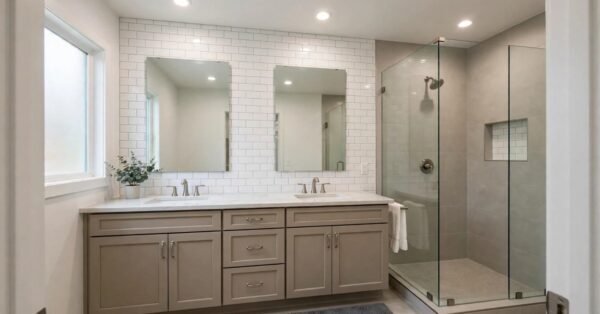

A smart bathroom is a bathroom equipped with connected or automated fixtures, such as smart toilets, digital shower controls, or leak-detection sensors, that improve comfort, efficiency, and water management. I’ve walked enough California homeowners through remodels to know this isn’t about gadgets for their own sake. We look at smart bathroom tech the same way we look at framing or plumbing: does it add real, lasting value to the home.
Bathrooms are one of the most-used rooms in any house, and outdated fixtures waste water and energy daily. A remodel is the moment to fix that. We’ve seen homeowners get this decision wrong by chasing trends instead of function, and it costs them later.
This guide covers what actually defines a smart bathroom, the fixture categories worth considering (toilets, showers, faucets, mirrors, and climate control), the efficiency and cost tradeoffs of each, and how to plan the upgrade with your builder so it’s wired, plumbed, and budgeted correctly from day one.
What Makes a Bathroom “Smart”
A smart bathroom uses connected devices, sensors, or automated controls to manage water, temperature, lighting, or air quality with less manual input from the homeowner. The term covers a wide range of fixtures, not a single product category. Some devices connect to Wi-Fi and an app. Others simply automate a function, like a motion-sensor faucet, without any app involved at all.
I draw a hard line between the two types during planning conversations. Connected home integration ties bathroom fixtures into a broader smart home system, while standalone automated fixtures work independently and need no setup beyond installation. Homeowners who want simplicity often do better starting with automated fixtures and adding connectivity later.
Connected vs. Automated Bathroom Features
Connected features sync with your phone or a home hub and usually require ongoing software updates. Automated features, like touchless faucets or motion-sensor lighting, just respond to presence or use without any account setup. Both categories can coexist in the same remodel.
Smart Toilets and Bidet Systems

A smart toilet is a toilet integrated with bidet functions, heated seating, and often self-cleaning or deodorizing features that reduce bathroom water and paper use. These units have moved from luxury novelty to a mainstream remodel request over the past several years. A 2024 Houzz renovation trends report found bidet and smart toilet installations rose in 28% of bathroom remodels nationwide.
Most models plug into a standard outlet near the toilet, which means the electrical rough-in has to be planned before drywall goes up, not after. I’ve seen remodels stall because nobody flagged the outlet requirement early enough.
Key Features to Look For
Heated seats, adjustable water pressure, and energy-saving standby modes separate entry-level units from higher-end ones. Some also include UV self-cleaning cycles, which matters for households prioritizing hygiene without extra scrubbing.
Smart Showers and Digital Temperature Control

A digital shower system lets users set and save exact water temperature and flow presets through a wall panel or app, removing the guesswork from manual mixing valves. This matters most in households with multiple users who each prefer different settings. Kids, grandparents, and guests can each save their own preset without fumbling with handles.
Digital shower valves also reduce water waste. Water running while you adjust temperature accounts for a measurable share of daily bathroom water use, and a saved preset skips that step entirely.
Programmable Presets and Water Usage Tracking
Many digital shower systems track water usage per session and display it on the control panel. This gives households a direct view of consumption patterns they’d otherwise never see, which tends to change behavior over time.
Smart Faucets and Touchless Fixtures
A touchless faucet uses a motion sensor to start and stop water flow without physical contact, cutting down on both water waste and surface germs. These are now common in primary bathrooms and guest baths alike. EPA WaterSense data shows touchless and sensor faucets can reduce water use by up to 30% compared to standard manual fixtures.
Retrofitting a touchless faucet into an existing sink usually requires battery or low-voltage wiring, which is far easier to plan during a full remodel than to add after the fact.
Heated Floors and Smart Climate Control
Radiant floor heating warms a bathroom from the ground up using electric coils or hydronic tubing installed beneath the finished floor, and smart thermostats let homeowners schedule or remotely adjust that heat. California’s mild climate means full radiant heating isn’t a year-round necessity everywhere in the state, but coastal and higher-elevation homes still benefit from it on cold mornings.
Smart thermostats paired with radiant systems learn usage patterns over several weeks and adjust the schedule automatically. That’s different from a standard programmable thermostat, which only follows the schedule you manually set and never adapts on its own.
Installation timing matters more here than with almost any other smart bathroom feature. Radiant heating has to go in before the finished floor, which means it’s a decision that has to be locked in early in the remodel timeline, not added as an afterthought once tile work has started.
Radiant Heat vs. Smart Thermostats for Bathrooms
Radiant floor heating warms the room passively through the floor surface, while a smart thermostat primarily controls air temperature through the existing HVAC system. Pairing both gives the most consistent comfort, since floor warmth and air temperature are managed independently.
Smart Mirrors and Lighting Systems

A smart mirror is a bathroom mirror with built-in LED lighting, anti-fog heating elements, and sometimes a touchscreen or voice-controlled display for weather, time, or music. Lighting quality in a bathroom affects everything from makeup application to shaving precision, so the LED color temperature on these mirrors matters more than most buyers realize at first.
Smart lighting systems installed around a vanity typically allow adjustable brightness and color temperature controlled through a wall panel or app. Circadian lighting research shows warmer light in the evening and cooler light in the morning supports better sleep cycles, which some homeowners now factor directly into their bathroom lighting plan.
Anti-Fog, Touch Controls, and Voice Integration
Anti-fog mirrors use a low-voltage heating element behind the glass to prevent condensation buildup after a hot shower. Touch controls let users adjust brightness directly on the glass, while voice integration connects the mirror to existing smart home assistants already in the house.
Smart Ventilation and Humidity Sensors
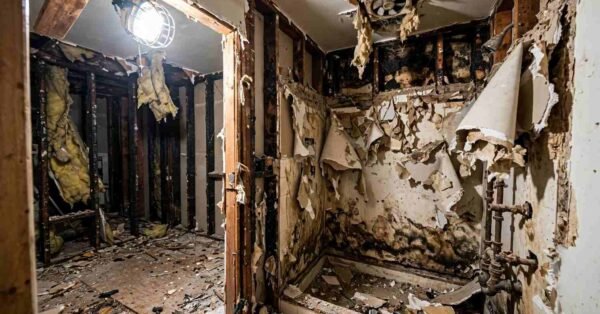
A smart bathroom fan uses a humidity sensor to automatically turn on when moisture levels rise and shut off once the air clears, rather than relying on a manual switch or timer. This single feature does more for long-term bathroom durability than almost any other smart upgrade on this list, because unmanaged humidity is what drives mold growth and finish damage over time.
Standard bathroom fans depend entirely on someone remembering to flip the switch before and after a shower. Humidity-sensing fans remove that dependency completely, which matters most in households where showers happen at different times with no consistent routine.
Water Leak Detection and Smart Shutoff Valves

A smart leak detector is a sensor placed near toilets, under sinks, or at the main water line that alerts homeowners through an app the moment moisture is detected, and some models pair with an automatic shutoff valve that stops water flow entirely. Bathrooms account for a disproportionate share of residential water damage claims, since toilets, supply lines, and shower pans all sit in one concentrated area.
Insurance Institute for Business and Home Safety data found water damage is one of the most frequent and costly home insurance claims, with the average claim exceeding $11,000. A shutoff valve that reacts in seconds rather than hours can be the difference between a minor repair and a full bathroom teardown.
Why Leak Detection Matters in California Homes
Many California homes, especially older construction, still run original supply lines that weren’t built with today’s fixture demands in mind. Pairing leak detection with a remodel gives homeowners a safety net precisely at the moment new plumbing is already being installed.
Voice Assistants and Smart Home Integration in the Bathroom
Voice assistant integration lets homeowners control bathroom lighting, exhaust fans, or shower temperature through spoken commands, usually via an existing smart speaker already placed in the home. This feature works best as an add-on to fixtures that already support smart controls, rather than a standalone purchase on its own.
Moisture resistance matters here more than in any other room. Bathroom-rated smart speakers and voice hubs are built with sealed components specifically to handle steam and humidity exposure that would damage a standard device.
Smart Storage and Accessibility Tech
Smart storage includes motion-activated cabinet lighting, built-in charging stations, and adjustable-height vanities that respond to a single household’s specific needs. These features matter increasingly in multigenerational households, where a bathroom needs to work for both a teenager and an aging parent without a second remodel down the line.
Accessibility-focused smart tech, like voice-activated grab bars or height-adjustable sinks, is also becoming a standard planning consideration rather than a specialty request reserved for later-life renovations.
Energy and Water Efficiency Benefits of Smart Bathroom Tech
Smart bathroom fixtures reduce long-term utility costs primarily by eliminating the waste that comes from manual operation, such as water running during temperature adjustment or lights left on in an empty room. Over a full year, these savings add up across dozens of daily touchpoints that most households never track individually.
The U.S. Department of Energy estimates that water heating accounts for about 18% of a typical home’s energy use, and smart shower and faucet systems that reduce runtime directly cut into that figure.
How Smart Fixtures Reduce Utility Costs
Sensor faucets stop runtime waste between uses, programmable shower presets eliminate temperature-adjustment waste, and humidity-sensing fans only run exhaust systems when needed rather than on a fixed timer. Each reduction is small individually but compounds significantly over a year of daily use.
Cost Considerations for Smart Bathroom Upgrades
Smart bathroom technology costs vary widely depending on the fixture category, ranging from under $200 for a basic sensor faucet to several thousand dollars for a full smart toilet and radiant heating package. Budgeting during the planning phase, rather than after walls are already open, keeps costs predictable and avoids expensive mid-project changes.
Labor costs for smart fixtures also run higher than standard installs in most cases, since many require dedicated electrical circuits or low-voltage wiring that a standard fixture never needs.
Budgeting by Tier (Entry, Mid, High-End)
Entry-tier upgrades, like touchless faucets and smart fans, typically add a modest amount to a standard remodel budget. Mid-tier additions, including smart toilets and digital shower valves, raise costs further. High-end packages combining radiant heat, smart mirrors, and full voice integration represent the largest investment tier.
Planning a Smart Bathroom Remodel With Your Builder

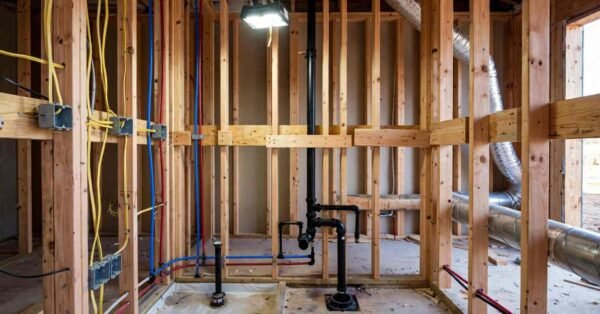
Planning a smart bathroom remodel starts with identifying which features require dedicated wiring, plumbing rough-in, or structural changes before any finish work begins. This sequencing decision shapes the entire project timeline, since electrical and plumbing work has to happen before drywall and tile, not after.
We walk every client through this sequencing conversation before a single wall comes down. Skipping it is the single most common reason smart bathroom features get left out of a project entirely, not because the homeowner didn’t want them, but because nobody planned the rough-in early enough to make them possible.
Questions to Ask Before Installation
Ask whether each smart fixture requires a dedicated electrical circuit, whether it needs Wi-Fi coverage strong enough to reach the bathroom, and whether the manufacturer’s warranty requires professional installation. These three questions alone eliminate most mid-project surprises.
Maintenance and Longevity of Smart Bathroom Fixtures
Smart bathroom fixtures generally require the same physical maintenance as standard fixtures, plus periodic software updates and battery replacement for sensor-based components. Most smart toilets, faucets, and shower systems carry manufacturer warranties between three and ten years, depending on the component.
Battery-powered sensor faucets need battery changes roughly once a year under normal household use, while hardwired systems avoid that maintenance step entirely but cost more to install upfront.
Common Mistakes to Avoid When Adding Bathroom Tech
The most common mistake homeowners make is selecting smart fixtures after rough-in work is already complete, which forces costly rewiring or re-plumbing to accommodate features that should have been planned from the start. A close second is choosing fixtures based on app reviews alone without confirming they’re compatible with the home’s existing Wi-Fi coverage or electrical panel capacity.
Overbuilding is another frequent issue. Not every bathroom needs every smart feature on this list, and stacking too many connected devices into one small room can create more maintenance burden than value.
A bathroom remodel works best when smart fixtures are chosen for the specific household using the space, not for the sake of having the most current technology available. We understand that balance comes from experience, not guesswork, and Tiny Home Builders California plans every rough-in with these upgrades in mind from day one. We build homes meant to perform for decades, not just impress at move-in. Reach out to our team to start planning a bathroom remodel built around the technology that actually fits your home.
Frequently Asked Questions
What is the most popular smart bathroom technology right now?
Smart toilets and touchless faucets are currently the most requested upgrades in bathroom remodels. Homeowners favor them for their hygiene benefits and water savings. Both integrate easily into most existing bathroom layouts.
How much does it cost to add smart tech to a bathroom remodel?
Costs range from under $200 for a basic sensor faucet to several thousand dollars for a full smart toilet and radiant heating package. Total cost depends on the number and type of fixtures chosen. Labor for wiring often adds to the base price.
Are smart toilets worth the investment?
Smart toilets are worth it for households prioritizing hygiene, water savings, and comfort features like heated seating. They reduce toilet paper and water use over time. Return on investment depends on usage frequency and household size.
Do smart bathroom fixtures increase home resale value?
Smart bathroom fixtures can modestly increase resale appeal, particularly touchless faucets and water-efficient toilets. Buyers increasingly expect some smart features in updated homes. However, over-customized tech may not appeal to every buyer.
Can smart bathroom devices work without Wi-Fi?
Many smart bathroom devices, like motion-sensor faucets and humidity-sensing fans, work independently without Wi-Fi. Only app-connected features, like programmable shower presets, require a network connection. This makes automated fixtures a simpler starting point.
How long do smart bathroom fixtures typically last?
Most smart bathroom fixtures carry manufacturer warranties between three and ten years. Actual lifespan depends on usage, maintenance, and component type. Battery-powered sensors need more frequent upkeep than hardwired systems.
What should I ask my builder before adding smart bathroom features?
Ask whether each fixture requires dedicated wiring, adequate Wi-Fi coverage, or professional installation for warranty compliance. These questions prevent mid-project surprises. A qualified builder should address them during initial planning.