A tiny home on wheels is a permanently towable dwelling built on a trailer chassis, and its cost is driven by three things: the trailer, the build quality, and the finish level. I have watched buyers plan around a single sticker price and get blindsided by the rest of the project.
That gap between the quoted number and the real number is where budgets break. And in California, land access, permits, and labor rates widen that gap more than in most states.
Here I break down price ranges, the five major cost categories, build-method comparisons, hidden fees, financing, budgeting steps, ownership costs, and quality signals worth paying for.
What a Tiny Home on Wheels Actually Costs in California
Most tiny homes on wheels in California land between $60,000 and $180,000 for a professionally built, move-in-ready unit. I see the widest cluster of completed custom builds sit around $95,000 to $140,000 once systems, finishes, and delivery are included.
The number moves with length, height, and complexity. A 20-foot single-loft build with a compact kitchen sits near the bottom of that range. A 34-foot gooseneck with a full bathroom, real appliances, and high-performance insulation sits near the top.
Average Price Ranges by Build Type
| Build Type | Typical California Range | What You Get |
| Trailer only | $6,000 – $16,000 | Certified chassis, axles, no structure |
| Shell / dry-in | $28,000 – $55,000 | Framed, sheathed, roofed, windows in |
| Semi-finished | $55,000 – $90,000 | Shell plus rough systems and insulation |
| Turnkey custom | $95,000 – $180,000+ | Complete, permitted, ready to occupy |
Cost Per Square Foot vs. Total Square Foot Cost
Tiny homes cost more per square foot than conventional houses, and that surprises almost everyone. A 300-square-foot THOW at $120,000 runs $400 per square foot, while the U.S. Census Bureau reports the median sales price of a new single-family home far lower on a per-foot basis.
The reason is density. Every tiny home packs a full kitchen, bathroom, electrical system, and plumbing system into a fraction of the footprint, so the expensive parts of a house never shrink proportionally.
Why California Pricing Differs From National Averages
California adds cost in three predictable places: labor rates, code compliance, and land. Construction labor here runs well above national medians, and that flows straight into the build quote.
Title 24 energy expectations, seismic-aware anchoring for sited units, and stricter local zoning also push builders toward better materials and more documentation. That raises the price and raises the quality of what you own.
The Five Major Cost Categories in a THOW Build
Every tiny home budget I have built breaks into five categories. Understanding the split tells you instantly whether a quote is complete or hiding something.
| Category | Share of Budget | Typical Cost (mid-range build) |
| Trailer and chassis | 8–14% | $8,000 – $16,000 |
| Shell and envelope | 22–30% | $25,000 – $40,000 |
| Systems (MEP) | 18–25% | $18,000 – $32,000 |
| Interior finishes | 20–28% | $22,000 – $38,000 |
| Appliances and fixtures | 8–12% | $8,000 – $16,000 |
Trailer and Chassis Foundation
The trailer carries everything for the life of the home, and it is the worst place to economize. A purpose-built tiny home trailer with correct axle rating, integrated outriggers, and galvanized or powder-coated steel costs more than a repurposed utility trailer and lasts decades longer.
I always confirm gross vehicle weight rating against the finished build weight before framing starts. Undersized axles create a home you cannot legally tow.
Shell, Framing, and Weatherproofing
The shell includes framing, sheathing, roofing, siding, windows, and doors. This is where road-load engineering separates a tiny home from a shed on a trailer, because the structure has to survive highway vibration and wind loading.
Metal roofing, rainscreen siding, and properly flashed windows raise the shell cost and eliminate the leak repairs that destroy tiny home budgets later.
Systems: Electrical, Plumbing, HVAC
Electrical, plumbing, and climate control usually run $18,000 to $32,000 installed. Off-grid capability changes this line dramatically, since a solar array with battery storage and a composting toilet costs more upfront than a shore-power hookup.
Mini-split heat pumps dominate this category for good reason. They heat, cool, and dehumidify efficiently in a small volume.
Interior Finishes and Cabinetry
Finishes carry the widest cost swing of any category. Custom cabinetry, hardwood counters, tile showers, and built-in storage push this line past $38,000, while prefinished plywood and laminate keep it near $22,000.
I treat finishes as the adjustable dial in a budget. Structure and systems stay fixed; finish level flexes.
Appliances and Fixtures
Compact appliances cost more than full-size ones, which feels backwards until you shop for them. A 24-inch range, drawer refrigerator, combo washer-dryer, and on-demand water heater together commonly total $8,000 to $16,000.
Specifying appliances early matters more than the price. Cabinet openings and electrical loads get built around those exact dimensions. 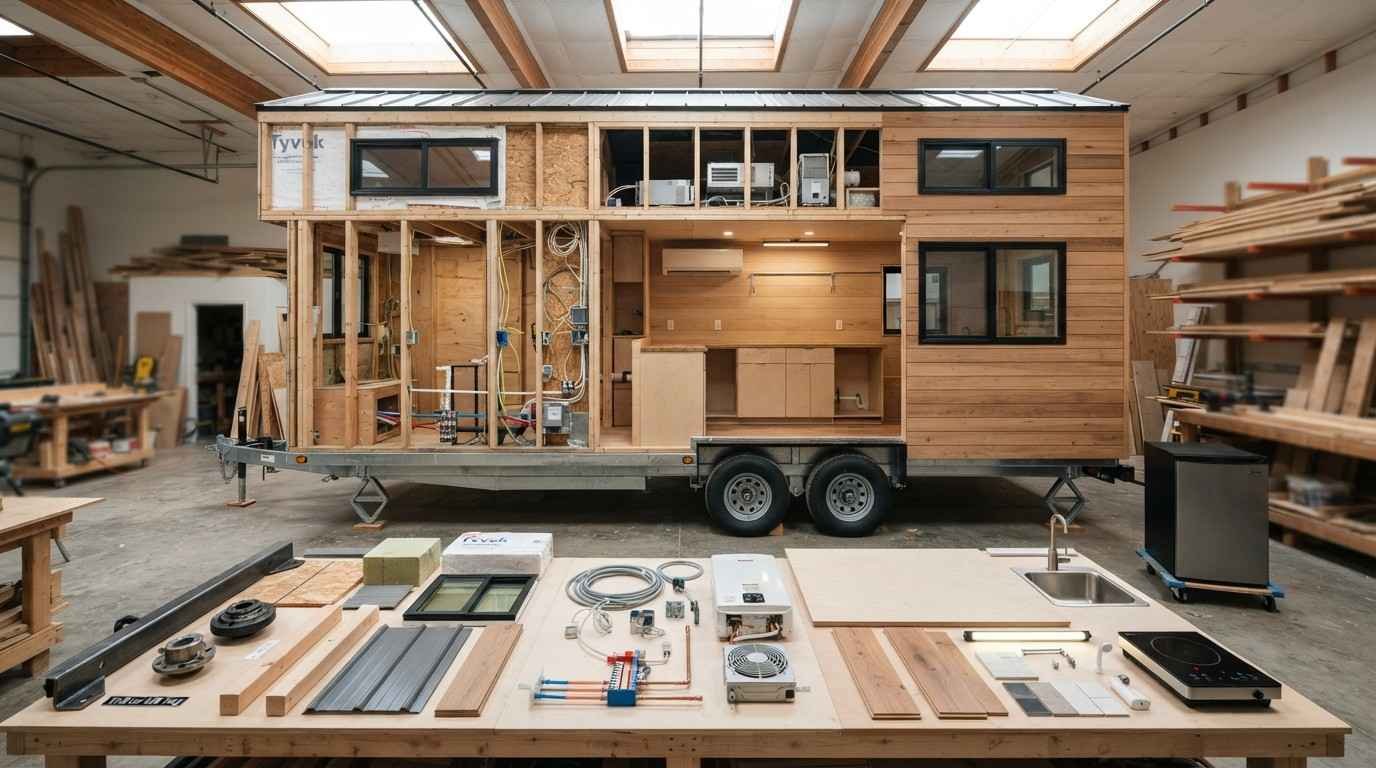
DIY vs. Shell Kit vs. Professional Builder Cost Comparison
The three build paths produce very different real costs, and material cost is only part of the comparison. Time, tooling, rework, and resale all belong in the math.
True Cost of a DIY Build
A DIY build commonly lands between $35,000 and $70,000 in materials. Add 1,200 to 2,000 hours of labor, tool purchases, and a first-timer’s rework, and the effective cost climbs fast.
DIY also complicates insurance and financing, because underwriters want third-party certification. That certification is difficult to obtain retroactively on an owner-built unit.
Shell and Semi-Finished Options
A dry-in shell at $28,000 to $55,000 gives you a weathertight, road-engineered structure and leaves interior work to you. I recommend this path for skilled owners who want control over finishes without gambling on structure.
The savings are real and the risk is contained. The hardest engineering is already done.
Turnkey Custom Builder Pricing
A turnkey build costs the most upfront and the least in surprises. You get engineered plans, certified construction, warranty coverage, and a single accountable party, which is why lenders and insurers prefer these units.
For buyers planning long-term occupancy or eventual resale, this path protects value. The premium buys documentation and recourse.
Materials and Craftsmanship: Where Quality Changes the Budget
Material choices set your long-term cost more than your purchase price does. I spend money on the envelope and structure, then manage the budget through visible finishes.
Framing Materials and Structural Choices
Steel framing resists racking and cuts weight, and it costs 15% to 30% more than dimensional lumber. Advanced-framed wood with metal strapping performs well and stays affordable.
Either works. Undersized members and missing hold-downs never do.
Insulation, Windows, and Envelope Performance
Closed-cell spray foam, rigid foam, and mineral wool all outperform loose batts in a vibrating structure. Dual-pane low-E windows and continuous air sealing cut heating and cooling loads, and the U.S. Department of Energy notes that air sealing and insulation rank among the most cost-effective efficiency upgrades available.
In a 250-square-foot home, envelope quality shows up on the first utility bill. Thin insulation is a monthly tax.
Finish-Level Tiers and Long-Term Value
I sort finishes into three tiers: durable-basic, mid-custom, and heirloom-custom. Durable-basic uses prefinished panels and solid-surface counters and holds up fine.
Heirloom-custom adds joinery, stone, and integrated millwork. It also adds resale appeal in a market where buyers compare finished units directly.
Hidden and Often-Missed Costs
Hidden costs sink more tiny home budgets than build overruns. These four categories account for most of the surprises I see.
Permits, Certifications, and Inspections
Third-party certification to ANSI 119.5 or NOAH standards typically runs $1,500 to $5,000 and unlocks insurance and financing. Local siting approvals add fees, and some California jurisdictions treat a THOW as a movable tiny house under state building code with its own review path.
Skipping certification saves money once and costs money forever. Insurers and lenders both ask for it.
Delivery, Transport, and Setup
Transport runs $3 to $8 per mile for a professional tow, plus pilot cars and permits for oversize loads. Setup includes leveling, blocking, skirting, and anchoring, commonly $1,500 to $6,000.
Wide builds over 8.5 feet require oversize permits in every state they cross. I plan routes before finalizing width.
Land, Parking, and Utility Hookups
Land and parking are the largest hidden cost in California. Monthly tiny home community rents commonly run $600 to $1,400, and buying rural land adds well, septic, and access road costs that easily exceed $40,000.
Utility hookups on private land add $3,000 to $25,000 depending on distance to service. Off-grid systems trade that for equipment cost.
Sales Tax, Registration, and Insurance
California sales tax applies to the completed unit, adding 7.25% to 10.75% depending on district. DMV registration as a park trailer or travel trailer adds annual fees, and specialty insurance typically runs $500 to $1,600 per year.
These lines total five figures on a mid-range build. I put them in the budget from day one.
Financing a Tiny Home on Wheels
Financing is the single biggest structural difference between a tiny home and a conventional house. The home is titled as a vehicle, not real property, and that changes every loan option.
RV Loans and Personal Loans
RV loans offer the best rates for certified units, commonly 7% to 12% over 10 to 20 years. Certification is the gatekeeper, and uncertified builds get pushed toward unsecured personal loans at higher rates and shorter terms.
Credit union RV lending tends to be the most flexible. I start there.
Builder Financing and Payment Schedules
Most custom builders work on milestone draws: deposit, trailer and shell, systems, finishes, and final. A transparent draw schedule tied to verifiable completion stages protects both sides.
I never recommend large front-loaded deposits. Payments should track progress you can inspect.
Why THOWs Rarely Qualify for Mortgages
Mortgages require permanently affixed real property, and a THOW keeps its wheels and title by design. That excludes conventional mortgage products almost universally.
Owners who want mortgage financing build on a foundation instead, often as an accessory dwelling unit on existing property. The tradeoff is mobility for financing access.
Building Your THOW Budget Step by Step
A working budget takes four passes. I build it in this order every time, and it prevents the mid-project cash crunch that stalls builds.
Setting a Realistic Total Project Number
Start with the all-in number, not the build number. Add build cost, certification, transport, setup, land or parking, utilities, tax, registration, and first-year insurance into one figure.
Most buyers who quote me a $90,000 budget are describing the build only. The all-in number lands closer to $125,000.
Contingency Reserves and Change Orders
I hold 10% to 15% of the build cost as contingency, and 15% for custom or off-grid builds. Change orders are the main consumer of that reserve, since mid-build design changes carry both material and labor premiums.
Locking finish selections before framing keeps contingency intact. Late changes cost multiples of early ones.
Reading and Comparing Builder Quotes
Comparable quotes require identical scopes. I put every bid into the same five-category table, then flag what each one excludes.
Watch for allowances, which are placeholder budgets for undecided items. A quote with heavy allowances is an estimate wearing a contract’s clothing, and comparing tiny home builder quotes line by line exposes the difference immediately.
How do I know if a tiny home quote is fair, and what will it cost me to own long term?
That question separates purchase price from ownership cost. The rest of this guide covers what you pay after the keys change hands and how build quality controls that number.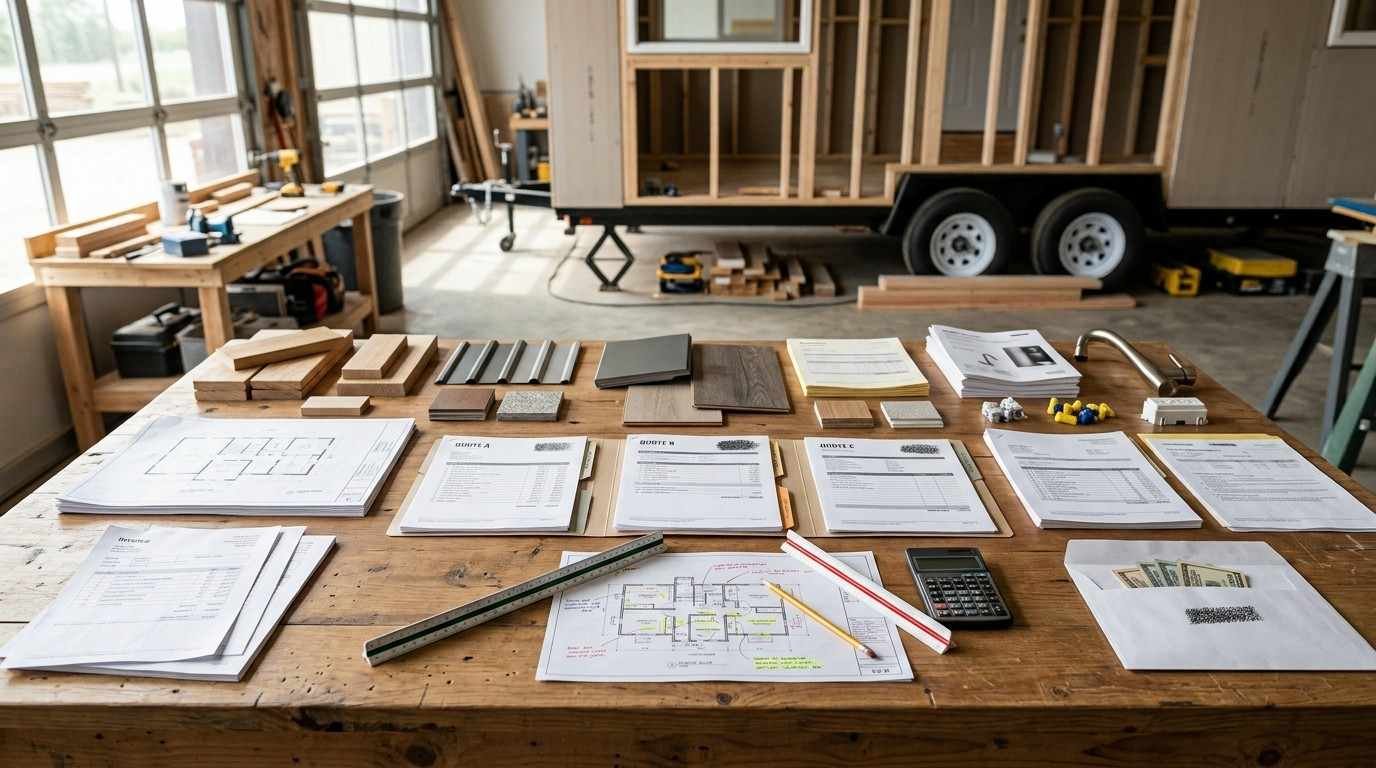
Ongoing Ownership Costs and Total Cost of Ownership
Purchase price is roughly 70% to 80% of a decade of tiny home cost. The remainder comes from utilities, maintenance, insurance, and site fees.
Utilities, Maintenance, and Repairs
A well-insulated THOW commonly runs $60 to $150 monthly in utilities. Maintenance follows a predictable cycle: roof and window seals, trailer bearings and brakes, and exterior finish refresh.
I budget 1% of build cost annually for maintenance. Deferred sealant work causes the expensive failures.
Depreciation vs. Resale Value
THOWs depreciate like vehicles in the eyes of lenders and appreciate like homes in the eyes of buyers, which creates a strange middle market. Certified, well-documented, professionally built units resell strongest, often retaining 70% to 85% of value at five years.
Owner-built uncertified units resell hardest. Documentation is the asset.
Insurance and Storage
Specialty THOW policies cover the structure in transit and while sited, and premiums track certification status and build value. Seasonal storage adds $50 to $250 monthly where owners do not have permanent parking.
Standard homeowners policies do not cover these homes. I confirm coverage before delivery.
How Construction Quality Protects Your Budget
Build quality is a financial variable, not an aesthetic one. Poor construction shows up as repair bills, denied insurance claims, and dead resale value.
Measurable Quality Indicators to Ask About
I ask every builder for six things: engineered plans, trailer GVWR documentation, insulation R-values, air sealing method, third-party certification, and a written warranty. Real answers arrive as documents, not adjectives.
Photo documentation of framing and systems before closing walls matters just as much. You cannot inspect what is already covered, which is why understanding what defines home construction quality pays for itself.
Red Flags in Low-Bid Quotes
The lowest bid usually excludes something specific. Common omissions: certification, transport, appliances, permits, and any real insulation specification.
Vague material lists are the clearest warning. Quality builders name brands, thicknesses, and R-values.
Warranties, Documentation, and Build Transparency
A meaningful warranty covers structure, envelope, and systems separately with defined terms. I look for one to five years on systems and longer on structure.
Documentation packages travel with the home to the next buyer. That paperwork is the difference between a resale and a fire sale.
Cost-Saving Strategies That Do Not Compromise Quality
Real savings come from scope decisions, not from cheaper materials. I use five levers and leave the envelope alone.
Simplify the geometry first. A rectangular single-loft plan with a straight roofline costs measurably less than dormers, bump-outs, and multiple roof planes, and it leaks less too.
Standardize sizes next. Off-the-shelf window and door dimensions, standard cabinet widths, and stock appliance footprints eliminate custom fabrication premiums across the whole build.
Then phase the finishes. Move in with durable-basic surfaces and upgrade counters, tile, and built-ins later from cash flow instead of financing them at 10%.
Finally, lock selections early and buy the trailer, insulation, and windows to spec. Those three items determine comfort and durability for the life of the home.
Conclusion
Tiny home on wheels cost comes down to trailer quality, envelope performance, systems, finish level, and the ownership costs that follow delivery.
Every category above connects to deeper resources on permits, quotes, construction standards, and financing paths worth reading before you commit.
We build certified, documented homes at Tiny Home Builders California, and we will walk your numbers with you line by line.
Frequently Asked Questions
How much does a tiny home on wheels cost in California?
Professionally built units typically run $60,000 to $180,000, with most custom turnkey builds landing between $95,000 and $140,000 before land and parking costs.
Is it cheaper to build a tiny home yourself?
Materials cost less, around $35,000 to $70,000. Once you add 1,200-plus labor hours, tools, rework, and lost certification, the real savings shrink considerably.
What hidden costs do tiny home buyers miss most often?
Land or parking rent, utility hookups, third-party certification, transport and setup, sales tax, registration, and specialty insurance. These commonly add $20,000 or more.
Can you get a mortgage for a tiny home on wheels?
No. THOWs are titled as vehicles, not real property. Buyers use RV loans, credit union financing, personal loans, or builder milestone payment plans instead.
How much should I set aside for contingency?
I hold 10% to 15% of build cost for standard builds and 15% for custom or off-grid projects. Change orders consume most of that reserve.
Do tiny homes on wheels hold their value?
Certified, professionally built, well-documented units often retain 70% to 85% of value at five years. Uncertified owner-built homes depreciate much faster.
What does third-party certification cost and why does it matter?
Certification runs roughly $1,500 to $5,000. It unlocks insurance coverage, RV loan eligibility, park acceptance, and stronger resale value.