An ADU adds real, measurable value to a California home, and in most markets that value shows up clearly at resale. I have watched this play out across dozens of projects, and the pattern holds: a well-built accessory dwelling unit consistently outperforms most other home improvements in return on investment.
Home values in California keep climbing, and buyers want flexibility built into a property before they ever walk through the door. An ADU delivers rental income potential, multigenerational living space, and square footage that appraisers can actually count. That combination is rare in a single upgrade.
I walk through what actually drives an ADU’s impact on resale value in this guide. We cover how much value gets added, how appraisers calculate it, what buyers are actually looking for, the cost and legal factors that shape your return, and the design choices that separate a strong investment from a wasted one.
What Is an ADU and Why Does It Affect Home Value?
An accessory dwelling unit is a secondary housing unit built on the same lot as a primary residence, complete with its own kitchen, bathroom, and sleeping area. That self-contained nature is exactly why it moves resale value in a way that a bonus room or finished basement never will.
I see this distinction trip people up constantly. A converted garage without a kitchen is a bonus room. The same space with a kitchen and separate entrance becomes a legal ADU, and that single difference changes how an appraiser treats it entirely.
Buyers see an ADU as income-generating square footage, not just extra space. That perception alone shifts negotiating power in a seller’s favor during resale.
Types of ADUs Recognized by Appraisers and Lenders
Appraisers generally recognize three ADU categories: detached units, attached units, and converted spaces like garage conversions. Each type gets valued differently depending on construction quality and independence from the main home.
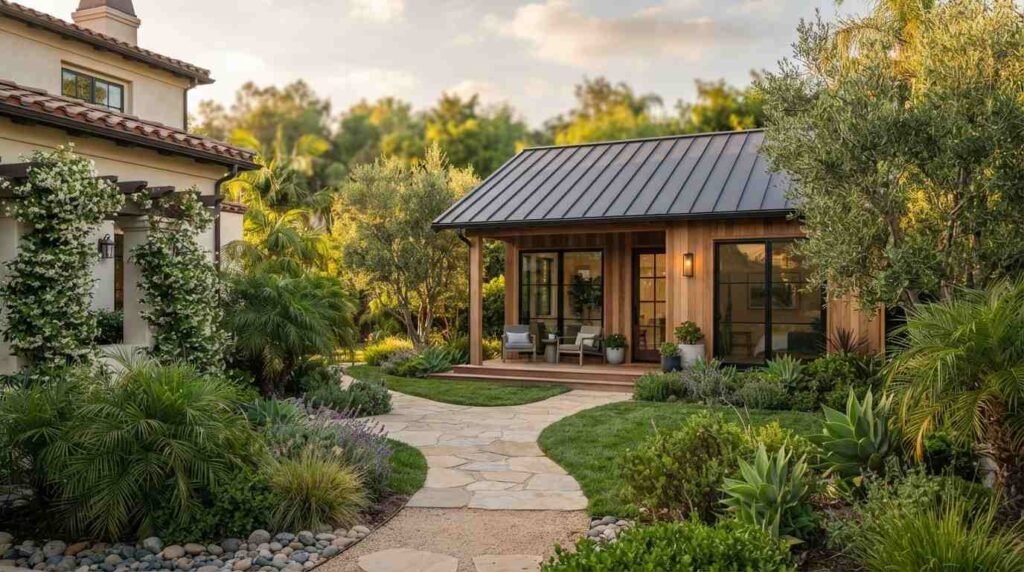
Detached ADUs tend to carry the strongest resale premium because they read as fully separate living spaces. Attached units and conversions still add value, but the appraisal often ties their worth more closely to the primary structure’s condition.
How Much Value Does an ADU Add to a Home in California?
A well-built ADU typically adds 20% to 30% to a home’s resale value in California, though the number swings based on location, size, and build quality. Freddie Mac’s ADU research found homes with ADUs sold for 35% more than comparable homes without one in several metro markets studied.

That premium is not evenly distributed across the state. Coastal and high-density metro areas tend to see the strongest lift because land and rental demand are already stretched thin there.
I tell clients to think of the ADU premium as a range, not a guarantee. Construction quality, permitting status, and rental potential all pull that number up or down.
Average ROI Ranges by Region and ADU Type
Urban and suburban California markets with strong rental demand typically see ADU ROI in the 50% to 70% range on construction cost. Rural markets with lower rental demand often land closer to 20% to 40%, since the income-generating appeal carries less weight there.
Detached units in high-demand rental zones consistently produce the highest ROI figures I have seen. Converted garages in lower-demand areas still add value, just at a noticeably smaller margin.
The Key Factors That Determine an ADU’s Impact on Resale Value
Location, size, permitting status, and construction quality are the four factors that swing an ADU’s resale impact the most. Miss any one of these and the unit’s value contribution drops fast, even if the space itself looks great.
A permitted, well-located, properly sized ADU built with durable materials checks every box an appraiser and a buyer both care about. Skip the permit or cut corners on materials, and the same square footage can actually work against the sale.
I have seen unpermitted units get flagged during a sale and force a price renegotiation on the spot. That single issue can erase most of the value the ADU was supposed to add.
Quality of Construction and Material Choices
Construction quality directly determines whether an ADU reads as a permanent asset or a liability waiting to surface during inspection. Buyers and their inspectors notice foundation work, insulation, roofing, and finish quality immediately.
I always tell homeowners that the materials behind the walls matter just as much as what’s visible. A unit built with proper moisture barriers and code-compliant framing holds its value through multiple ownership changes, while a rushed build starts losing ground the day it’s finished.
How Appraisers Calculate ADU Value During a Sale
Appraisers typically use either the comparable sales approach or the income approach to value an ADU, depending on local market data availability. The comparable sales method looks at similar properties with ADUs that recently sold, while the income approach values the unit based on potential rental income.
Most California appraisers lean toward the comparable sales method when enough ADU sales data exists nearby. In markets where ADU sales are still rare, the income approach fills that gap by capitalizing the unit’s rental potential.
I recommend homeowners keep permit records and rental comps on hand before listing. That paperwork gives the appraiser concrete data instead of forcing a rough estimate.
Comparable Sales vs. Income Approach Methods
The comparable sales approach pulls data from recently sold homes with similar ADUs in the same area, which tends to produce a more market-accurate number. The income approach instead calculates value based on the rent the unit could realistically generate, then applies a capitalization rate to that figure.
Appraisers pick whichever method has the stronger data set available. In tight urban markets with plenty of ADU sales, comparable sales usually wins out.
ADUs and Buyer Demand: What California Homebuyers Actually Want
California buyers actively search for homes with ADUs because they solve two problems at once: extra income and flexible living space for family. That dual appeal is exactly what pushes ADU-equipped homes to sell faster and at a premium.
I talk to buyers who want a unit for aging parents just as often as I talk to buyers chasing rental income. Both groups drive real demand, and that demand shows up directly in offer prices.
Multigenerational Living and Rental Income Appeal
Multigenerational households increasingly search specifically for homes with a separate living unit already built. Pew Research Center found the number of Americans living in multigenerational households has quadrupled since 1971, reaching roughly 18% of the U.S. population.
That shift in household structure directly fuels ADU demand in California, where housing costs push families toward shared living arrangements more than almost anywhere else in the country. A finished, private ADU answers that need immediately.
Financing and Cost Considerations That Influence ROI
Construction cost per square foot, financing terms, and material selection all shape how much return an ADU actually delivers at resale. A unit built efficiently without sacrificing quality tends to produce the strongest ROI outcomes.

I walk clients through cost breakdowns early, because the biggest ROI killer I see is overbuilding a unit far beyond what the local rental or resale market supports. Matching the build to the market matters more than maximizing square footage.
Construction Cost per Square Foot vs. Value Added
ADU construction costs in California typically range from $200 to $400 per square foot, depending on finishes, site conditions, and unit type. The value added at resale needs to outpace that cost significantly to justify the investment.
Detached units on flat, accessible lots tend to cost less per square foot than converted garages requiring structural changes. That cost difference directly affects the final ROI calculation.
Permitting, Zoning, and Legal Compliance Impact on Value
A permitted ADU built to current code carries significantly more resale value than an unpermitted one, and the gap is not small. Unpermitted units create legal exposure for buyers, which appraisers and lenders factor into value immediately.
I have seen deals fall through entirely once an inspector flagged an unpermitted unit during escrow. The buyer either walks away or demands a price cut steep enough to cover the risk they are now taking on.
California ADU Law Changes Affecting Resale
California has passed multiple state laws since 2016 easing ADU permitting requirements, reducing fees, and limiting how much cities can restrict ADU construction. Those changes have made permitted ADUs far more common, which raises buyer and appraiser expectations around compliance.
A home with an ADU built under current state law standards reads as lower-risk to both lenders and buyers. That reduced risk translates directly into a stronger resale number.
Common Mistakes That Reduce an ADU’s Resale Value
Skipping permits, overbuilding for the local market, and choosing poor layouts are the three mistakes I see erase ADU value most often. Each one either creates legal risk or mismatches the unit with what buyers in that area actually want.
I have walked through units with beautiful finishes that still hurt the home’s value because the layout made no sense for rental or family use. Good materials cannot fix a design that ignores how the space will actually get used.
Poor Design Choices and Layout Mismatches
A cramped bathroom, poor natural light, or an awkward entrance location can undercut an otherwise well-built ADU’s appeal to buyers. These layout issues become obvious the moment a potential buyer walks through, regardless of how solid the construction is underneath.
I push clients toward layouts that mirror what renters and multigenerational families actually need: a private entrance, a full kitchen, and enough separation from the main house to feel independent. That separation is what buyers pay for.
ADU vs. Other Home Improvements: Comparing Value Impact
An ADU generally outperforms kitchen remodels, room additions, and most other home improvements in resale ROI, particularly in high-demand California markets. The difference comes down to income potential, which standard remodels simply cannot offer.
I compare this often with clients weighing where to put their renovation budget. A kitchen remodel improves buyer perception, but it rarely generates rental income or houses a family member the way an ADU does.
ADU Value vs. Kitchen Remodels and Room Additions
Kitchen remodels typically return 60% to 80% of their cost at resale, while well-built ADUs frequently return 50% to 70% or more, with the added benefit of ongoing rental income potential before the sale even happens. Room additions without independent living features fall somewhere in between, adding usable space without the income angle.
That rental income potential is the real differentiator. A kitchen remodel never pays you monthly rent while you still own the house.
How to Maximize Your ADU’s Resale Value

Choosing a detached layout, prioritizing durable materials, and working with an experienced builder are the three moves that maximize an ADU’s resale value most reliably. Each decision compounds the others, since quality construction protects the investment that location and design already set up.
I tell every client the same thing before groundbreaking starts: build it like you’re never selling, because that mindset produces the construction quality buyers actually pay a premium for.
Design, Craftsmanship, and Builder Selection Tips
Choosing a builder with a proven track record in ADU construction protects against the code violations, material shortcuts, and design mismatches that quietly erase resale value. Ask for permit history, material specifications, and completed project references before signing anything.
We built our entire process around this exact concern at Tiny Home Builders California. Reach out to us today to start planning an ADU built for lasting resale value, not just a quick add-on.
Conclusion
An ADU consistently adds measurable resale value across California when it’s permitted, well-located, and built with durable materials. The factors that matter most are construction quality, market fit, and legal compliance.
Buyer demand for flexible, income-generating space continues to grow, and that trend shows no sign of slowing down anytime soon. A well-built ADU meets that demand directly.
We help homeowners build ADUs designed for long-term value, not shortcuts. Contact Tiny Home Builders California today to start your ADU project the right way.
Frequently Asked Questions
Does an ADU always increase home value?
A well-built, permitted ADU increases home value in the vast majority of California markets. Poor construction quality or an unpermitted unit can reduce or even eliminate that value gain.
How much does an ADU cost to build in California?
ADU construction in California typically costs between $200 and $400 per square foot, depending on finishes and site conditions. Total cost usually ranges from $150,000 to $300,000 for a full detached unit.
Do appraisers always count ADU square footage?
Appraisers count ADU square footage when the unit is permitted and meets code requirements for a legal secondary dwelling. Unpermitted units often get excluded or heavily discounted during appraisal.
Is a detached ADU worth more than an attached one?
Detached ADUs generally carry a stronger resale premium because they read as fully independent living spaces to both buyers and appraisers. Attached units still add value, just typically at a smaller margin.
How long does it take to see ROI on an ADU?
Homeowners who rent out an ADU often see rental income offset construction costs within 5 to 10 years, depending on local rents. Resale value gains, by contrast, show up immediately once the unit is complete and permitted.
Can an unpermitted ADU still add value at resale?
An unpermitted ADU can create legal risk that leads buyers to negotiate the price down significantly, or walk away entirely. Permitting the unit before listing almost always protects more value than it costs.
Does the size of an ADU affect its resale impact?
A right-sized ADU that matches local rental and buyer demand adds more value than an oversized unit that costs more to build than the market supports. Matching unit size to neighborhood norms produces the strongest ROI.