Park model home construction relies on a specific set of materials, including galvanized steel chassis frames, engineered wood or metal wall framing, moisture-resistant subflooring, and climate-rated insulation and roofing systems, that together determine how well the home performs over decades. I’ve walked enough job sites to know that the difference between a home that holds up and one that doesn’t almost always traces back to what’s inside the walls, not what’s painted on them.
Material choices affect comfort, maintenance costs, and resale value for years after move-in. A homeowner who understands these choices asks better questions and avoids expensive surprises.
This guide covers the structural backbone of a park model home, the exterior envelope that protects it from weather, the interior finishes that shape daily comfort, and the codes and verification steps that confirm a builder actually delivered what they promised. We’ll group it by where each material sits in the build, from the chassis up to the roofline.
What Makes a Material “Best” for Park Model Home Construction
The best materials for park model home construction are those that balance weight restrictions, transportability, and long-term durability, since these homes are built on a chassis and must withstand both road transport and permanent site exposure. I think of it less as “premium versus budget” and more as “engineered for the right job.”
A material that works beautifully in a site-built home can fail quickly in a park model if it wasn’t designed for vibration during transport or for the tighter structural tolerances these homes require. Weight matters here in a way it never does in conventional construction.
Builders who understand this distinction choose materials rated for mobility, moisture resistance, and thermal performance simultaneously. That’s a different sourcing standard than what a typical production home builder follows.
Chassis and Steel Frame Materials in Park Model Construction
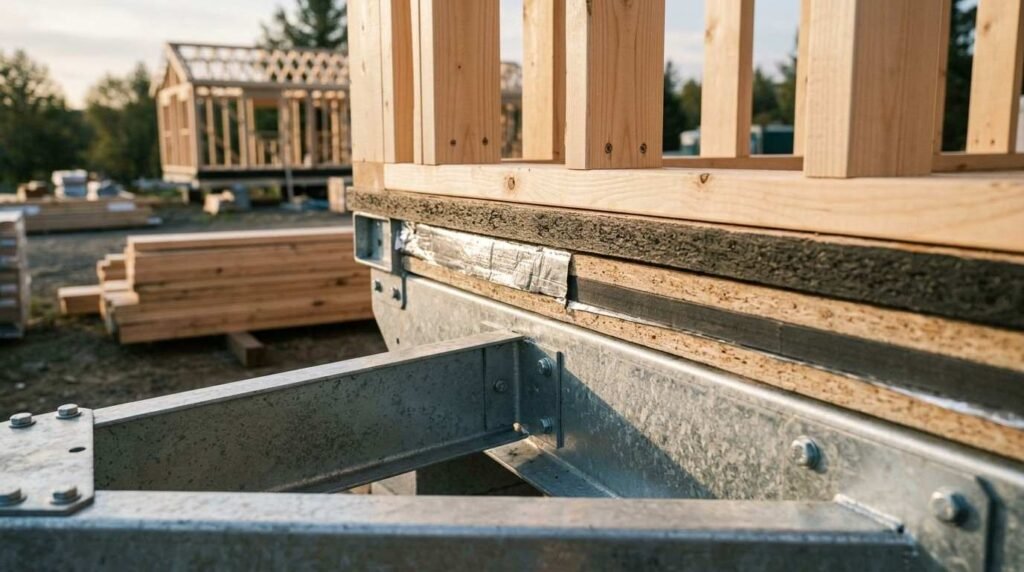
The chassis is the structural steel frame that supports the entire park model home, and it’s typically built from galvanized or powder-coated steel I-beams designed to resist rust and withstand the stress of transport. This is the single most important material decision in the entire build, because everything else sits on top of it.
Galvanized steel undergoes a zinc coating process that protects against corrosion, which matters enormously in coastal California markets where salt air accelerates rust on untreated metal. I’ve seen chassis fail decades early simply because a builder cut corners on coating thickness.
| Chassis Material | Corrosion Resistance | Typical Use Case |
| Galvanized steel I-beam | High | Standard park model chassis |
| Powder-coated steel | Moderate-High | Budget-sensitive builds |
| Uncoated steel | Low | Not recommended for coastal/humid zones |
Chassis certification standards determine whether a frame meets the structural load requirements for both transport and permanent placement.
Subfloor and Floor Decking Materials
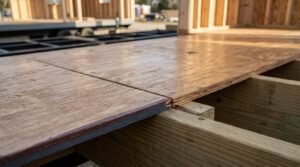
Subflooring in a park model home is most commonly built from moisture-resistant plywood or oriented strand board (OSB) treated for water resistance, since the floor system sits closer to ground moisture than a traditional foundation. A weak subfloor shows up fast as soft spots or squeaks within a few years.
Builders who use marine-grade or exterior-rated plywood are paying more upfront, but that choice prevents the delamination that cheaper interior-grade board develops when exposed to humidity swings. This is one area where the material cost difference is small relative to the failure cost.
I always tell buyers to ask specifically which subfloor grade is used, not just “plywood,” because that one word hides a wide quality range.
Wall Framing Materials: Wood vs. Metal Stud Systems
Wall framing in park model homes uses either kiln-dried wood studs or light-gauge steel studs, each offering different strengths for weight, insulation cavity size, and resistance to pests or warping. Wood remains the more common choice because it’s lighter and easier to insulate around.
| Framing Material | Weight | Pest Resistance | Insulation Compatibility |
| Kiln-dried wood studs | Lighter | Lower (treatable) | Excellent |
| Light-gauge steel studs | Heavier | Excellent | Requires thermal break |
| Mixed wood/steel hybrid | Moderate | Good | Good |
Steel framing resists termites and doesn’t warp with humidity changes, which makes it appealing in certain California climate zones, but it conducts heat more readily unless a thermal break is installed. That tradeoff is worth understanding before you assume steel is automatically the upgrade.
Exterior Siding Materials for Durability and Curb Appeal
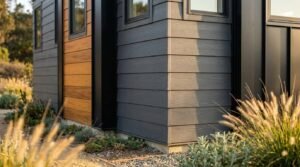
Exterior siding on a park model home is typically fiber cement, engineered wood, vinyl, or metal panel, chosen based on climate exposure, maintenance tolerance, and the look the homeowner wants. Fiber cement has become the standard for buyers prioritizing longevity.
- Fiber cement siding holds up against sun, moisture, and pests with minimal maintenance, making it a strong fit for most California climate zones.
- Engineered wood siding offers a natural look at a lower cost but needs more regular sealing and inspection.
- Vinyl siding is budget-friendly and low-maintenance but can warp under sustained high heat in inland desert regions.
- Metal panel siding delivers excellent durability and a modern aesthetic, though it carries a higher upfront material cost.
The right choice depends heavily on where in California the home will sit permanently, since coastal, desert, and mountain exposure each stress siding differently.
Roofing Materials and Systems Built for California Climates
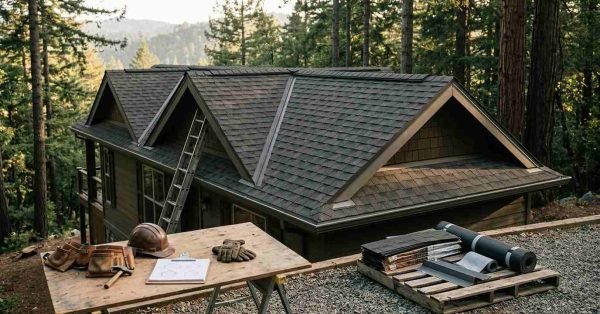
Roofing materials for park model homes generally include asphalt shingles, metal roofing, or TPO membrane systems, each rated for different combinations of wind load, UV exposure, and fire resistance. An Ahrefs-style industry comparison shows that metal roofing systems now account for a growing share of manufactured and park model installations specifically because of their fire-resistance ratings.
| Roofing Material | Lifespan | Fire Rating | Best Fit |
| Asphalt shingles | 15-20 years | Class A (treated) | Standard budgets |
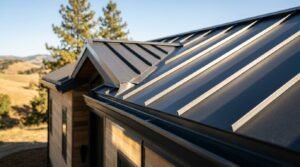
| Standing-seam metal | 40-50 years | Class A | Wildfire-prone zones |
| TPO membrane | 20-25 years | Class A | Low-slope roof designs |
California’s wildfire-prone regions increasingly favor Class A fire-rated roofing, and metal roofing systems meet that standard while also shedding heat more efficiently than asphalt. Roofing material selection by climate zone gets into which option fits a specific region’s fire and heat exposure.
Insulation Materials and Thermal Performance
Insulation in park model homes commonly uses spray foam, rigid foam board, or fiberglass batts, with R-values that directly determine how much energy the home needs for heating and cooling. Spray foam insulation typically achieves R-6 to R-7 per inch, nearly double the performance of standard fiberglass batts at the same thickness.
| Insulation Type | R-Value per Inch | Air Sealing | Typical Use |
| Spray foam (closed-cell) | R-6 to R-7 | Excellent | Walls, roof cavities |
| Rigid foam board | R-4 to R-6.5 | Good | Exterior sheathing |
| Fiberglass batts | R-3 to R-3.8 | Poor (requires separate air seal) | Budget builds |
Because wall cavities in park model homes are often narrower than in site-built houses, higher R-value-per-inch materials like spray foam matter more here than in conventional construction. A full breakdown of energy efficiency standards for park model homes covers how insulation ties into overall performance ratings.
Windows and Door Materials for Energy Efficiency and Security
Windows and doors in quality park model homes use dual-pane or triple-pane glass set in vinyl, fiberglass, or aluminum-clad frames, each affecting thermal performance and durability differently. Vinyl frames dominate the market because they resist corrosion and don’t conduct heat the way aluminum does.
- Fiberglass frames offer the best dimensional stability in extreme temperature swings common to inland California.
- Vinyl frames balance cost and performance well for most climate zones.
- Aluminum-clad wood frames look premium but need a thermal break to avoid energy loss.
Low-E glass coatings reduce heat transfer regardless of frame material, so I always recommend confirming that spec specifically rather than assuming it’s included.
Interior Wall and Ceiling Finish Materials
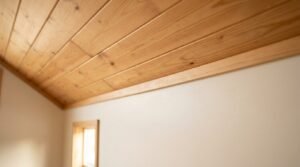
Interior finishes in park model homes typically include drywall, tongue-and-groove wood paneling, or laminate wall panels, chosen for weight, moisture resistance, and finished appearance. Drywall gives the most traditional, site-built feel but adds more weight than panel systems.
Tongue-and-groove paneling resists cracking during transport in a way that drywall sometimes doesn’t, which is a real consideration since these homes travel before they’re permanently placed. That’s a detail many buyers never think to ask about until after delivery.
Builders balancing weight, finish quality, and transport durability often land on a hybrid approach using drywall in stationary areas and panel systems near structural stress points.
Flooring Material Options and Performance Comparison
Flooring materials for park model homes include luxury vinyl plank (LVP), engineered hardwood, and laminate, each offering different durability and moisture resistance for a home that may see more humidity swings than a standard house. LVP has become the dominant choice for good reason.
| Flooring Type | Moisture Resistance | Durability | Maintenance |
| Luxury vinyl plank (LVP) | Excellent | High | Low |
| Engineered hardwood | Moderate | Moderate-High | Moderate |
| Laminate | Low-Moderate | Moderate | Low |
LVP handles the temperature and humidity fluctuations of transport and seasonal changes better than engineered hardwood, which can expand or contract at the seams over time. A deeper look at interior finish selection for small-footprint homes walks through how these choices affect daily livability.
Plumbing and Electrical System Materials
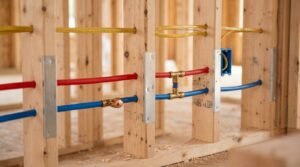
Plumbing in park model homes commonly uses PEX tubing instead of rigid copper, while electrical systems rely on standard romex wiring rated for residential use, both chosen for flexibility during transport and installation. PEX handles the vibration and flexing of transport far better than rigid copper pipe, which can crack at joints.
- PEX plumbing resists freezing damage better than copper in homes placed in colder mountain regions.
- Electrical systems should meet the same residential code standards applied to site-built homes, not a reduced standard.
- Shut-off valve placement and wiring gauge matter more in a compact footprint, where systems are packed closer together.
A builder cutting corners on either system creates risks that aren’t visible until something fails, which makes this one of the harder areas for buyers to inspect on their own.
Building Codes and Material Standards That Apply in California
Park model homes built for placement in California must meet standards set by the National Fire Protection Association’s NFPA 1192 code, alongside state-specific Title 25 requirements that govern manufactured housing construction. These standards set the floor, not the ceiling, for material quality.
- Confirm the home carries an NFPA 1192 compliance label from a certified third-party inspector.
- Verify Title 25 HCD (Department of Housing and Community Development) certification for any unit intended for permanent placement.
- Check for local fire-zone overlays that may require upgraded roofing or siding materials.
- Ask whether the chassis and frame meet ANSI A119.5 standards specific to park model RVs.
Builders who exceed these baseline codes voluntarily, rather than building to the minimum, are usually the ones worth paying closer attention to. California’s full regulatory framework for manufactured and park model housing breaks down how these overlapping standards apply by county.
How Material Quality Affects Long-Term Durability and Resale Value
Material quality directly determines how long a park model home lasts before major systems need replacement, with well-built homes using premium materials commonly lasting 30 to 50 years compared to 15 to 20 years for homes built with minimum-grade components. That gap compounds over time in ways that aren’t obvious at purchase.
Buyers often focus on finishes they can see rather than structural materials they can’t, but the chassis, framing, and envelope are what actually determine resale value a decade later. I’ve watched well-maintained homes with quality materials hold value far better than flashier homes built on weaker bones.
Appraisers and future buyers increasingly ask for documentation on materials used, which means the paper trail matters almost as much as the materials themselves.
Questions to Ask Builders About Materials Before You Sign
Before signing a contract, ask builders to specify the exact brand and grade of chassis steel, subfloor material, insulation type and R-value, and roofing system, rather than accepting generic category names. Vague answers here are a warning sign.
- What specific grade of steel is used in the chassis, and is it galvanized?
- What is the R-value of the insulation in the walls, floor, and roof?
- Which subfloor material is used, and is it rated for exterior exposure?
- What roofing system is installed, and what’s its fire rating?
- Can you provide documentation showing NFPA 1192 and Title 25 compliance?
- What warranty terms apply to structural materials specifically?
A builder who answers these questions specifically and confidently, with documentation to back it up, is demonstrating the kind of transparency that correlates with construction quality overall.
Conclusion
A quality park model home depends on steel chassis integrity, climate-appropriate insulation, durable siding, and code-compliant roofing working together as one system. These material choices connect directly to the durability, energy performance, and resale value discussed throughout this guide.
We built our reputation on sourcing materials that meet and exceed these standards. Contact Tiny Home Builders California to discuss your project and see our material specifications firsthand.
Frequently Asked Questions
What is the most durable material for a park model home?
Galvanized steel chassis combined with fiber cement siding and metal roofing offers the most durable overall material package. These three components face the highest exposure to transport stress and weather over the home’s lifespan.
Are park model homes built with the same materials as site-built homes?
Park model homes use similar material categories but with lighter-weight, transport-rated variants for framing and subflooring. The chassis and mobility requirements drive most of these material differences.
How long do materials in a park model home typically last?
Quality materials in a well-built park model home typically last 30 to 50 years before major replacement is needed. Minimum-grade materials often require significant repairs within 15 to 20 years.
What roofing material works best in California’s climate?
Standing-seam metal roofing works best across most California climate zones due to its Class A fire rating and heat-shedding properties. It performs especially well in wildfire-prone and high-heat inland regions.
Do park model homes require special insulation?
Park model homes benefit from higher R-value-per-inch insulation like spray foam due to narrower wall cavities than standard homes. This compensates for the reduced insulation space without sacrificing thermal performance.
What should I check about material quality before buying?
Request specific documentation on chassis steel grade, subfloor rating, insulation R-value, and roofing system before signing any contract. Generic category names without specifics are a warning sign of lower quality.
Does material quality affect financing or insurance for park model homes?
Yes, lenders and insurers often require proof of NFPA 1192 and Title 25 compliance tied directly to the materials and construction standards used. Homes built with documented, code-exceeding materials typically qualify for better insurance rates.