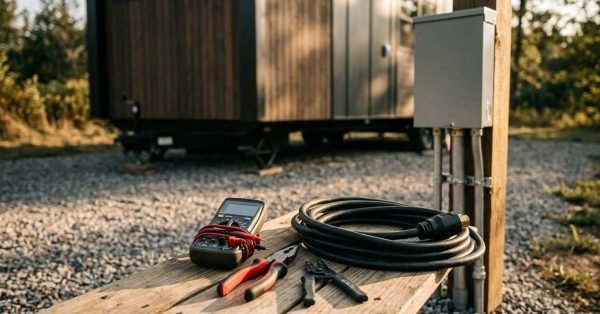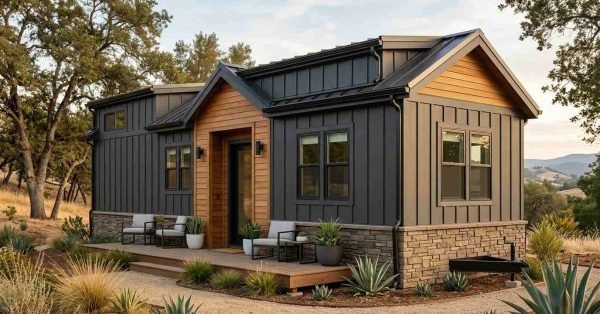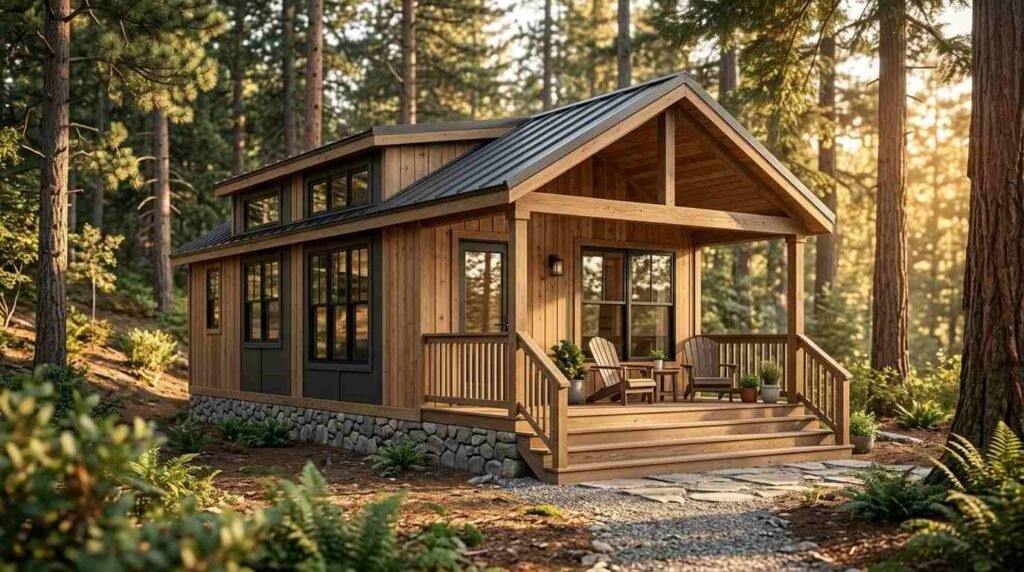
A park model home is a small, factory-built dwelling constructed to ANSI A119.5 standards and designed for long-term placement on a fixed foundation or leased lot. Choosing the right manufacturer determines whether that home holds up for decades or starts showing structural problems within a few years, which is why construction quality, certifications, and manufacturer reputation matter more than price alone. I have walked through dozens of these builds, and the difference between a well-built unit and a poorly built one is rarely visible on the showroom floor.
Most buyers never see how a park model is framed or insulated before they sign. That gap in visibility is exactly why manufacturer vetting is not optional anymore; it’s foundational to protecting your investment.
This guide covers what a park model home actually is and how it differs from similar structures, the certifications and construction quality markers that separate strong manufacturers from weak ones, how pricing and warranty terms typically work, a comparison of top manufacturers serving California, and the state-specific zoning, climate, and resale factors that affect long-term value.
What Is a Park Model Home?
A park model home is a transportable dwelling built on a single chassis, typically under 400 square feet, and certified to ANSI A119.5 standards rather than full residential building codes. I think of them as a middle ground between a manufactured home and an RV, built for residential comfort but regulated more like a recreational structure.
That certification distinction matters because it shapes everything from financing to where you’re legally allowed to place one. We see buyers get tripped up constantly when they assume a park model qualifies for a standard mortgage the way a site-built or manufactured home does.
How Park Models Differ From Tiny Homes and RVs
Park models differ from tiny homes on wheels and RVs primarily in their construction standard, size limit, and intended use. Tiny homes on wheels often follow RV industry (RVIA) certification or no certification at all, while park models must meet the ANSI A119.5 standard specifically written for park trailers.
RVs are built for mobility and short-term travel. Park models are built to sit in one place for years, with residential-grade insulation, plumbing, and electrical systems that a typical travel trailer simply does not carry.
Why the Manufacturer You Choose Determines Long-Term Quality
The manufacturer you choose determines long-term quality because construction decisions made on the factory floor, not after-sale service, dictate how the home performs for the next 20 to 30 years. I’ve seen two park models with nearly identical floor plans age completely differently because one used proper structural fasteners and the other cut corners on connections buyers never inspect.
Quality control inside a factory is not standardized across the industry the way most people assume. One plant might run third-party inspections on every unit, while another self-certifies with minimal oversight, and that difference compounds over a decade of California heat cycles and seasonal humidity shifts.
Key Industry Standards and Certifications to Look For
The most important certification for a park model home is ANSI A119.5, the national safety and construction standard specifically written for recreational park trailers. Without it, a unit cannot legally be classified or insured as a park model in most jurisdictions, including California.
Beyond ANSI certification, I look for a manufacturer’s compliance with NFPA fire safety codes, their stated R-values for insulation, and whether they carry independent third-party inspection, not just an internal quality check. A recent industry overview from the RV Industry Association notes that ANSI-certified park models must meet specific wind load, snow load, and structural requirements that vary by region, which matters directly for California’s seismic and wildfire-adjacent zones.
We also check whether a manufacturer discloses its insulation R-value and HVAC sizing calculations upfront, since reputable builders publish these specs without being asked, while weaker manufacturers often bury or omit them entirely.
ANSI A119.5 Certification Explained
ANSI A119.5 certification is a construction and safety standard administered by the American National Standards Institute specifically for park model recreational vehicles. It covers structural integrity, electrical systems, plumbing, fire safety, and egress requirements.
A manufacturer displaying this certification has had their design reviewed and their production facility inspected by an approved third-party agency. That inspection happens on an ongoing basis, not just once, which is the detail most buyers never ask about.
Construction Quality Indicators to Compare Across Manufacturers
Construction quality in a park model comes down to framing materials, insulation type and thickness, and the structural connections holding the chassis to the frame. I always start by asking what gauge steel the chassis uses and whether the walls are built with 2×4 or 2×6 framing, since that single spec affects both insulation capacity and long-term structural rigidity.
Roofing material and pitch also tell you a lot. A low-slope roof with inadequate drainage is a common failure point in park models, especially in regions like coastal California where seasonal rain can pool if the pitch and membrane aren’t specified correctly.
Framing, Insulation, and Structural Materials
Framing and insulation quality directly determine a park model’s energy performance and structural durability over time. Manufacturers using 2×6 wall framing generally achieve higher R-values than those using 2×4 construction, simply because there’s more cavity depth for insulation.
Spray foam insulation performs better in park models than fiberglass batt because it fills irregular cavities completely and resists moisture intrusion, which matters in a structure that experiences more vibration and settling than a site-built home.
Customization and Floor Plan Flexibility
Customization and floor plan flexibility vary enormously between manufacturers, with some offering only a handful of fixed layouts and others building fully custom designs from scratch. I generally steer buyers toward manufacturers who allow structural customization, like moving load-bearing walls or extending a loft, rather than just cosmetic swaps like countertop color.
The flexibility a manufacturer offers often reflects how their factory is organized. Production-line builders optimize for speed and repeat floor plans, while smaller custom shops build fewer units but accommodate layout changes that larger manufacturers won’t touch.
Manufacturer Experience and Reputation
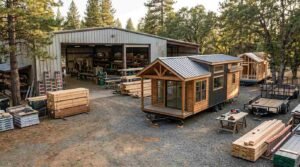
Manufacturer experience and reputation are measurable through years in business, warranty claim history, and how dealers and past buyers describe their post-sale support. A builder with fifteen years in the park model industry has weathered material shortages, code changes, and economic downturns in ways a newer company hasn’t been tested against yet.
I always look at how a manufacturer responds when something goes wrong, not just their marketing copy. Online reviews that mention specific warranty interactions tend to be far more reliable than generic five-star ratings with no detail behind them.
Warranty Coverage and What It Should Include
A solid park model warranty should cover structural components for at least one year, with separate coverage terms for appliances, plumbing, and electrical systems. Most reputable manufacturers offer a one-year comprehensive warranty plus manufacturer-specific coverage on major systems like HVAC and water heaters.
What the warranty excludes matters just as much as what it includes. I’ve reviewed contracts where cosmetic defects, transport damage, and even insulation settling were quietly excluded, which left buyers covering repair costs they assumed were included.
Pricing Structures and What Affects Park Model Cost
Park model pricing typically starts between $60,000 and $120,000 depending on size, customization level, and manufacturer, according to industry pricing data compiled by the Manufactured Housing Institute. Base price almost never reflects the final out-the-door cost once delivery, site prep, and utility hookups are factored in.
I tell buyers to request an itemized quote broken into base unit cost, factory upgrades, transport fees, and site work, because manufacturers bundle these differently and comparing two “base prices” side by side can be misleading without that breakdown.
Base Price vs. Upgrade and Delivery Costs
Base price covers the standard factory-built unit with no customizations, while upgrade and delivery costs are added separately and can increase the total by 20% to 40%. Delivery costs alone vary significantly based on distance and whether the site requires crane placement versus a standard tow-in setup.
Utility hookups, foundation or pier work, and permit fees typically fall outside the manufacturer’s quote entirely and get handled through local contractors instead.
Top Park Model Manufacturers Serving California
Several established manufacturers ship park models into California, including companies with decades of ANSI-certified production history and others with strong regional reputations for custom work. I evaluate each one against the same baseline: certification compliance, materials transparency, warranty terms, and verified reviews from California buyers specifically, since climate and transport logistics affect performance differently than in other states.
National manufacturers tend to offer more standardized pricing and faster production timelines, while regional builders often provide more hands-on customization and shorter delivery distances into California markets.
National Manufacturers vs. Regional Builders
National manufacturers typically operate larger factories with standardized floor plans and faster turnaround times, while regional builders focus on smaller production runs with more customization options. The tradeoff usually comes down to speed versus flexibility.
Regional builders serving California also tend to have more practical experience with the state’s specific zoning and climate requirements, since they’ve delivered into the same counties repeatedly.
How to Compare Manufacturers Side by Side
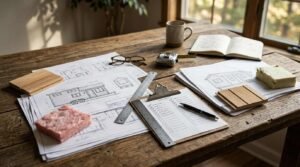
Comparing park model manufacturers side by side works best with a standardized checklist covering certification, materials specs, pricing breakdown, warranty terms, and verified customer references. I recommend buyers request the same five documents from every manufacturer they consider: ANSI certification proof, itemized pricing, written warranty terms, insulation specs, and three recent customer contacts.
Without that standardization, it’s easy to get swayed by a nicer showroom model or a faster sales response time instead of the construction details that actually matter long-term.
Questions to Ask Before Signing a Contract
Before signing a contract, ask the manufacturer directly about chassis gauge, wall framing dimensions, insulation R-value, warranty exclusions, and expected production lead time. Their willingness to answer specifically, rather than redirecting to general marketing language, tells you a lot about how transparent they’ll be after the sale.
I also ask what happens if a defect is discovered after delivery and who absorbs the cost of a service call, since that single answer reveals how a manufacturer treats accountability.
Red Flags That Signal a Lower-Quality Manufacturer
The clearest red flag in a park model manufacturer is reluctance to provide written specifications on framing, insulation, or certification status. A manufacturer confident in their build quality will hand over those documents without hesitation.
Other warning signs include unusually short warranty periods, a high volume of unresolved complaints with the Better Business Bureau, and sales staff who can’t answer basic construction questions. I treat vague answers about chassis materials or insulation type as an immediate disqualifier, regardless of how attractive the floor plan looks.
California Zoning, Permitting, and Placement Rules
California zoning and placement rules for park model homes vary significantly by county, with some jurisdictions permitting them as permanent residences and others restricting them to designated RV or park model communities. Before purchasing, I always confirm with the local planning department whether the intended parcel allows park model placement as a primary dwelling.
Permitting requirements also depend on whether the unit will sit on a foundation or remain on its wheels, since that distinction changes how counties classify the structure for tax and insurance purposes.
Climate and Energy Efficiency Considerations for California
California’s climate diversity, from coastal fog to inland desert heat, means energy efficiency specs that work in one region may underperform in another. I pay close attention to HVAC sizing and insulation R-value when a park model is headed to a hot inland valley versus a milder coastal zone.
Manufacturers who size HVAC systems based on generic regional defaults, rather than the specific delivery location’s climate zone, often leave buyers with units that run inefficiently once installed.
Delivery, Site Prep, and Installation Logistics
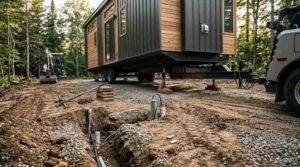
Delivery and installation logistics for a park model typically involve permitting, site grading, utility connections, and either a crane placement or standard tow-in depending on site access. I tell buyers to walk their site with the delivery team before finalizing any contract, since access issues discovered on delivery day often result in costly change orders.
Site prep costs, including grading and utility trenching, are almost always billed separately from the manufacturer’s unit price and should be quoted by a local contractor in advance.
Resale Value and Long-Term Investment Potential
Resale value for a park model home depends heavily on manufacturer reputation, build quality, and how well the unit was maintained, with ANSI-certified units from established manufacturers retaining value better than off-brand alternatives. I’ve seen well-maintained units from reputable manufacturers hold 60% to 70% of their original value after a decade, while poorly built units depreciate much faster.
Location also plays a significant role in resale, since a park model placed in a desirable California community with land ownership tends to appreciate differently than one on leased land.
Maintenance and Lifespan Expectations by Manufacturer Quality
A well-built park model from a reputable manufacturer can last 30 to 40 years with proper maintenance, while lower-quality construction may show structural issues within the first decade. Roof seals, skirting, and chassis connections require the most consistent attention over the home’s lifespan.
I recommend an annual inspection covering roof membrane condition, insulation moisture levels, and plumbing connections, since catching small issues early prevents the kind of structural damage that shortens a park model’s usable life.
Conclusion
Choosing a park model manufacturer comes down to certifications, construction materials, warranty terms, and verified reputation working together. California’s climate and zoning add another layer worth weighing carefully.
We’ve walked through what separates a well-built park model from one that fails early, and that knowledge belongs in every buyer’s hands. The cluster of manufacturers serving California keeps evolving, so revisiting these standards before signing pays off.
We’d love to help you evaluate your options with confidence. Reach out to Tiny Home Builders California and let’s find the right fit together.
Frequently Asked Questions
What is the average price of a park model home in California?
Park model homes in California typically range from $60,000 to $120,000 before delivery and site costs. Final pricing depends heavily on size, customization, and manufacturer.
Do park model homes meet California building codes?
Park model homes are certified to ANSI A119.5 standards rather than California’s standard residential building code. Local zoning determines where they can legally be placed as a dwelling.
How long does it take to get a park model home built and delivered?
Production typically takes 8 to 16 weeks depending on manufacturer backlog and customization level. Delivery and site prep can add several more weeks on top of that.
Can I customize the floor plan of a park model home?
Most manufacturers offer some customization, though the extent varies significantly between production-line and custom builders. Structural changes like moving walls are only available through certain manufacturers.
What warranty should I expect from a park model manufacturer?
A reputable manufacturer typically offers at least a one-year comprehensive warranty covering structural and system components. Always review exclusions carefully before signing.
Are park model homes a good investment in California?
Park model homes can hold strong resale value when built by reputable, ANSI-certified manufacturers and properly maintained. Location and land ownership also significantly affect long-term investment potential.
What is the difference between a park model and a manufactured home?
Park models are smaller, certified under ANSI A119.5, and classified more like recreational structures, while manufactured homes follow HUD code and full residential standards. Manufactured homes are generally larger and more widely accepted as permanent residences.