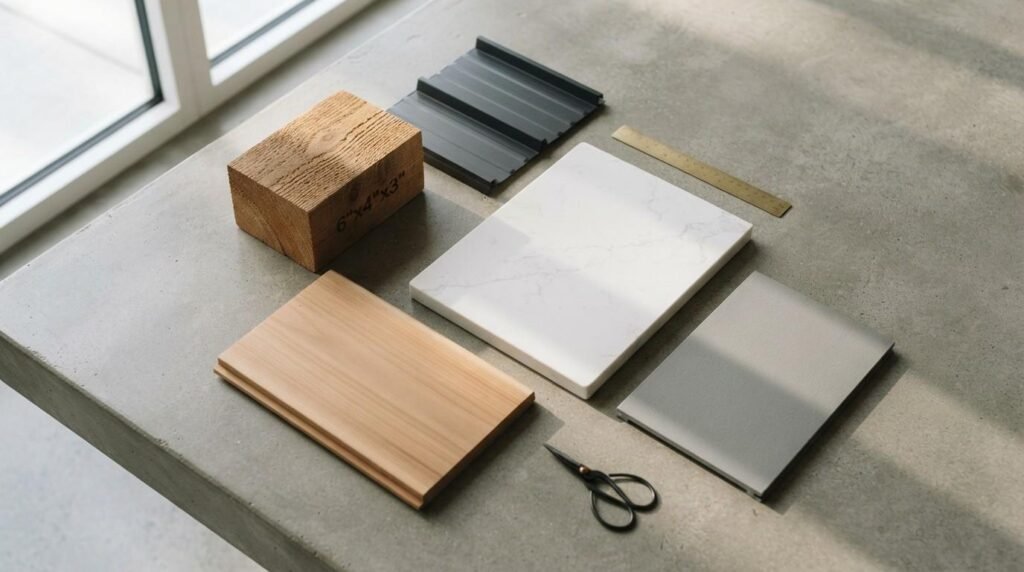
The best materials for building a custom home are the ones that match your climate, your budget, and how long you plan to own the house. I have watched beautiful homes fail early because someone picked a finish before they picked a wall assembly. Material choice is a performance decision first.
California adds pressure to every choice. Wildfire zones, seismic soil, coastal salt air, and strict energy codes all narrow the field before style enters the conversation.
This guide covers foundations, framing, cladding, roofing, insulation, windows, interior finishes, mechanical systems, sustainable options, budgeting, verification, and the questions worth asking your builder.
What Makes a Building Material “Best” for a Custom Home
A building material is best when it delivers the performance your site demands for the lowest total cost of ownership. That definition sounds unglamorous. It also saves people from expensive regret.
I judge every material against four filters, and I apply them in the same order every time.
Durability and Service Life
Service life is how long a material performs before it needs replacement, not how long it looks new. Asphalt shingles last decades. Standing seam metal and clay tile often outlive the mortgage.
Longer service life reduces replacement cycles. That single factor changes the math on almost every exterior decision.
Cost Versus Long-Term Value
Upfront price tells you almost nothing about value. A cheaper window costs more every month for thirty years through heat gain and heat loss.
I split materials into two buckets. Things buried in the walls get the premium spend, and things you can swap later get the flexible spend.
Energy Performance and Comfort
Comfort comes from the envelope, not the thermostat. Buildings consume roughly 40% of total U.S. energy according to Energy Information Administration data, and the envelope drives most of that in a home.
Insulation, air sealing, and glazing work as one system. Upgrade one and ignore the others, and you waste the money.
Design Flexibility and Aesthetics
Aesthetics matter. They just belong last in the sequence, because the beautiful version of a bad assembly is still a bad assembly.
Most looks can be achieved several ways. I find the durable path to the look you want, then price it.
Foundation Materials: Concrete, Slab, and Pier Systems
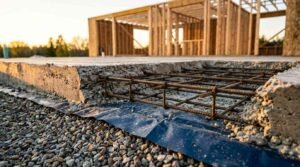
The foundation is the one material decision you cannot revisit. Everything above it depends on the concrete, reinforcement, and soil preparation underneath.
Concrete strength, rebar schedule, and drainage detailing matter more than foundation type in most cases.
Poured Concrete and Slab-on-Grade
Slab-on-grade is the most common approach for California custom homes. It is economical, fast, and pairs well with radiant heating and modern moisture barriers.
Vapor retarders under the slab are not optional. Skipping them invites flooring failures years later.
Raised Foundations and Pier Systems
Raised foundations create a crawlspace, which gives access to plumbing and mechanical runs. They suit sloped lots and expansive soils well.
Pier and grade beam systems handle difficult terrain where a flat slab makes no sense. They cost more and buy stability.
Soil, Seismic, and Site Conditions in California
Soil reports drive foundation design here. Expansive clay, liquefaction risk, and slope stability all change reinforcement and depth requirements.
Seismic design in California follows engineered load paths from roof to footing, and understanding how construction quality standards get verified on site protects that investment. A geotechnical engineer earns their fee on the first page of the report.
Framing Materials: Wood, Steel, and Engineered Systems
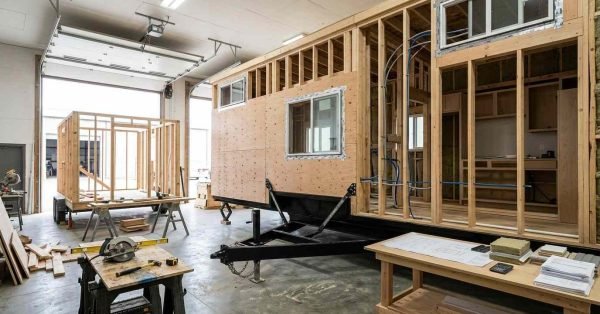
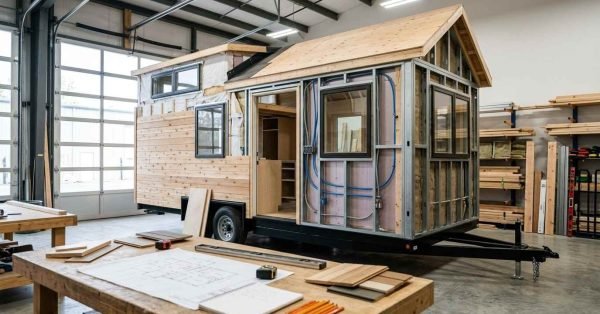
Framing sets the skeleton, the tolerances, and the straightness of every finish that follows. Bad framing shows up in doors that stick and drywall that cracks.
I care about moisture content, species grade, and connection hardware more than brand names.
Dimensional Lumber and Douglas Fir
Douglas fir dominates West Coast framing for good reason. It holds fasteners well, carries load efficiently, and dries reasonably straight.
Kiln-dried lumber shrinks less after installation. That reduces nail pops and squeaks in the finished house.
Engineered Lumber (LVL, I-Joists, Glulam)
Engineered lumber solves spans that solid sawn wood struggles with. LVL beams, I-joists, and glulam carry more load with less depth and far less warping.
The tradeoff is moisture sensitivity during construction. These products need protection until the building dries in.
Light-Gauge Steel Framing
Steel framing resists rot, termites, and fire in ways wood cannot. It shows up more in ADUs, multifamily, and modern architectural work.
Thermal bridging is the catch. Steel needs continuous exterior insulation to perform in a conditioned wall.
SIPs and ICF Alternatives
Structural insulated panels and insulated concrete forms combine structure and insulation into one assembly. They deliver tight, quiet, energy-efficient shells.
Both demand precise planning. Changes after panel fabrication get expensive fast, which is why choosing an experienced home builder matters more on these systems than on conventional framing.
Exterior Cladding and Siding Materials
Cladding is your rain screen, your fire barrier, and your curb appeal all at once. In California, fire performance often decides the shortlist.
Behind every siding choice sits a water-resistive barrier and flashing detail that matters more than the siding itself.
Fiber Cement and Stucco
Fiber cement and stucco cover the majority of California custom homes. Both are noncombustible, dimensionally stable, and comfortable in hot dry climates.
Stucco needs proper drainage planes and control joints. Fiber cement needs correct fastening and painted end cuts.
Wood, Cedar, and Engineered Wood Siding
Natural wood brings warmth that manufactured products only approximate. Cedar and redwood resist decay naturally and reward maintenance.
Engineered wood siding delivers a similar look with better consistency. It still needs disciplined paint and caulk schedules.
Metal, Brick, and Stone Veneer
Metal panels read modern and last a long time. Brick and stone veneer add mass, texture, and permanence at higher installed cost.
Veneers depend on proper ties, weeps, and drainage cavities. Detailing failures here cause hidden water damage.
Fire-Resistant Cladding for Wildfire Zones
California maps designate high fire hazard severity zones, and homes inside them follow Chapter 7A ignition-resistant construction requirements. CAL FIRE guidance drives material eligibility for exterior assemblies.
Noncombustible cladding, ember-resistant vents, and enclosed eaves work together. One weak component undoes the rest.
Roofing Materials and Weather Protection
The roof takes the most abuse of any assembly on the house. Sun, wind, water, and embers all attack it first.
I look at the full assembly, because the covering is only the visible layer.
Asphalt Shingle, Metal, and Clay Tile
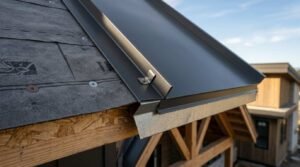
Architectural asphalt shingles remain the value leader. Standing seam metal offers long life, fire resistance, and clean lines.
Clay and concrete tile suit Mediterranean and Spanish architecture and last generations. Both require framing designed for the added weight.
Underlayment, Flashing, and Ventilation
Underlayment is the real waterproofing layer. Self-adhered membranes at valleys and eaves prevent the leaks that ruin ceilings.
Ventilation controls heat and moisture in the attic. Balanced intake and exhaust keep the assembly dry and extend shingle life.
Class A Fire Ratings and Ember Resistance
Class A is the highest roof fire classification, and most California custom homes target it. Ember-resistant vents and blocked bird stops close the gaps.
Roof-to-wall intersections deserve extra attention. Embers collect exactly where debris collects.
Insulation, Air Sealing, and Building Envelope Materials
The envelope decides your comfort and your utility bills. I treat insulation and air sealing as a single material decision.
Air leakage often wastes more energy than missing insulation. Sealing costs less and returns more.
Batt, Blown-In, Rigid Foam, and Spray Foam
Fiberglass and mineral wool batts are economical and easy to inspect. Blown-in cellulose fills irregular cavities well.
Rigid foam adds continuous exterior R-value and breaks thermal bridges. Closed-cell spray foam seals and insulates in one step at a higher price.
Air Barriers, Weather-Resistive Barriers, and Vapor Control
A weather-resistive barrier keeps liquid water out while allowing drying. Air barriers stop uncontrolled airflow through the assembly.
Vapor control depends on climate zone. California varies enormously from coast to desert, and the detailing follows the zone.
Title 24 Energy Code Considerations
California’s Title 24 energy standards set envelope, glazing, and equipment requirements for new homes. The California Energy Commission publishes the current code cycle and compliance pathways.
Compliance is modeled, not guessed. Your energy consultant and your material specs need to agree before permit.
Windows, Doors, and Glazing Materials
Windows are the weakest thermal point in any wall. They also drive daylight, views, and how the house feels.
Frame material and glazing package matter equally, and installation matters more than both.
Vinyl, Fiberglass, Wood-Clad, and Aluminum Frames
Vinyl delivers strong thermal performance at accessible pricing. Fiberglass adds dimensional stability and better long-term performance.
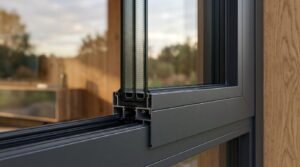
Wood-clad frames pair interior warmth with exterior durability. Thermally broken aluminum enables large modern openings.
Low-E Coatings, U-Factor, and SHGC
U-factor measures heat transfer, and lower is better. Solar heat gain coefficient measures solar heat admitted, and California often wants that number low.
Low-E coatings tune both. The right glazing package changes room by room and orientation by orientation.
Egress, Impact, and Fire-Rated Assemblies
Bedrooms require egress-sized openings for escape and rescue. Those dimensions are code, not preference.
Fire zones add tempered or multi-pane glazing requirements. Door assemblies carry their own ratings.
Interior Finish Materials: Floors, Walls, and Millwork
Interior finishes are what you touch every day. They are also the easiest place to overspend and the easiest place to correct later.
I choose finishes for wear resistance first and appearance second.
Hardwood, Engineered Wood, Tile, and LVP
Solid hardwood refinishes multiple times and lasts decades. Engineered wood handles slab moisture and wide planks better.
Porcelain tile wins on durability and water resistance. Luxury vinyl plank delivers waterproof performance at lower cost.
Drywall, Plaster, and Wall Finishes
Drywall level of finish is a specification, not an assumption. Level 4 and Level 5 look very different under raking light.
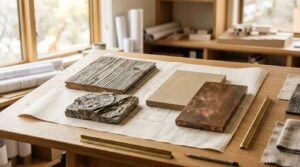
Plaster and Venetian finishes add depth and texture. They cost more in labor than in material.
Cabinetry, Countertops, and Trim
Plywood boxes with solid face frames outlast particleboard construction. Hardware quality shows up within the first year of use.
Quartz resists staining without sealing. Natural stone brings character and asks for maintenance, and the tradeoffs mirror the broader custom home design process decisions you make early.
Mechanical, Plumbing, and Electrical Materials
Systems hide behind walls, which is exactly why the materials deserve scrutiny. Replacing them later means demolition.
I specify these components as carefully as anything visible.
HVAC Equipment and Ductwork
Heat pumps now handle California climates efficiently in both directions. Sizing follows a load calculation, not a rule of thumb.
Duct location and sealing matter enormously. Ducts inside conditioned space outperform attic runs every time.
PEX, Copper, and Drain Materials
PEX installs fast, resists freezing, and reduces fittings inside walls. Copper offers proven longevity and rigidity.
Cast iron drain lines run quieter than ABS. That difference is noticeable in two-story homes.
Wiring, Panels, and Electrification Readiness
Panel capacity determines what your home supports later. Heat pumps, induction cooking, and EV charging all draw meaningfully.
I run conduit and stub circuits during framing. That small cost prevents a large retrofit.
Sustainable and Low-Carbon Material Options
Sustainable material choices improve indoor air, reduce waste, and often improve durability at the same time. The overlap is bigger than people expect.
I focus on measurable attributes rather than vague green claims.
Reclaimed, FSC-Certified, and Rapidly Renewable Materials
FSC certification verifies responsible forest management for lumber and panels. Reclaimed timber adds character with a low carbon footprint.
Bamboo, cork, and wool insulation renew quickly. Each has specific moisture and wear considerations.
Low-VOC Finishes and Indoor Air Quality
Volatile organic compounds off-gas from paints, adhesives, and sealants. The EPA notes indoor pollutant levels can exceed outdoor levels substantially.
Low-VOC and zero-VOC products cost little more today. Ventilation strategy completes the picture, and energy-efficient home features tie air quality and mechanical design together.
Embodied Carbon and Life-Cycle Thinking
Embodied carbon is the emissions locked into producing and transporting materials. Concrete, steel, and aluminum carry the most.
Wood stores carbon. Mix intelligently rather than chasing a single metric.
Material Costs, Budgeting, and Value Engineering
Material selection is where budgets are won or lost. Clear specifications prevent the change orders that wreck schedules.
Construction costs have stayed volatile, and Associated General Contractors data tracks input price swings that ripple into residential work.
Where to Spend and Where to Save
I spend on the envelope, the roof, the windows, and the systems. Those are permanent and expensive to correct.
I save on lighting fixtures, paint colors, hardware, and select finishes. Those swap out affordably later.
Allowances, Specifications, and Change Orders
Allowances are budget placeholders, not selections. Vague allowances hide cost and create disputes.
A detailed specification list eliminates guessing. It also lets bids compare apples to apples, which is central to reading home construction cost estimates accurately.
Lead Times and Supply Chain Planning
Windows, custom doors, and specialty tile carry long lead times. Ordering late stalls the entire schedule.
I lock long-lead items before framing starts. That single habit protects completion dates.
How Builders Specify and Verify Materials
Here is the question that separates marketing from method. How do you know your builder actually used the materials they specified?
Verification lives in documentation, and good builders volunteer it.
Specification Sheets and Submittals
Specification sheets list manufacturer, model, and performance ratings for every major component. Submittals confirm what was ordered matches what was approved.
I share these openly. Transparency here predicts transparency everywhere else.
Inspections, Documentation, and Warranties
Municipal inspections verify code compliance at defined stages. Third-party envelope testing verifies performance beyond code.
Manufacturer warranties depend on correct installation. Registration and photo documentation protect your coverage, and reviewing a home builder warranty before signing avoids surprises.
Matching Materials to Your Home Type and Location
The same material performs differently across California. Climate zone and building type both change the answer.
I start with location and scale, then select.
Coastal, Inland, Mountain, and Desert Climates
Coastal homes fight salt air and demand corrosion-resistant fasteners and finishes. Inland valleys prioritize cooling loads and shading.
Mountain builds handle snow load and freeze cycles. Desert builds fight extreme solar gain and thermal movement.
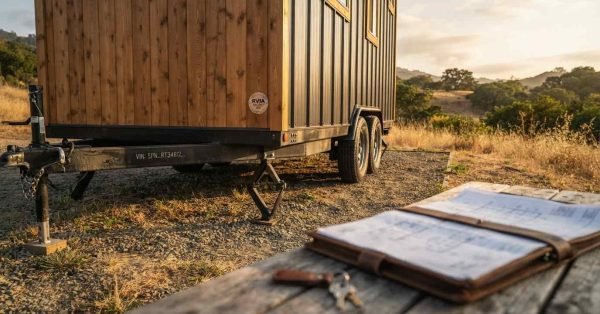
Tiny Homes, ADUs, and Small-Footprint Builds
Small homes reward lightweight, high-performance materials. Every inch of wall thickness competes with living space.
Compact builds also concentrate quality. Fewer square feet means premium materials fit the budget, and the ADU construction process rewards that approach.
Questions to Ask a Builder About Materials
The right questions surface a builder’s standards quickly. Vague answers tell you plenty.
I want to hear specifics on brands, ratings, and assemblies rather than adjectives.
Ask which framing lumber grade and species they use, and why. Ask for the window U-factor and SHGC values on the plan.
Ask how they air-seal, and whether they blower-door test. Ask what fire-rated assemblies they use in your fire zone.
Ask which items are allowances versus specified selections. Then ask to see a real specification package from a completed home.
Builders who track measurable construction quality indicators answer these instantly.
Conclusion
I covered foundations, framing, cladding, roofing, envelope, glazing, finishes, systems, sustainability, budgeting, and verification as one connected material strategy.
Material choices compound over decades. Deeper guides on each assembly help you evaluate builders with real technical confidence rather than marketing language.
We build homes around durable, verified materials at Tiny Home Builders California. Reach out, and we will walk through your specifications together.
Frequently Asked Questions
What is the most durable material for building a custom home?
Concrete and steel offer the longest structural service life. For most custom homes, engineered wood framing with noncombustible cladding delivers the best durability per dollar.
What are the best fire-resistant materials for California homes?
Fiber cement, stucco, metal, and clay tile perform best. Class A roofing plus ember-resistant vents and enclosed eaves complete an ignition-resistant assembly.
Which building materials save the most energy?
Insulation, air sealing, and high-performance glazing deliver the biggest savings. The envelope matters more than the heating and cooling equipment itself.
Is PEX or copper better for a custom home?
PEX installs faster, resists freezing, and uses fewer in-wall fittings. Copper offers proven longevity. Both perform well when installed correctly.
How much of a custom home budget goes to materials?
Materials typically represent roughly 40 to 50 percent of hard construction costs. Labor, permits, and site work make up the remainder.
What flooring lasts longest in a custom home?
Porcelain tile and solid hardwood last longest. Tile resists water completely, and hardwood refinishes several times across decades of use.
Are sustainable building materials more expensive?
Many cost the same today, including low-VOC paints and FSC lumber. Premium options like reclaimed timber and natural insulation carry higher prices.