
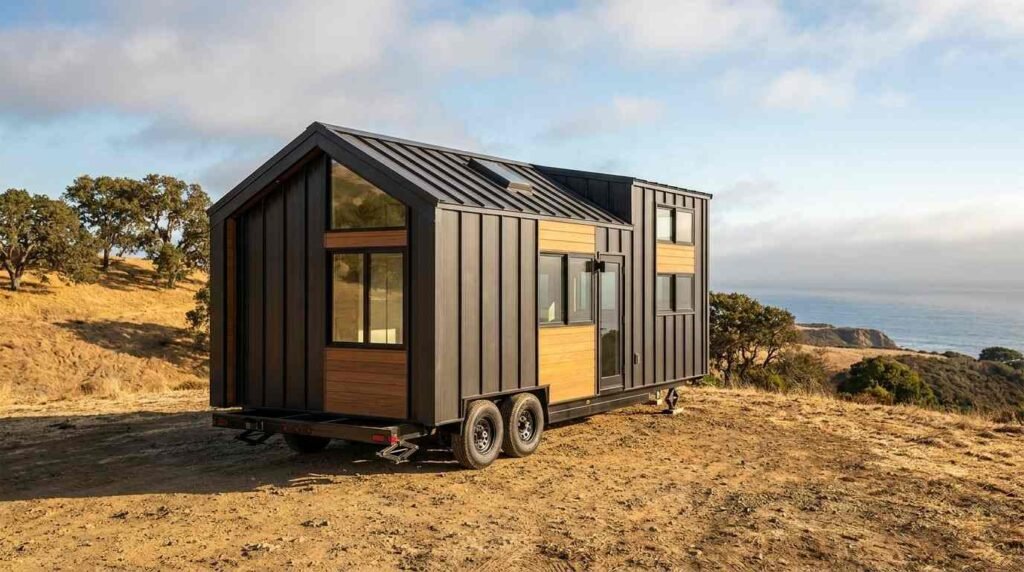
A tiny home on wheels lives a rougher life than a stationary house. Steel trailer frames, metal roofing, and closed-cell spray foam insulation consistently outperform cheaper alternatives when a home spends years being towed, parked in the sun, and hit with coastal moisture. I have watched too many owners regret a budget material choice three years into ownership.
California adds its own pressure to this decision. Wildfire zones, coastal humidity, and inland heat swings all push material requirements past what a typical stick-built home needs to survive.
This guide walks through the structural materials that hold a tiny home together, the building envelope that protects it from weather, the interior materials you live with daily, and the cost and decision factors that tie it all together.
What Makes a Material “Good” for a Tiny Home on Wheels
A good material for this application is one that survives motion, weight limits, and weather exposure without failing early. Trailer travel puts stress on a structure that a fixed foundation never experiences. Materials chosen for durability here have to handle vibration, flex, and constant moisture cycling.
Weight matters more in a tiny home on wheels than in almost any other residential build. Every pound of material affects towing capacity, fuel efficiency, and legal trailer weight limits in most states.
Weight, Flex, and Vibration Resistance
Trailer travel subjects a tiny home to constant micro-vibrations and occasional flex at highway speeds. Materials with low flexibility, like standard drywall, crack under this kind of repeated stress. Builders lean toward lightweight, flexible materials in the wall and ceiling assemblies specifically to survive the drive, not just the driveway.
Moisture and Climate Resistance
Moisture is the single biggest long-term threat to a tiny home’s structure. Materials that trap moisture instead of shedding it lead to hidden rot inside wall cavities. This becomes especially important in California’s coastal fog belt and humid inland valleys.
Trailer and Framing Materials: Steel vs. Wood
The trailer and frame form the skeleton of the entire home, and this is not the place to cut cost. Steel dominates trailer chassis construction because it resists the twisting forces of highway travel far better than any wood alternative.
Steel Trailer Chassis Durability
A steel chassis is a welded structural base that carries the entire weight of the home and resists the torsional stress of towing. Galvanized steel trailers resist rust for decades when properly sealed and maintained. I always tell clients to ask specifically about galvanization thickness, not just “steel” as a generic answer.
Wood and Steel Framing Trade-Offs
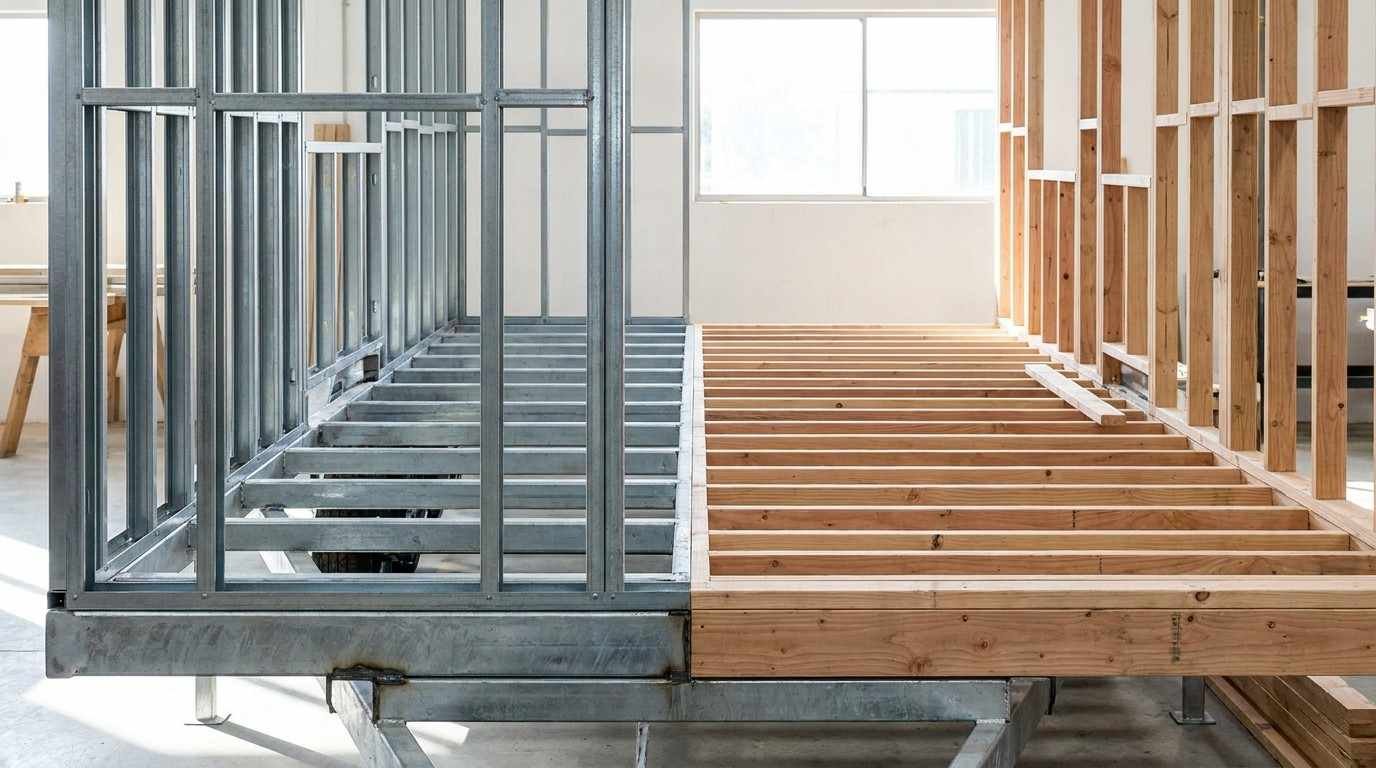
Wood framing costs less upfront and is easier for most crews to work with on-site. Steel framing costs more but resists warping, pest damage, and moisture swelling far better over a 20-plus year lifespan. I generally push clients toward steel for the wall framing even when it stretches the budget, because framing repairs on a tiny home mean tearing into finished walls.
Exterior Siding Materials Compared
Siding takes the brunt of weather exposure and defines a huge part of the home’s long-term maintenance schedule. The three dominant options for tiny homes on wheels are metal, wood, and composite materials, each with a different durability-to-cost ratio.
Metal Siding
Metal siding, usually aluminum or steel panel, resists fire, pests, and moisture better than almost any other option. It costs more per square foot than wood but needs essentially zero maintenance over its lifespan. California’s wildfire-prone zones make metal siding a strong practical choice, not just an aesthetic one.
Wood Siding
Wood siding gives a warmer, more traditional look and costs less at installation. It demands regular resealing or repainting, and skipping that maintenance schedule shortens its lifespan dramatically. Cedar holds up better than pine against rot, but neither matches metal’s near-zero upkeep.
Composite and Fiber Cement Siding
Fiber cement siding is a manufactured material that blends cement, sand, and cellulose fibers into a rot-resistant, fire-resistant panel. It splits the difference between wood’s appearance and metal’s durability, though it adds weight that matters more on a trailer than on a fixed foundation. I see it used often on tiny homes that prioritize a house-like look without accepting wood’s maintenance burden.
Roofing Materials for Tiny Homes on Wheels
Roofing on a tiny home takes constant sun exposure and has to survive branches, debris, and towing vibration without developing leaks. Metal and rubber membrane roofing dominate this category for good reason.
Metal Roofing
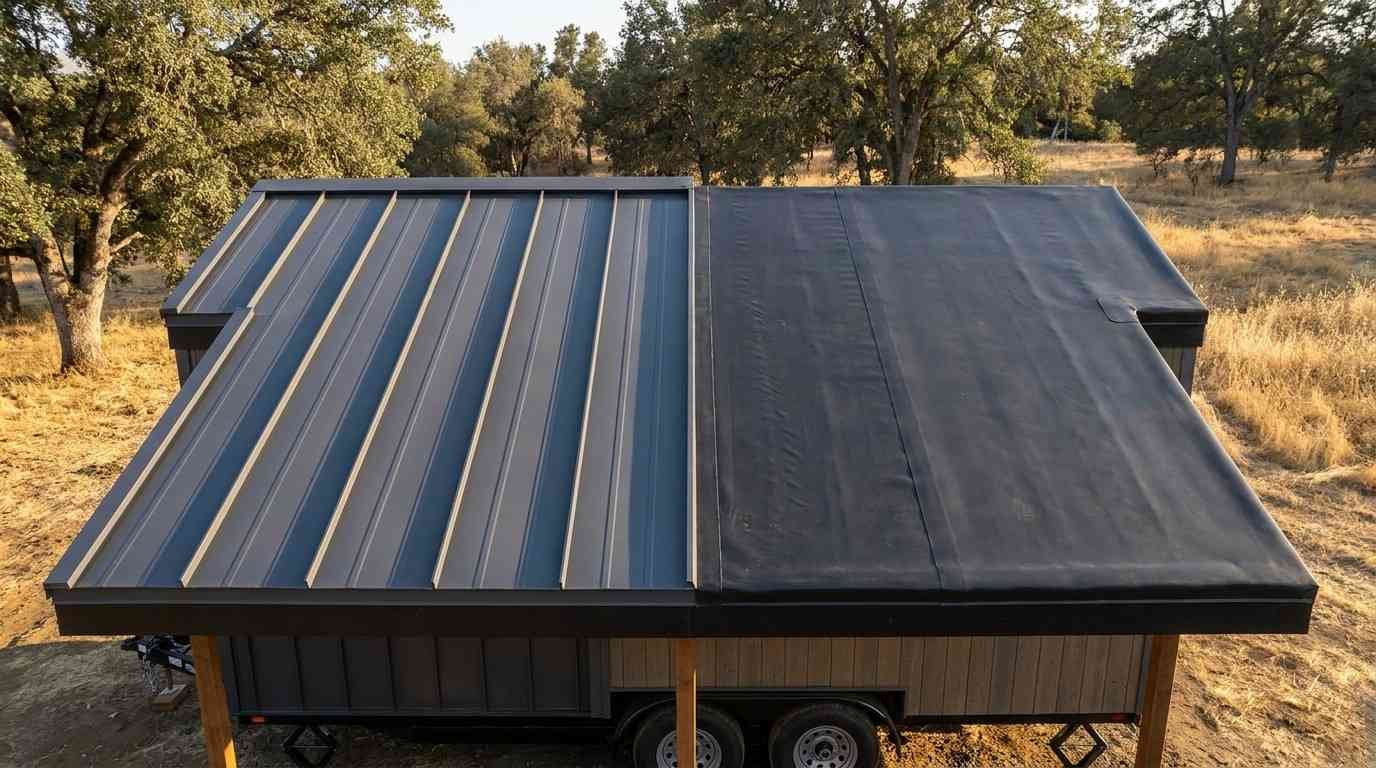
Standing seam metal roofing sheds water instantly and reflects heat rather than absorbing it, which matters enormously in California’s hot inland regions. It typically lasts 40 to 50 years with minimal maintenance. The upfront cost runs higher than membrane options, but the lifespan math usually favors metal on a home meant to last decades.
Membrane and Rubber Roofing
EPDM rubber membrane roofing is lightweight, flexible enough to handle trailer flex, and considerably cheaper to install than metal. It typically needs replacement or resealing every 10 to 15 years, which adds a recurring cost metal roofing avoids. Builders often choose membrane roofing on budget-conscious builds where lower upfront cost outweighs the shorter lifespan.
Insulation Materials and Energy Performance
Insulation determines how comfortable a tiny home stays through California’s temperature swings and how much energy it takes to heat or cool. Closed-cell spray foam typically delivers an R-value of 6 to 7 per inch, according to the U.S. Department of Energy, making it one of the highest-performing options available for tight wall cavities.
Spray Foam Insulation
Spray foam insulation is a liquid-applied material that expands to fill gaps and creates an air seal alongside its thermal resistance. That air-sealing quality matters enormously in a tiny home, where every gap represents a larger percentage of total wall area than in a full-size house. It costs more than batt insulation but often pays that difference back through lower energy bills.
Rigid Foam and Mineral Wool
Rigid foam board insulation offers strong R-value per inch and handles moisture better than fiberglass batts. Mineral wool adds fire resistance on top of solid thermal performance, which matters in wildfire-adjacent regions of California. Both options cost less than spray foam while still outperforming standard fiberglass batts in a trailer-mounted structure.
Interior Wall and Flooring Materials
Interior materials get chosen for a different reason than exterior ones. Weight still matters, but daily livability, moisture resistance in wet areas, and aesthetic warmth carry more weight in this decision.
Subfloor and Flooring Options
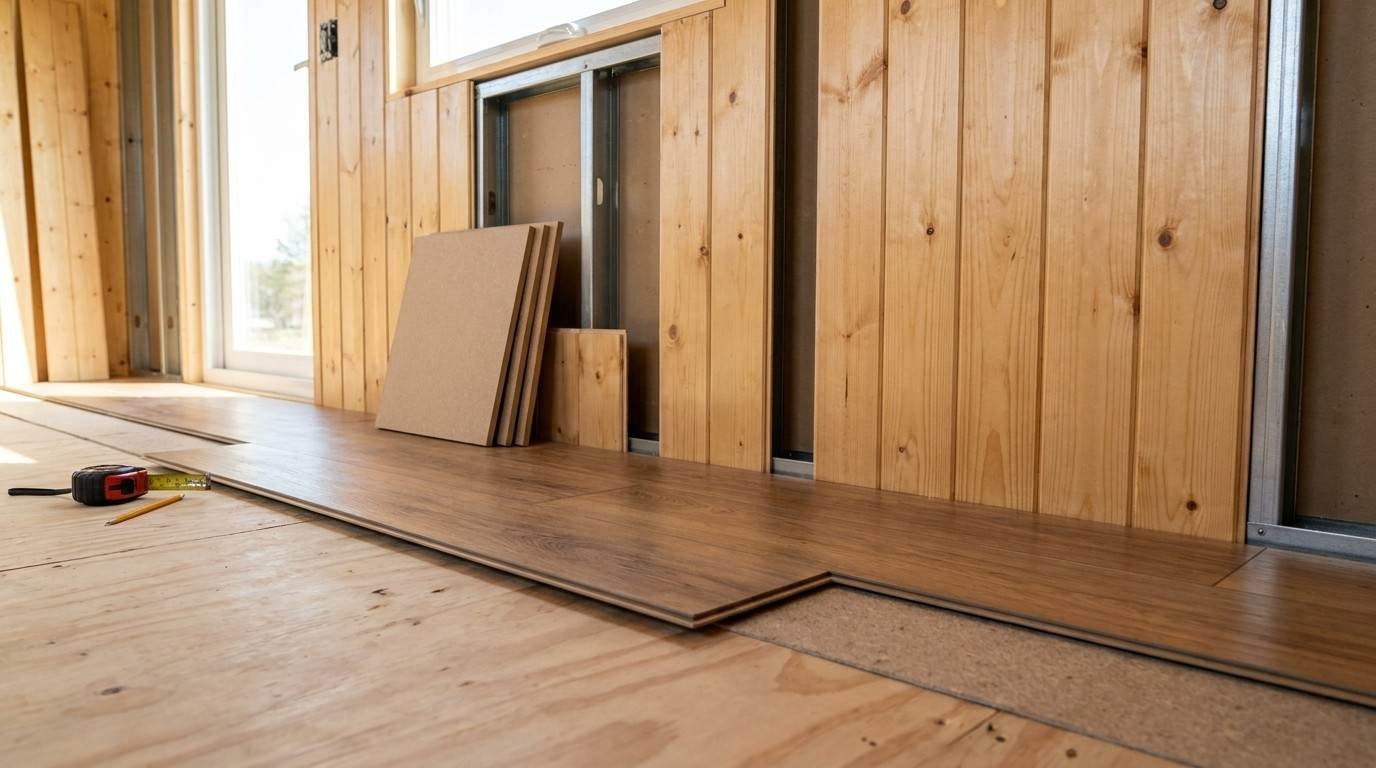
Marine-grade plywood resists the moisture and flex that standard subfloor material cannot handle in a mobile structure. Luxury vinyl plank flooring has become the dominant finish choice because it resists moisture, flexes without cracking, and costs far less than hardwood. I rarely recommend solid hardwood flooring in a tiny home on wheels because the wood expands and contracts with trailer movement in ways engineered flooring simply does not.
Interior Wall Paneling
Tongue-and-groove wood paneling remains the most common interior wall finish because it flexes with the structure instead of cracking like drywall. Lightweight composite panels offer a similar look at a lower weight penalty, which matters when every pound counts toward trailer capacity. Both options outperform traditional drywall in a home that experiences regular vibration and movement.
Windows and Doors: Material Durability Factors
Vinyl-framed, double-pane windows dominate tiny home builds because they resist the temperature swings and moisture exposure better than wood-framed alternatives. Fiberglass window frames cost more but resist warping and expansion even better than vinyl over a multi-decade lifespan. Exterior doors made from fiberglass or steel with a thermally broken frame hold up far better against California’s sun exposure than solid wood doors that dry out and warp over time.
Material Cost Breakdown by Category
Material costs on a tiny home on wheels typically represent 40 to 60 percent of total build cost, with the remainder covering labor, permits, and trailer chassis. Understanding where budget, mid-range, and premium choices diverge helps prospective owners set realistic expectations before a builder ever provides a quote.
Budget, Mid-Range, and Premium Material Tiers
| Category | Budget Tier | Mid-Range Tier | Premium Tier |
| Siding | Wood lap siding | Fiber cement | Standing seam metal |
| Roofing | EPDM membrane | Architectural shingle | Standing seam metal |
| Insulation | Fiberglass batt | Rigid foam board | Closed-cell spray foam |
| Flooring | Laminate | Luxury vinyl plank | Engineered hardwood |
| Framing | Wood stud | Wood with steel reinforcement | Full steel frame |
A budget-tier material package cuts upfront cost significantly but usually shortens the home’s maintenance-free lifespan by a decade or more. Premium tiers cost more per square foot but reduce long-term repair and replacement expenses, which matters most for owners planning to live in the home full-time rather than use it occasionally.
How Climate in California Affects Material Choice
California’s climate diversity means material decisions shift depending on where the home sits. Coastal regions demand corrosion-resistant fasteners and moisture-sealed siding because salt air accelerates metal corrosion and wood rot alike. Inland and desert regions push the priority toward reflective roofing and higher R-value insulation to manage extreme heat swings between day and night.
Wildfire-prone regions add another layer entirely, favoring fire-resistant siding, roofing, and mineral wool insulation over their flammable alternatives. A material package that performs beautifully in coastal Santa Barbara can underperform badly in the high desert around Joshua Tree, and a builder who understands this regional nuance is worth more than one who applies the same spec sheet everywhere.
How to Evaluate a Builder’s Material Choices
The strongest signal of a quality builder is specificity. A builder who names exact material brands, gauges, and R-values gives you something to verify. A builder who speaks only in generalities like “high-quality materials” is giving you a marketing line, not a specification.
Ask for the material list in writing before signing a contract, and compare it against the tiers outlined above. A transparent builder walks you through why each material was chosen for your specific climate and use case, rather than defaulting to whatever is cheapest or easiest to source.
Conclusion
Material choice shapes everything from a tiny home’s towing weight to its 30-year durability and comfort. Steel framing, metal roofing, and high-R insulation consistently outperform budget alternatives across California’s varied climates.
We help homeowners translate these material decisions into a home built for lasting value, not just a lower initial price tag. Reach out to Tiny Home Builders California to walk through a material spec built for your exact location and lifestyle.
Frequently Asked Questions
What is the most durable siding material for a tiny home on wheels?
Metal siding, typically aluminum or steel panel, is the most durable option. It resists fire, pests, and moisture with essentially zero maintenance over its lifespan.
Is steel framing worth the extra cost over wood?
Steel framing resists warping, pests, and moisture far better than wood over a 20-plus year lifespan. It costs more upfront but reduces long-term repair needs significantly.
How much does insulation affect energy costs in a tiny home?
Insulation quality directly affects heating and cooling costs, sometimes by hundreds of dollars per year. Closed-cell spray foam delivers the highest R-value per inch of any common option.
What roofing material lasts the longest on a tiny home?
Standing seam metal roofing typically lasts 40 to 50 years with minimal maintenance. It outlasts membrane roofing by two to three times.
Does California climate really change which materials I should choose?
Yes, coastal, inland, and wildfire-prone regions each demand different material priorities. Corrosion resistance, heat reflection, and fire resistance matter differently depending on location.
What percentage of a tiny home budget goes toward materials?
Materials typically represent 40 to 60 percent of total build cost. The remainder covers labor, permits, and the trailer chassis itself.
Is vinyl plank flooring a good choice for a tiny home on wheels?
Yes, luxury vinyl plank resists moisture and flexes without cracking under trailer movement. It costs less than hardwood while outperforming it in this application.
How do I know if a builder is using quality materials?
Ask for a written material list with specific brands, gauges, and R-values. Specificity is the clearest sign of a transparent, quality-focused builder.


