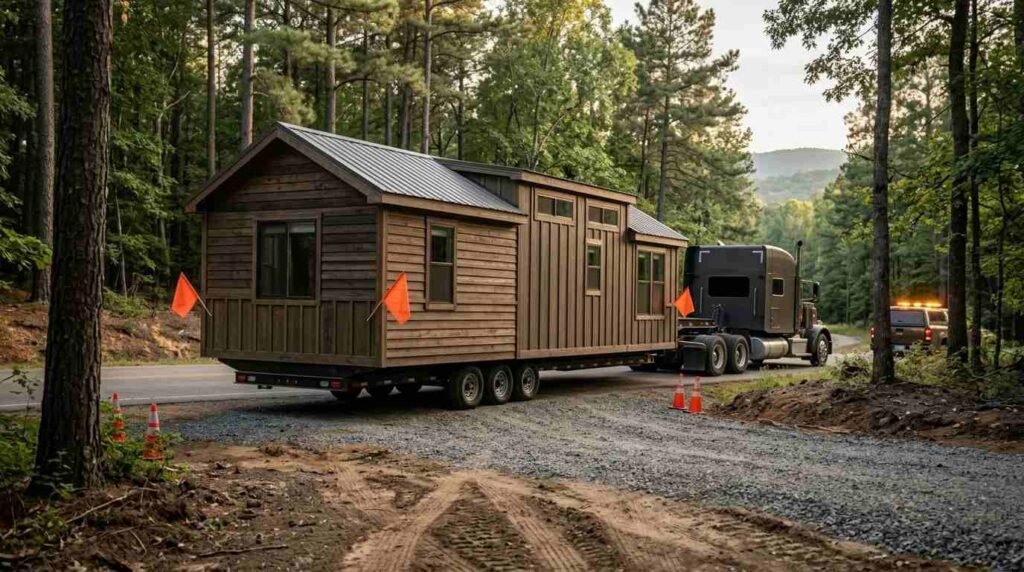
Park model home delivery is the regulated process of transporting a factory-built park model unit from the manufacturing facility to its final site using specialized hauling equipment and oversize-load permits. I’ve walked enough clients through this stage to know it’s the part of the build they worry about most, because it’s the one piece that happens outside a controlled factory environment. The truck leaves the plant, the home is on the road, and suddenly there are permits, escort vehicles, and site access questions nobody mentioned during the design phase.
Getting delivery wrong costs real money and real time, sometimes pushing move-in dates back by weeks. I’ve seen a single missed permit delay a family’s placement by nearly a month.
This guide covers how delivery differs from traditional transport, how homes get prepped and permitted for the road, what site prep and delivery day actually involve, and how costs, timelines, and the right transport team come together before you sign anything.
What Is Park Model Home Delivery and Why It Works Differently
Park model home delivery differs from traditional home construction because the entire structure travels fully built on a chassis rather than being assembled piece by piece on-site. The home exists as a complete unit before it ever leaves the factory floor. That single fact changes almost everything about how the move gets planned.
A stick-built home never has to survive a 200-mile highway trip. A park model does, and that means the factory builds in extra bracing, travel-rated anchoring, and a frame designed to flex slightly under road vibration without cracking drywall or loosening cabinetry.
Park Model vs. Traditional Home Delivery
Traditional construction delivers materials to a site and builds there. Park model delivery moves a finished home down the highway, which means road width, bridge clearances, and turn radii matter as much as the home’s square footage.
| Factor | Traditional Home | Park Model Home |
| What’s transported | Raw materials, lumber, framing | Fully assembled home unit |
| Primary logistics concern | Material delivery scheduling | Oversize load routing and permits |
| Site work timing | Happens during construction | Happens before delivery |
| Weather sensitivity | Affects construction pace | Affects the actual move |
Who Handles the Delivery Process
A licensed heavy-haul transport company, often coordinated directly by the builder, manages the physical move. I always push for one point of contact who owns the whole delivery process, because splitting responsibility between a builder and an independent hauler is where miscommunication creeps in.
How Park Model Homes Are Prepared for Transport
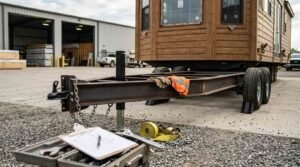
Pre-transport preparation is the inspection and securing process a factory completes before a park model home leaves for delivery, covering structural checks, interior bracing, and running gear. Skipping any part of this stage is how homes arrive with hairline drywall cracks or a cabinet door that won’t close right.
Factory Pre-Transport Inspections
Every reputable factory runs a structural walkthrough before a home ever touches the highway. Inspectors check the roof seams, window seals, and subfloor attachment points for anything that road vibration could work loose.
I’ve found that the factories doing this well document the inspection with photos and a signed checklist, not just a verbal sign-off. That paper trail matters if a dispute comes up later about pre-existing versus transport damage.
Securing Interior Fixtures and Appliances
Cabinets get strapped, appliances get braced, and anything with a door gets taped or locked shut before the home moves an inch. Loose interior items are the single most common source of minor transport damage I’ve encountered, and they’re also the easiest to prevent.
Axle, Hitch, and Towing Component Checks
The chassis, axles, hitch assembly, and tires all get inspected against weight ratings specific to the home’s size and travel distance. An axle rated below the home’s actual loaded weight is one of the most dangerous oversights in this entire process, and it’s exactly why reputable transporters verify it independently rather than trusting the factory’s paperwork alone.
Permits and Legal Requirements for Transporting Park Model Homes
Transporting a park model home in California requires an oversize load permit from the California Department of Transportation, plus any additional county permits tied to the home’s final placement location. The permit confirms the route, the travel hours, and whether escort vehicles are legally required.
Oversize Load Permits in California
Caltrans’ oversize load permitting system requires a specific route application for any load exceeding standard width thresholds, and most park model homes fall into that category automatically. The permit dictates which highways the transporter can use and what hours of the day the move can legally happen.
County-Specific Zoning and Placement Rules
Beyond the state-level travel permit, the destination county decides whether park model placement requires its own zoning approval, setback compliance, or a separate placement permit. I tell every client to confirm county placement rules before signing a delivery date, because a zoning hold-up at the destination stalls a truck that’s already on the road.
Understanding Park Model Weight, Size, and Road Restrictions
Park model homes typically weigh between 10,000 and 15,000 pounds and measure up to 400 square feet, dimensions that place them squarely in the oversize-load category on California highways. Width is usually the limiting factor, since most park models exceed the standard 8.5-foot road width allowance.
That width restriction is why escort vehicles become mandatory on most routes, and why some rural roads simply can’t accommodate the load at all without a modified route plan.
The Delivery Timeline: From Factory to Final Site
The full delivery timeline for a park model home typically runs four to eight weeks from factory completion to final site placement, depending on permit processing time, transport distance, and site readiness. That window shrinks or stretches based mostly on how early the permit application gets filed.
Scheduling and Lead Time Expectations
Permit processing alone can take two to three weeks in busier counties, and I always recommend starting that paperwork the moment the home’s production date is confirmed rather than waiting for it to leave the factory. Waiting costs real calendar time nobody gets back.
Weather and Route Delays
Winter storms in mountain counties and high-wind advisories along coastal routes are the two most common weather delays I’ve seen push a delivery date. A transporter worth hiring builds a few flex days into the schedule specifically to absorb this kind of disruption.
Site Preparation Requirements Before Delivery Day
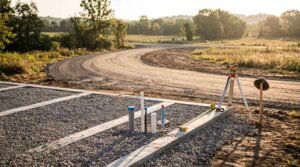
Site preparation is the work completed at the destination property before delivery day, covering the foundation pad, utility stub-outs, and a clear access path wide enough for the transport truck. A site that isn’t ready on delivery day means the truck either waits at cost or the delivery gets rescheduled entirely.
Pad, Foundation, and Utility Readiness
The foundation pad, pier blocks, or runner system needs to be fully cured and level before the home arrives, and electrical, water, and sewer stub-outs should already be positioned at the correct hookup points. I’ve watched a perfectly good delivery day get wasted because the pad was poured a week too late to cure properly.
Access Road and Clearance Requirements
The access route onto the property needs enough width and overhead clearance for both the transport truck and any crane or toter equipment that will maneuver the home into final position. Low tree branches and narrow gate openings are the two most common site-access surprises on rural California properties.
What Happens on Delivery Day
Delivery day is when the transport truck arrives on-site, the home gets unhitched from its traveling chassis, and specialized equipment lifts or wheels it into its final position on the foundation. The whole process, from truck arrival to final placement, usually takes a single day on an accessible site.
Placement and Leveling Equipment Used
Hydraulic jacks and leveling equipment adjust the home onto its pier or foundation system, checking level at multiple points along the frame before anything gets permanently secured. A home that isn’t leveled correctly at this stage can develop door and window alignment problems within the first year.
Crane and Toter Setups for Difficult Sites
A toter, a specialized low-profile mover, handles most standard placements, while a crane lift becomes necessary on sites with steep grades, tight access, or obstacles the toter can’t maneuver around. Crane placements typically add one to two thousand dollars to the overall delivery cost, which is why site access evaluation happens before, not during, scheduling.
Transport Costs and What Influences Pricing
Park model transport costs in California typically range from $5,000 to $15,000, driven primarily by distance traveled, permit fees, escort vehicle requirements, and the complexity of the final placement. Rural properties with difficult access routes sit at the higher end of that range almost without exception.
Distance is the most predictable cost factor, but site access difficulty is the one that catches people off guard, since a crane requirement alone can add thousands to an otherwise average delivery.
Common Delivery Challenges on Rural or Remote California Properties
Rural and remote properties create delivery challenges because narrow access roads, steep grades, and limited turning radius restrict the equipment a transporter can safely use. These properties often require a site visit weeks in advance just to confirm the move is physically possible with standard equipment.
Low-hanging power lines, unpaved roads that soften after rain, and gated easements shared with neighboring properties are the recurring issues I see on mountain and foothill lots across the state.
Post-Delivery Setup: Utility Hookups and Final Inspections
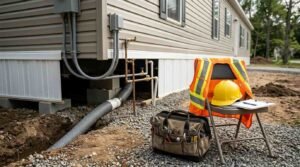
Post-delivery setup covers connecting the home to electrical, water, and sewer utilities, followed by a final inspection confirming the unit is level, secured, and safely connected before occupancy. This stage typically happens within one to three days of physical placement.
Local trades finish utility hookups, and the inspector signs off before anyone moves a single box inside, which is the correct order even when a family is eager to start unpacking early.
Insurance and Liability During Transport
Transport insurance covers physical damage to the home while it’s in transit, and responsibility for that coverage should be clearly assigned to either the builder, the transport company, or a named third-party policy before the move date. Ambiguity here is where disputes happen if damage occurs.
I always confirm, in writing, exactly which party’s policy covers the home between the factory gate and the final site, because verbal assurances don’t hold up when there’s actual damage to settle.
How to Choose a Qualified Delivery and Transport Team
A qualified transport team carries active heavy-haul licensing, carries adequate cargo insurance, and has documented experience moving park model homes specifically, not just general oversize freight. General freight experience doesn’t automatically translate to the bracing and placement skills a home move requires.
Asking for references from deliveries completed in the same county tells you more than any marketing brochure, since local road knowledge and permit relationships genuinely speed up the process.
Questions to Ask Your Builder About Delivery Before You Sign
Confirming who owns the delivery process, what’s included in the transport quote, and who carries liability during transit are the three questions that prevent the most common disputes later. I tell every prospective client to get these answers in writing before signing anything.
Asking whether the quoted price includes permits, escort vehicles, and crane placement if needed avoids the surprise add-on costs that catch people off guard on delivery day.
Conclusion
Park model delivery brings together factory prep, permits, site readiness, and placement day into one coordinated process. Every stage connects to the next, and skipping one creates delays elsewhere in the timeline.
We’ve guided families across California through this exact process, and the right team makes it straightforward rather than stressful.
Reach out to Tiny Home Builders California today, and let’s plan a delivery that gets your home home.
Frequently Asked Questions
How much does it cost to transport a park model home in California?
Transport costs typically range from $5,000 to $15,000 depending on distance and site access. Crane placements or difficult rural access can push costs toward the higher end of that range.
Do I need a special permit to move a park model home?
Yes, an oversize load permit from Caltrans is required for nearly all park model transports. County-level placement permits are often needed as well.
How far in advance should I schedule delivery?
Permit processing alone can take two to three weeks, so scheduling should start as soon as the factory confirms a completion date. Four to eight weeks total is a realistic planning window.
Can a park model home be delivered to a remote or rural property?
Yes, but narrow roads, steep grades, and tight clearances may require a site visit and specialized equipment. Some rural sites need a crane instead of standard placement equipment.
What site conditions are required before delivery day?
The foundation pad must be cured and level, utility stub-outs positioned correctly, and the access route clear for the truck and any lifting equipment. An unready site typically forces a rescheduled delivery.
Who is responsible if damage occurs during transport?
Responsibility depends on which party’s insurance policy was assigned to cover the transit period. This should always be confirmed in writing before the move date.
How long does the entire delivery and setup process take?
The full process from factory completion to final utility hookup typically runs four to eight weeks. Delivery day itself usually takes a single day on an accessible site.