
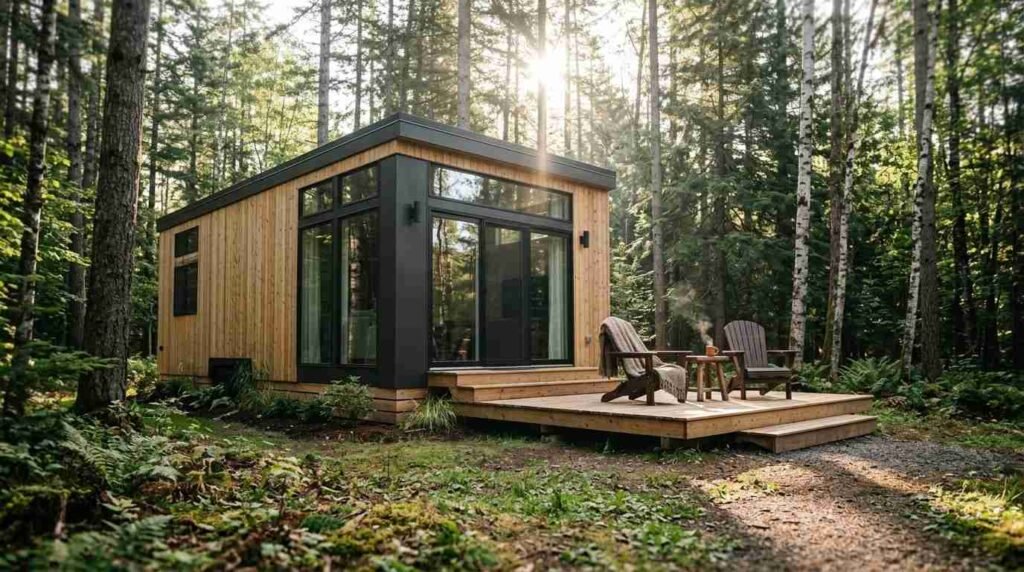
A park model is a factory-built recreational structure classified as a travel trailer under ANSI A119.5, the national construction standard that governs park model RVs in the United States. This classification affects everything from where you can place one to how you finance and insure it. I’ve watched buyers get this wrong constantly, assuming a park model is treated like a tiny home or manufactured house when it legally isn’t.
Understanding this standard protects your investment from day one. Misclassifying a park model creates permitting delays, financing denials, and zoning violations you don’t see coming.
This guide covers what ANSI A119.5 actually regulates, how park models differ from RVs and manufactured homes, California-specific placement rules, financing realities, and how to verify certification before you buy. We’ll also clear up the full-time living question most buyers ask first.
What Is a Park Model Home?
A park model is a transportable recreational unit built on a single chassis, typically under 400 square feet, designed for seasonal or semi-permanent placement at a campground, RV resort, or private lot. I think of it as the bridge between an RV and a cottage — it looks like a small home, but it’s built and titled like a trailer.
Most park models run between 320 and 499 square feet of floor area, which is the ceiling set by ANSI A119.5 before a unit no longer qualifies under that standard. Go bigger than that threshold, and you’re outside park model territory entirely, into modular or manufactured housing rules.
Key Characteristics of Park Model Units
Park models share a few defining traits regardless of manufacturer. They sit on a single wheeled chassis, they’re built to arrive mostly finished, and they’re designed for a single-family recreational or seasonal placement.
- Built on one chassis with axles for transport
- Maximum 400 square feet in the main floor area (excluding lofts and bay windows)
- Connects to standard utility hookups rather than a permanent foundation
- Constructed to ANSI A119.5, not the HUD Code used for manufactured homes
These four traits are what separate a true park model from a modular cabin that merely looks similar.
Park Model vs. Traditional RV Size and Design
Traditional RVs are built for frequent travel and road use, while park models are built for infrequent moves and long-term site occupancy. I’ve toured both, and the construction philosophy is completely different: a travel trailer is engineered to survive highway vibration for years, while a park model is engineered to feel like a house once it’s parked.
Weight and size limits separate the two categories more than anything else, since a park model’s dimensions when fully assembled often exceed what’s legal to tow without a special permit.
What Does ANSI A119.5 Actually Regulate?
ANSI A119.5 is the American National Standards Institute code that governs the construction, plumbing, electrical, and fire safety requirements for park model recreational vehicles. It was developed specifically because park models don’t fit neatly into either the RV code or the HUD manufactured housing code.
The standard sets requirements most buyers never see unless they ask: wall thickness, electrical load capacity, plumbing vent sizing, egress window placement, and structural tie-down points for transport. A unit either meets every section of the standard or it isn’t legally a certified park model.

Scope of the ANSI A119.5 Standard
The standard covers structural design, electrical systems, LP-gas and fuel systems, plumbing, and thermal and fire safety performance for units intended for recreational camping or seasonal use. It does not cover full-time residential occupancy requirements, which is a distinction that catches a lot of buyers off guard.
An ANSI standards overview from UL Solutions notes that ANSI itself doesn’t certify products directly; it accredits third-party organizations to test and verify compliance against the published standard.
Who Enforces ANSI A119.5 Compliance
Compliance is verified by independent, ANSI-accredited inspection agencies, not by ANSI itself and not by local building departments. The manufacturer pays for third-party plant inspections throughout production, and a compliant unit leaves the factory with a permanent certification label referencing the standard.
Local jurisdictions then decide separately whether to permit the certified unit for placement, which is where state and county rules start to matter more than the federal standard itself.
Is a Park Model Legally Classified as an RV?
Yes, a park model is legally classified as a recreational vehicle under ANSI A119.5, which falls within the broader RV industry classification system even though most people don’t associate the word “RV” with a stationary cabin-style unit. The RV classification exists because of how the unit is built and titled, not how it’s actually used day to day.
This classification carries real consequences. It determines which building codes apply, how the unit is titled by the state, and whether a lender treats it as real property or personal property.
Federal vs. State Classification Differences
Federally, a park model built to ANSI A119.5 is recognized as a recreational vehicle, exempt from the HUD Code that governs manufactured housing. States then layer their own rules on top, and California’s placement and occupancy restrictions can be stricter than the federal baseline.
That gap between federal classification and state enforcement is exactly where most buyer confusion starts.
ANSI A119.5 vs. RVIA (ANSI A119.2) Standards
ANSI A119.5 governs park model units specifically, while ANSI A119.2 governs conventional towable and motorized RVs like travel trailers, fifth wheels, and motorhomes. Both standards are published under the same ANSI umbrella, but they apply to structurally different categories of vehicles.
I get asked constantly why a park model needs its own separate standard instead of just using the regular RV code. The answer is size and intended use: a 399-square-foot park model has structural and occupancy considerations a 28-foot travel trailer never faces.
Key Differences Between the Two Certifications
| Factor | ANSI A119.5 (Park Model) | ANSI A119.2 (Standard RV) |
| Max floor area | 400 sq ft | Varies, generally smaller footprint |
| Intended mobility | Infrequent, long-term site placement | Frequent travel use |
| Chassis design | Single chassis, residential-style construction | Full travel chassis, road-optimized |
| Typical use | Seasonal cabin, resort placement | Active road travel and camping |
A unit certified under one standard cannot simply be relabeled under the other; the construction methods diverge too much at the structural level.
How Park Models Differ From HUD-Code Manufactured Homes

A park model is never built to the HUD Code, which is the federal standard that governs manufactured homes intended for full-time permanent residential use. This is the single most important distinction for anyone considering a park model as a primary residence.
HUD Code homes go through a completely separate certification path, with different wind zone engineering, different minimum square footage, and different foundation requirements than anything ANSI A119.5 addresses.
Why HUD Code Does Not Apply to Park Models
HUD Code was written for homes meant to be lived in year-round on a permanent foundation, while ANSI A119.5 was written for units meant for seasonal or recreational placement. A HUD manufactured housing program overview confirms that manufactured homes must meet the federal HUD Code standard administered since 1976, which park models are specifically excluded from.
That exclusion is intentional, not an oversight; it’s what keeps park models in a lighter-weight regulatory category.
Park Model Classification Rules in California

California classifies park models as recreational vehicles under state law, and Title 25 of the California Code of Regulations governs where and how they can be placed. This state-level layer is what actually determines whether you can put a park model on your land, not the ANSI certification alone.
I spend more time on this question with California clients than almost any other, because the gap between what’s certified and what’s permittable catches people constantly.
California Title 25 and Park Model Placement
Title 25 requires park models placed outside licensed mobile home parks or campgrounds to go through additional review, and many counties restrict them to designated recreational zones rather than standard residential lots. The California Department of Housing and Community Development oversees registration and titling for these units statewide.
County-by-County Zoning Variations
Zoning enforcement varies significantly by county, with some allowing park models as accessory structures and others prohibiting them outright on residential parcels. I always tell clients to check with the specific county planning department before purchasing, since a unit perfectly legal in one county can be denied a permit two counties over.
Can You Live in a Park Model Full-Time?
Full-time occupancy in a park model is restricted or prohibited in many California jurisdictions, even though the unit itself may be fully livable and code-compliant. The construction standard and the occupancy permission are two completely separate questions.
This is the gap that trips up more buyers than any other single issue. A park model can pass every inspection and still be illegal to live in year-round depending on where it sits.
Full-Time Occupancy Restrictions by Jurisdiction
Some counties cap occupancy at 180 days per year, others require placement within a licensed RV resort for any residential use, and a few permit full-time living only as a secondary unit on an existing residential lot. Always confirm occupancy rules directly with the local planning department before assuming year-round living is allowed.
Park Model Certification Labels and What They Mean
Every ANSI A119.5-compliant park model carries a permanent metal certification label, usually mounted near the main electrical panel or entry door, identifying the manufacturer, model, and compliance standard. This label is the single fastest way to confirm a unit is legitimately certified before you commit to a purchase.
I check this label on every unit I evaluate, because a missing or altered label is an immediate red flag regardless of how finished the interior looks.
Reading the ANSI A119.5 Compliance Tag
The tag typically lists the manufacturer’s name, the date of manufacture, the serial number, and an explicit reference to ANSI A119.5 compliance, often alongside the third-party inspection agency’s seal. If that seal or standard reference is missing, the unit cannot be verified as compliant no matter what the seller claims.
Financing and Insurance Implications of RV Classification
Because a park model is classified as an RV rather than real property, most traditional mortgage lenders will not finance it, pushing buyers toward RV loans, personal property loans, or cash purchase instead. This classification difference changes the entire financial picture compared to buying a conventional home.
I walk every client through this before they fall in love with a floor plan, because the financing reality shapes what’s actually achievable on a given budget.
Why Lenders Treat Park Models Differently Than Homes
Lenders evaluate park models against RV depreciation schedules rather than real estate appreciation models, since the unit is titled similarly to a vehicle in most states. Insurance follows the same logic, typically requiring an RV or manufactured-structure policy rather than a standard homeowner’s policy.
Permitting and Placement Requirements for Park Models
Placing a park model legally requires a combination of a zoning permit, a site plan review, and utility connection approvals, all of which vary by county and by whether the land is inside a licensed park or on private property. Skipping any one of these steps is the most common reason placements get flagged after the fact.
Foundation, Utility Hookups, and Site Prep Rules
Park models typically sit on piers, blocks, or a minimal concrete pad rather than a full permanent foundation, since a true foundation can reclassify the structure under different building codes entirely. Utility hookups for water, sewer, and electrical must meet the same standards as an RV site unless the jurisdiction requires upgraded residential-grade connections for long-term placement.
Park Model vs. Tiny Home on Wheels (THOW) Classification
A tiny home on wheels is typically built to RVIA or NOAH certification standards rather than ANSI A119.5, which creates a meaningfully different legal and construction path than a park model. Builders choose between these standards based on intended square footage, aesthetic goals, and how the finished unit will be marketed and sold.
Why Builders Choose One Standard Over the Other
Park model certification suits buyers who want maximum square footage within recreational land-use rules, while THOW certification suits buyers prioritizing full road mobility and a more residential design aesthetic. Neither path is inherently better; the right one depends entirely on where and how the unit will ultimately be used.
Towing, Transport, and DOT Requirements
Transporting a park model on public roads requires compliance with state Department of Transportation weight, width, and permit requirements, since fully assembled units frequently exceed standard towing dimensions. This is a one-time event for most owners, but it’s a heavily regulated one.
Weight Limits and Road Legality
Most park models require oversize load permits and a specialized towing service rather than a standard pickup truck, since finished units can weigh well over 10,000 pounds and exceed legal width limits without escort vehicles. Always confirm transport logistics and permit costs with your manufacturer before finalizing a purchase agreement.
Common Misconceptions About Park Models and RVs
The most common misconception is that “RV classification” means a park model is unsafe or poorly built, when ANSI A119.5 actually sets construction requirements comparable in rigor to residential codes in several key areas. Classification describes a legal category, not a quality level.
Myths vs. Facts on Classification
People frequently assume park models can be financed like homes, placed on any residential lot, or lived in full-time anywhere, none of which are reliably true without checking local rules first. The construction quality of a well-built park model often rivals a small home; it’s the placement and financing rules that differ, not necessarily the craftsmanship.
How to Verify a Park Model Meets ANSI A119.5
Verifying compliance means physically locating the certification label, confirming the inspection agency’s seal, and requesting the manufacturer’s compliance documentation before signing a purchase agreement. Skipping this step is the single riskiest shortcut a buyer can take.
Questions to Ask Your Builder Before You Buy
Ask which third-party agency inspected the unit, request a copy of the compliance certificate, and confirm the exact square footage falls within the 400-square-foot ANSI A119.5 ceiling. A builder unwilling or unable to answer these questions directly is a signal to look elsewhere.
Conclusion
A park model is an ANSI A119.5-certified recreational vehicle, distinct from both standard RVs and HUD-code manufactured homes in construction, financing, and placement rules.
California adds its own zoning and occupancy layer on top of federal certification, so classification alone never guarantees where you can legally place or live in one.
We build to the standards that matter and walk every client through this classification before they buy. Reach out to Tiny Home Builders California to get it right from day one.
Frequently Asked Questions
Is a park model considered an RV in California?
Yes, California classifies park models as recreational vehicles under state law. Title 25 of the California Code of Regulations governs their placement and registration statewide.
What is the difference between ANSI A119.5 and ANSI A119.2?
ANSI A119.5 governs park models up to 400 square feet built for long-term site placement. ANSI A119.2 governs conventional travel trailers and motorhomes built for frequent road travel.
Can a park model be used as a permanent residence?
It depends entirely on local zoning, since many California counties restrict or prohibit full-time occupancy. Always verify occupancy rules with the county planning department before purchase.
Do park models need a HUD certification?
No, park models are specifically excluded from the HUD Code that governs manufactured homes. They’re certified instead under the separate ANSI A119.5 standard.
Are park models street legal to tow?
Yes, but most require oversize load permits and specialized towing due to their weight and width. Standard pickup trucks typically cannot legally or safely tow a fully assembled unit.
Does insurance treat a park model like an RV or a home?
Most insurers treat park models as RVs, requiring a specialized RV or manufactured-structure policy. Standard homeowner’s insurance usually will not cover a park model.
How do I know if a park model is ANSI A119.5 certified?
Check for a permanent metal certification label near the electrical panel or entry door. Request the manufacturer’s compliance documentation to confirm independent third-party inspection.


