
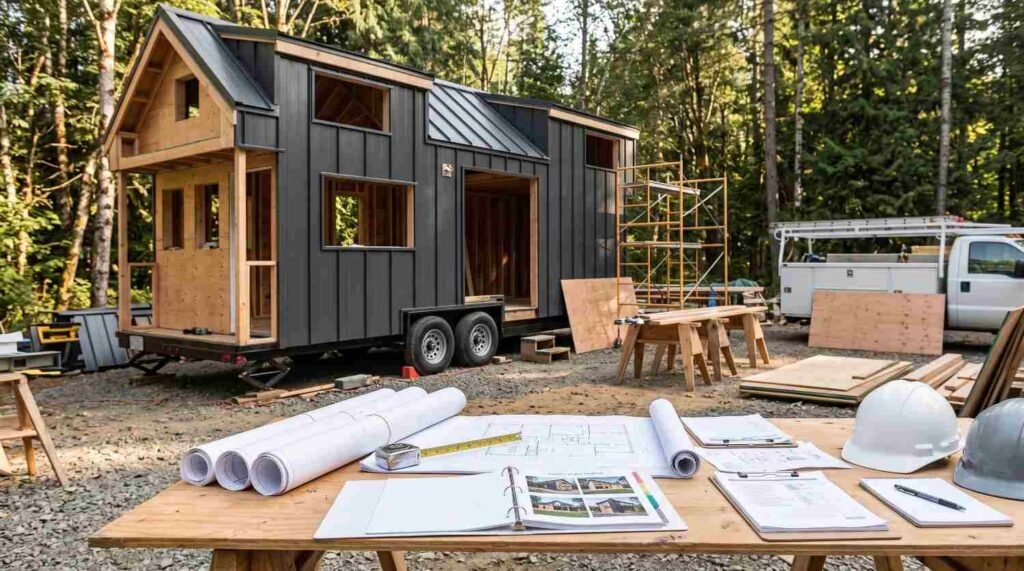
I’ve sat across the table from enough homeowners to know the moment when excitement turns into hesitation. They’ve found a builder with a beautiful Instagram feed and a friendly sales pitch, but they don’t actually know what separates a well-built tiny home from one that falls apart in five years.
The tiny house industry has fewer regulations than traditional homebuilding, and that gap gets filled by marketing claims instead of measurable standards. A builder’s charm doesn’t tell you anything about their framing techniques or their insulation R-value.
This guide walks through credentials and experience first, then moves into craftsmanship and materials, project process and communication, code compliance and warranties, and finally the trust signals that tell you how a builder behaves when something goes wrong.
Are You Licensed, Insured, and Certified for Tiny Home Construction?
A contractor’s license is a legal requirement that shows a builder has met a state’s minimum competency and business standards. I ask this question first because it’s the fastest way to eliminate builders who shouldn’t be building anything, let alone a home you’ll live in.
Insurance matters just as much as licensing. General liability coverage protects you if something goes wrong on the job site, and workers’ compensation protects you from lawsuits if a worker gets hurt on your property.
Ask for the actual policy numbers, not just a verbal confirmation. A legitimate builder hands these over without hesitation, and you can verify them directly with the insurance carrier.
Certification adds another layer. RVIA certification, for builders working on wheeled tiny homes, means the unit meets specific safety and construction standards tied to towing and utility systems.
I’ve seen buyers skip this step because the builder “seemed trustworthy.” Trustworthy people can still be uninsured, unlicensed, and unprepared for the liability a home build carries.
How Long Have You Been Building Tiny Homes Specifically?
General construction experience doesn’t automatically transfer to tiny homes. The physics of a 200-square-foot structure on wheels or a small foundation are genuinely different from a 2,000-square-foot house, and weight distribution, structural loads, and space efficiency all behave differently at that scale.
I want to know how many tiny homes a builder has completed, not how many years they’ve held a business license. Ten years in business with three tiny home builds tells a different story than three years in business with fifty completed units.
Ask what their learning curve looked like. A builder who’s honest about early mistakes and how they corrected them usually knows more than one who claims a flawless track record.
Specialization shows up in details most buyers never think to ask about how a builder handles loft stairs, how they route plumbing through tight wall cavities, how they balance weight for a road-legal trailer build.
What Materials and Construction Methods Do You Use?
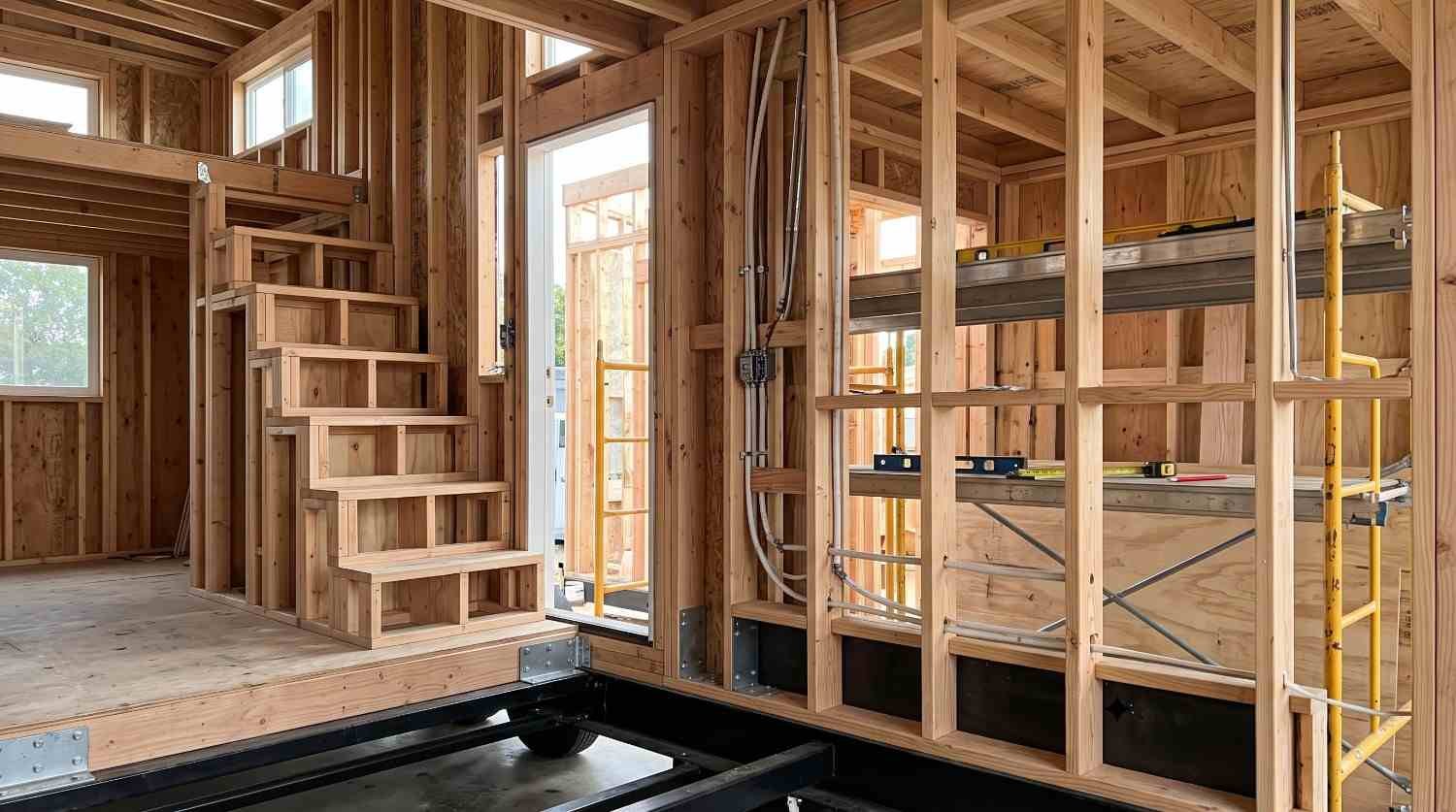
This is where marketing language and actual construction quality tend to diverge the most. “Premium materials” means nothing without specifics grade of lumber, type of sheathing, fastener specifications, and moisture barrier systems all determine how the home performs over a decade, not just on move-in day.
Framing lumber comes in different grades, and a builder using construction-grade or better lumber with proper spacing is building for durability. Ask directly which grade they use and why.
Exterior sheathing and weather barriers matter enormously in a tiny home because the structure has a higher ratio of exterior surface to interior volume than a standard house. Moisture intrusion in a tiny home shows up faster and does more relative damage.
I also ask about fastener type. Builders using proper structural screws and connectors instead of standard nails throughout tend to build homes that hold up better against the vibration of towing, if the home is mobile.
A builder confident in their materials will walk you through every choice without getting defensive. One who deflects the question with “we use the best stuff” hasn’t actually thought this through.
Can I See Examples of Your Past Builds or Visit a Completed Home?
Photos get filtered and edited. Standing inside a finished home tells you things a photo never will how it smells, whether doors and drawers operate smoothly months after installation, whether the finishes still look tight at the seams.
I recommend asking to see at least one home that’s been lived in for a year or more, not just the newest showpiece. New construction always looks good. A year of daily use reveals whether the craftsmanship holds up.
Pay attention to trim work, cabinet alignment, and how flooring transitions meet at doorways. These small details are where rushed or inexperienced builders cut corners, and they’re also where careful builders show their attention span.
A builder who’s proud of their work makes this easy. One who stalls, cancels visits repeatedly, or only offers photos is telling you something important without saying a word.
How Do You Handle Insulation, Ventilation, and Energy Efficiency?
Energy efficiency in a tiny home affects comfort every single day you live in it, through temperature swings, humidity control, and utility costs. The U.S. Department of Energy notes that proper insulation and air sealing are among the most cost-effective ways to improve a home’s comfort and reduce energy waste.
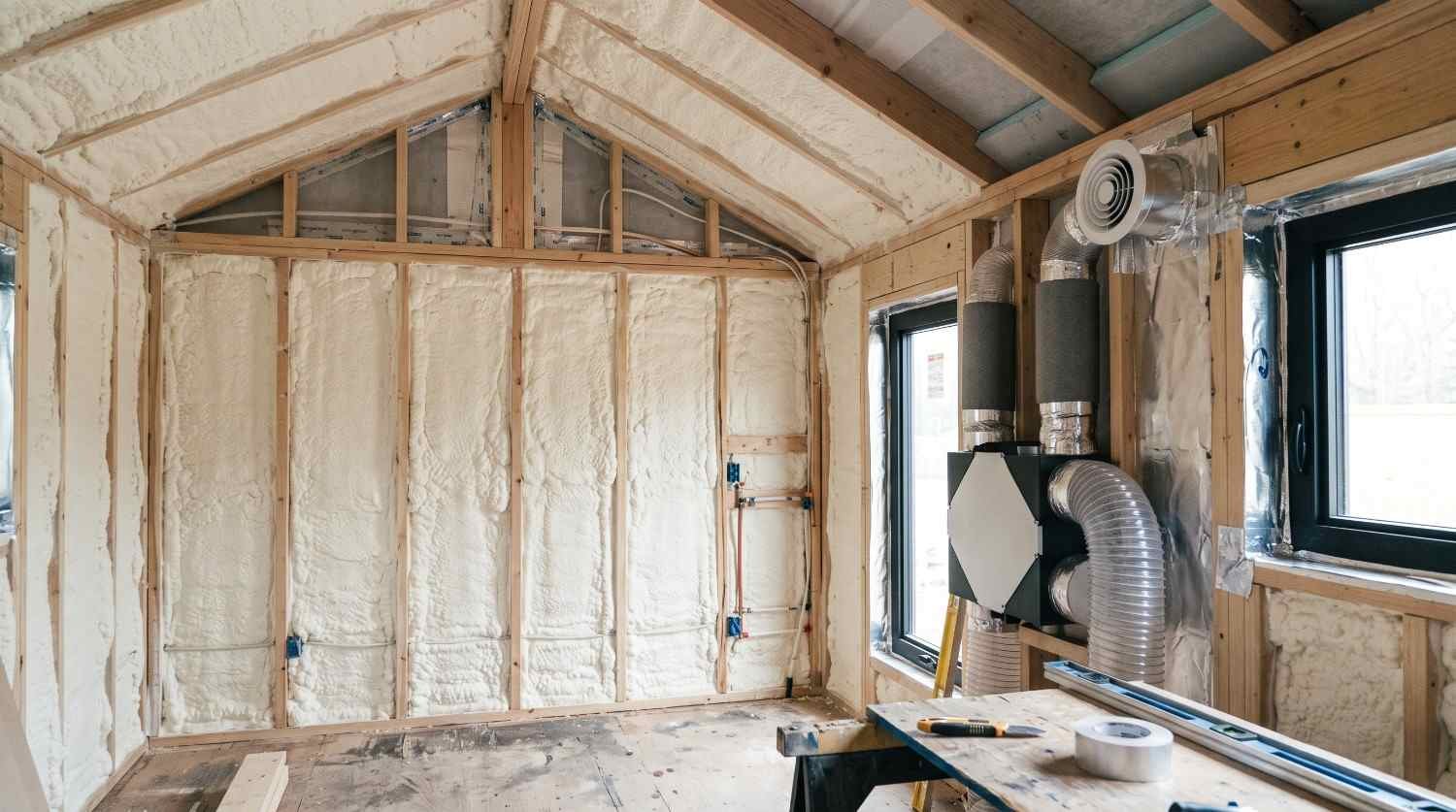
Ask about the specific insulation type and R-value used in walls, roof, and floor. Spray foam, rigid foam, and mineral wool all perform differently, and a good builder can explain the tradeoffs instead of just naming a product.
Ventilation gets overlooked constantly in small spaces. Without a plan for moisture control, condensation builds up inside walls and under flooring, and that leads to mold and structural decay long before most homeowners notice a problem.
I ask specifically how a builder addresses the bathroom and kitchen, since those areas generate the most moisture in a compact footprint. A vented exhaust system isn’t optional in a well-built tiny home.
What Does Your Design and Customization Process Look Like?
A structured design process protects you from costly changes mid-build. I want to see how a builder moves from initial conversation to finalized floor plan, and how many revision rounds are included before extra fees kick in.
Some builders offer fully custom design coordination, while others work from a set of modified base plans. Neither approach is inherently better, but you need to know which one you’re paying for before signing anything.
Ask how they handle your specific priorities, whether that’s a home office nook, extra storage, or a full-size shower instead of a standard tiny house stall. The answer tells you whether they’re solving your problem or fitting you into their template.
Get the design process in writing, including how many revisions are included and what triggers an additional design fee.
How Do You Manage Timelines and Communicate Progress?
Tiny home builds typically run four to seven months depending on complexity, customization, and materials availability. Ask for a realistic range specific to your project, not an optimistic number meant to close the sale.
I always ask how often a builder provides updates. Weekly photo updates, scheduled calls, or a shared project management portal all work, but silence for weeks at a time is a warning sign regardless of how good the finished product turns out to be.
Find out who your point of contact is during the build. A single dedicated contact prevents the frustration of chasing down answers from three different people who all give you different information.
Ask what happens if the timeline slips. A builder who has a clear process for communicating delays and revised dates is more trustworthy than one who avoids the question entirely.
What Is Included in Your Quote, and How Do You Handle Change Orders?
A vague quote is where budget overruns start. I want every quote itemized by category, covering materials, labor, permits, delivery, and any site work, so nothing gets buried in an “other” line item.
Ask specifically what’s excluded. Utility hookups, site preparation, foundation work, and permit fees sometimes fall outside the base quote, and finding that out mid-build creates real financial stress.
Change orders happen on almost every custom build. What matters is the process a written change order with updated pricing before work proceeds protects both you and the builder from disputes later.
I ask for a sample change order document during the initial consultation. A builder who has one ready has clearly done this before and has a system for managing scope changes fairly.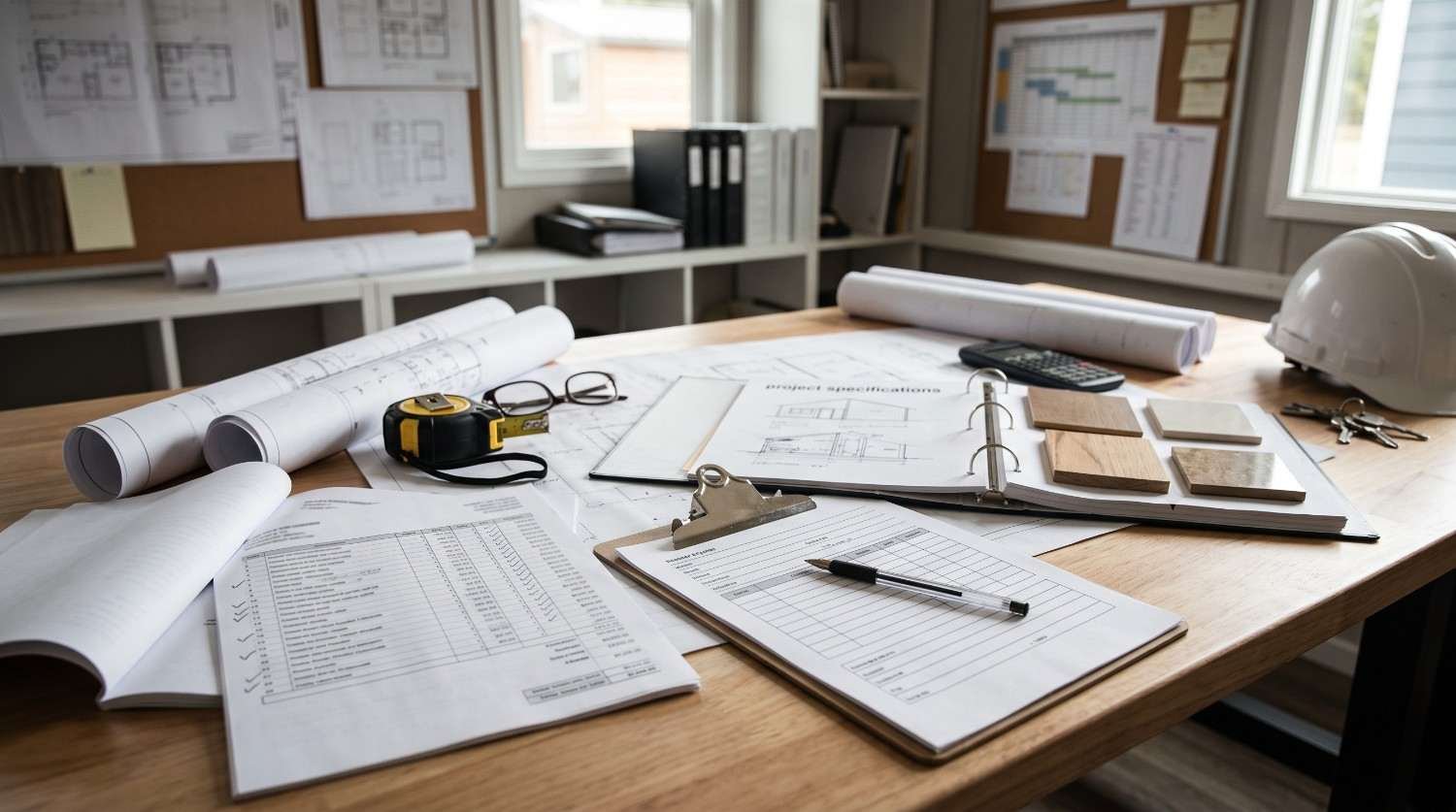
How Do You Ensure Compliance With Building Codes and Towing/Zoning Regulations?
Building codes exist to protect structural safety, fire safety, and livability, and a tiny home builder needs to know which codes apply to your specific situation. Foundation-built tiny homes typically fall under standard residential codes, while wheeled tiny homes intersect with both RV and towing regulations.
Zoning adds another layer entirely separate from construction quality. A beautifully built tiny home is worthless to you if it can’t legally sit where you plan to put it, so ask whether the builder helps navigate local zoning requirements or leaves that entirely to you.
For towable units, ask about axle rating, trailer certification, and whether the finished weight stays within legal towing limits for your vehicle and state. An overweight tiny home creates real safety risk on the road.
A builder who brings up compliance unprompted, rather than waiting for you to ask, is generally more experienced and more careful about protecting you from costly legal problems after move-in.
What Warranty or Post-Build Support Do You Provide?
A structural warranty covers major failures framing issues, foundation problems, roof leaks for a defined period after completion, and most established builders offer somewhere between one and ten years depending on the component.
Ask what’s explicitly covered versus excluded. Appliances usually carry their own manufacturer warranties separate from the builder’s structural warranty, and knowing the difference prevents confusion when something breaks.
I also ask about the punch list process the walkthrough where you flag remaining issues before final payment. A builder with a clear, written punch list process is committed to finishing the details, not just declaring the project done.
Post-build support matters beyond the warranty period too. Find out whether the builder answers questions or provides guidance after the home is delivered, since small issues are far easier to fix with the original builder’s input.
Can You Provide References or Reviews From Past Clients?
Direct conversations with past clients reveal details that reviews never capture. I ask builders for at least three references, ideally from projects completed at different points over the past two to three years, so I can hear how the home has held up over time.
When speaking with references, ask specific questions: Did the final cost match the quote? Did the timeline hold? Would they hire this builder again for a second project? Vague praise is less useful than direct answers to direct questions.
Online reviews carry some value but come with limitations, since a handful of five-star reviews can be curated or incentivized. Look for detailed reviews that mention specific project stages rather than generic satisfaction statements.
A builder who’s genuinely confident in their work provides references without hesitation and doesn’t steer you exclusively toward their newest, most enthusiastic clients.
How Do You Handle Problems, Delays, or Disputes During the Build?
Every construction project hits friction at some point a materials delay, a design change, an unexpected structural issue. What separates a good builder isn’t the absence of problems, it’s how they communicate and resolve them.
I ask this question directly and watch how a builder responds. Defensive answers or claims of a completely problem-free track record usually mean less transparency, not more skill.
Ask about their dispute resolution process specifically. A written contract with a clear mediation or resolution clause protects both parties if a serious disagreement arises over cost, quality, or timeline.
Find out how they’ve handled a difficult situation in the past. A builder willing to walk through a real example, including what went wrong and how they fixed it, is showing you exactly how they’ll treat you when something doesn’t go perfectly.
Conclusion
Choosing the right tiny house builder comes down to more than comparing prices or looking at finished homes. Verifying credentials, checking material quality, and understanding how a builder handles timelines and unexpected problems all help you make a more confident decision.
I recommend asking these twelve questions before signing a contract. Clear answers reveal how a builder approaches communication, craftsmanship, and accountability, helping you compare your options beyond polished photos and sales promises.
At Tiny Home Builders California, we believe every homeowner deserves transparency, quality workmanship, and clear communication throughout the building process. Reach out to Tiny Home Builders California to discuss your project and plan a tiny home built around your needs and expectations.
Frequently Asked Questions
What is the most important question to ask a tiny house builder?
Licensing and insurance verification comes first, since it protects you legally and financially before any other factor matters. Without proper licensing and insurance, none of the builder’s other qualifications carry the same weight.
How much does a custom tiny house builder typically cost?
Costs vary widely based on size, materials, and customization, typically ranging from $60,000 to $150,000 or more. I always recommend getting itemized quotes from multiple builders to compare accurately rather than relying on a single ballpark figure.
How long does it take to build a tiny house?
Most custom tiny home builds take four to seven months from signed contract to completion. Complex custom features, material delays, or permitting issues can extend that timeline further.
Do tiny house builders need a special license?
Requirements vary by state, but most tiny home builders need a standard contractor’s license, and builders working on wheeled units often pursue RVIA certification. I always verify both directly with the builder rather than taking their word for it.
What should be included in a tiny house builder’s warranty?
A solid warranty covers structural elements like framing, roofing, and foundation issues for one to ten years depending on the component. Appliances typically carry separate manufacturer warranties outside the builder’s coverage.
Can I customize the layout with any tiny house builder?
Customization level depends entirely on the builder’s process, ranging from fully custom design to modified standard floor plans. Ask specifically what’s included before assuming full customization is part of the base price.
How do I verify a builder’s insurance and licensing?
Request the actual license number and insurance policy details, then verify them directly with your state’s licensing board and the insurance carrier. A legitimate builder provides this information without hesitation or delay.
What red flags indicate a poor-quality tiny house builder?
Vague quotes, reluctance to provide references, no completed homes to visit, and defensiveness around questions about materials or process all signal risk. Trust builders who welcome scrutiny rather than avoid it.


